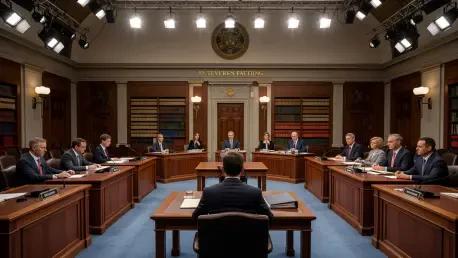

The bright lights and heavy silence of the Senate Banking Committee room usually signal a routine administrative procedure, but the air felt markedly different as Brian Johnson prepared to justify a vision that could reshape the American financial landscape. The confirmation hearing for Johnson transformed a standard political procedure into a heated debate over the fundamental soul of American financial regulation. When a nominee for the nation’s top consumer watchdog has just exited the executive offices of a major credit card issuer, it raises a question that resonated throughout the hearing room: Is it possible to pivot from defending corporate interests to shielding the public from them?
The session was marked by a palpable tension, as lawmakers grappled with the optics of a “revolving door” that seems to spin faster with every election cycle. At the heart of the confirmation was a fundamental question about the integrity of the system that connects high-level government regulation with the private sector. The dialogue shifted from mere professional qualifications to the ethical implications of a candidate whose recent history was deeply intertwined with the very entities he would be expected to police. This tension underscored the high stakes of a position designed to serve as the ultimate check on corporate overreach.
A High-Stakes Face-Off in the Senate Banking Committee
To understand the gravity of Johnson’s nomination, one must look at the Consumer Financial Protection Bureau’s origin as a post-2008 watchdog designed to prevent another global financial meltdown. For over a decade, the agency has served as the primary line of defense against predatory lending and deceptive banking practices. However, the mission of the agency has become a partisan flashpoint, with the current administration seeking to “modernize” operations—a term that critics argue is merely code for deregulation.
The stakes involve more than just administrative shifts; they involve the literal enforcement power required to oversee trillion-dollar industries that touch the lives of nearly every American household. Supporters of the nominee suggested that the bureau required a more streamlined approach to remain efficient in a fast-paced market. In contrast, opponents argued that any attempt to dilute the agency’s authority would inevitably lead to a return to the reckless behaviors that preceded the last economic crisis. This ideological divide set the stage for a confrontation that was as much about the future of the economy as it was about the nominee himself.
The Evolution of the CFPB and the High Price of Oversight
The hearing centered on a proposal that would fundamentally alter the agency’s capability: a plan to reduce the workforce by 53%. Specifically, the number of examiners tasked with auditing financial institutions would plummet from 350 to just 77, a move that consumer advocates suggest would leave the bureau toothless. This plan, which has sparked a 17-month legal battle between the agency and its employee union, represents a dramatic departure from the bureau’s historical staffing levels. Johnson remained cautious in his testimony, pledging to review the staffing needs with an open mind while stopping short of condemning the drastic cuts.
Beyond staffing, the committee scrutinized the timeline of Johnson’s departure from Capital One. The sequence of events—leaving the bank, a million-dollar donation from the bank to the inauguration, the dropping of a lawsuit against the bank, and Johnson’s subsequent nomination—created a narrative of potential regulatory capture. Johnson’s defense rested on his pledge to recuse himself for two years, yet the bank’s decision to waive his bonus repayments added fuel to the fire regarding his true loyalties. The optics of these financial arrangements suggested a level of industry influence that many senators found difficult to reconcile with a consumer protection mandate.
The Core Controversies: Staffing Slashes and Industry Allegiances
Senator Elizabeth Warren led the charge against the nomination, framing the recent shifts at the bureau as a “corporate pardon machine” that favors big banks over average citizens. This perspective was bolstered by the fact that 42 active cases were dismissed during the transition period, signaling a departure from an aggressive litigation posture. Warren argued that the reduction in examiners was not an efficiency measure but a deliberate attempt to allow firms to evade accountability. She pressed the nominee on whether he would continue this trend of dropping investigations into major financial players.
Johnson maintained a disciplined, objective tone, positioning himself as a technocrat focused on efficiency and accountability. He argued that the agency should avoid ideological agendas that restrict consumer choice or drive up costs toward unsustainable levels. However, his refusal to answer hypothetical questions regarding executive pressure from the White House left many senators concerned about the future independence of the CFPB. The partisan divide was further highlighted by concurrent party-line votes for other regulatory positions, illustrating how financial oversight has become a primary ideological battleground in Washington.