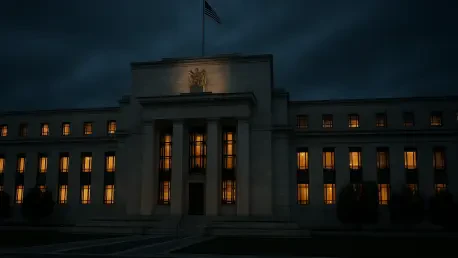

The marble halls of the Federal Reserve usually echo with the quiet deliberations of monetary policy, but a storm of executive authority is currently rattling the windows of the Eccles Building. This unprecedented move to convene a formal “committee of inquiry” for a sitting Federal Reserve Governor marks a turning point in the relationship between the executive branch and the nation’s central bank. By utilizing a century-old executive tactic, the White House is signaling that the era of hands-off management regarding the Fed’s inner circle has come to an end. This is not merely a personnel dispute; it is a fundamental challenge to the institutional design of American financial governance.
The central tension lies in the clash between the President’s “Spirit of 2025” vision and the statutory autonomy that has long protected Fed officials from political interference. The administration argues that no government official, regardless of their proximity to the levers of the economy, should be immune from accountability for personal or professional misconduct. This vision seeks to integrate independent agencies more closely with the executive’s policy goals, asserting that the democratic mandate of the President should take precedence over bureaucratic insulation. Consequently, the establishment of this committee serves as both a functional investigative body and a powerful symbolic statement about the limits of administrative independence.
A High-Stakes Showdown Over the Federal Reserve’s Independence
The White House’s decision to move toward a formal inquiry represents a sophisticated shift in strategy, moving away from simple public pressure toward a structured, legalistic confrontation. This committee of inquiry is tasked with investigating Governor Lisa Cook, a figure who has become a focal point for the administration’s broader efforts to reshape the Federal Reserve Board. While the central bank is designed to operate without political fear or favor, the administration contends that this independence does not provide a “get out of jail free” card for serious ethical lapses. This move has sent ripples through the financial world, raising questions about how much control the President can legally exert over those who set the nation’s interest rates.
Furthermore, the administration is grounding its current actions in a philosophy of executive supremacy that seeks to reclaim authority from independent regulators. Proponents of this approach argue that the “Spirit of 2025” requires a unified executive branch where all high-level officials are ultimately answerable to the President. By framing the inquiry as a matter of transparency and the rule of law, the White House is attempting to navigate the complex statutory protections that usually shield Fed governors. This tactical maneuver forces the Federal Reserve to defend its internal culture and personnel decisions in a public and potentially damaging forum, fundamentally altering the traditional rules of engagement.
The Path to the Inquiry: From Supreme Court Rulings to Allegations of Fraud
The legal battle that led to this moment was defined by a pivotal Supreme Court ruling in June, where a 5-4 majority clarified the President’s power to dismiss independent officials. Initially, the administration sought the summary firing of Governor Cook, but the Court, led by Chief Justice John Roberts, intervened. The majority held that while the President does possess removal authority, he must adhere to “due process” as mandated by existing statutes. This meant the White House could not simply issue a termination notice but had to provide a formal explanation of the evidence and a procedural opportunity for the official to respond.
Following this judicial setback, the administration’s strategy shifted from a direct political dismissal to a procedural “for cause” investigation. The catalyst for this current probe revolves around allegations of mortgage fraud, which the White House claims constitute the necessary legal grounds for removal. By pivoting to specific allegations of personal misconduct rather than policy disagreements, the administration is attempting to meet the high bar set by the Supreme Court for firing a protected official. This shift has transformed the conflict into a high-stakes legal drama, where the definition of “due process” is being tested in real-time within the halls of the executive branch.
The Committee of Inquiry: Personnel, Precedent, and Procedural Mechanics
To provide a framework for this investigation, the administration has revived the 1912 Taft Precedent, a historical mechanism used by President William Howard Taft to evaluate the conduct of federal officials. This “Three-Person Panel” is comprised of high-ranking allies: Kevin Hassett, Director of the National Economic Council; Keith Sonderling, from the Office of Government Ethics; and Andrea Lucas, Chair of the Equal Employment Opportunity Commission. The selection of these individuals ensures that the inquiry remains closely aligned with the administration’s regulatory philosophy while maintaining the appearance of a formal administrative proceeding. Their task is to evaluate the evidence and provide a recommendation that satisfies the Supreme Court’s demand for a reasoned explanation.
The mechanics of the hearing are strictly defined, with the proceedings scheduled for Nov. 5 at the White House. Governor Cook is required to appear and address the mortgage fraud allegations directly, though she is permitted to submit a written position statement three days prior. While she is allowed legal counsel, the rules of engagement are heavily controlled by the committee, leading to sharp institutional pushback. Senate leadership and various legal scholars have characterized the panel as a “kangaroo court” designed to produce a predetermined outcome. Despite these criticisms, the administration remains undeterred, viewing the process as a necessary step to fulfill its constitutional duty to ensure that federal officials are held to the highest standards.
Expert Perspectives on the Implications for Central Banking
Legal experts such as Abbe Lowell and Norm Eisen have been vocal in their skepticism, arguing that the inquiry is a “box-checking” exercise intended to bypass the Fed’s statutory protections. They suggest that by creating a formal procedural record, the administration is merely providing the Supreme Court with the paperwork it requested to allow a political firing to proceed. This perspective views the investigation as a dangerous precedent that could be used against any official in an independent regulatory body who falls out of favor with the executive. The concern is that the “for cause” standard is being stretched to include any allegation that can be framed as a matter of integrity or ethics.
In contrast, the political implications of this move are causing significant alarm in the legislative branch. Senator Chuck Schumer warned that the investigation could lead to “economic chaos” by dismantling the traditional wall between the presidency and the central bank. The fear among critics is that if the administration succeeds in removing Cook, it will clear the way for nominees like Judy Shelton or Kevin Hassett to join the board and pursue a more partisan economic agenda. This potential reshuffling of the Federal Reserve Board could lead to a fundamental change in how monetary policy is conducted, with potentially long-lasting effects on market stability and international investor confidence.
Navigating the Fallout: What This Means for Federal Oversight
The inquiry established a new framework for how the executive branch could legally challenge the tenure of officials in independent regulatory bodies. By successfully navigating the procedural requirements set by the Supreme Court, the administration demonstrated that the “for cause” removal standard was not an insurmountable barrier. This process showed that detailed investigations into personal conduct could serve as an effective tool for institutional restructuring. Future administrations recognized that they could achieve personnel shifts by focusing on procedural compliance rather than direct political confrontation.
The findings from the panel, which emerged after the Nov. 10 recommendation deadline, offered a blueprint for future oversight efforts across the federal government. To ensure continued stability, legal experts suggested that Congress might need to further refine the definitions of “for cause” to prevent the weaponization of ethics investigations. Looking ahead, the focus shifted toward establishing clearer guidelines for the release of hearing transcripts and the role of independent inspectors general in such proceedings. This entire episode reinforced the idea that institutional independence remained a fragile concept that required constant legal and legislative maintenance in an era of expanding executive authority.