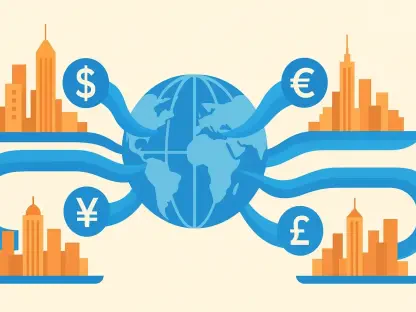

The long-standing wall between legacy banking ledgers and distributed blockchain networks has finally begun to crumble as established financial institutions move from tentative pilots to full-scale infrastructure integration. This transformation reached a critical milestone in late 2026, marking a period where digital assets transitioned from the periphery of the financial world to the center of institutional strategy. The introduction of the Global Money Platform, a collaborative effort between Mastercard and crypto-payments specialist BVNK, serves as a primary example of this shift. This initiative represents a sophisticated intersection between traditional fiat-based banking and the burgeoning world of on-chain finance, effectively signaling to the global business community that stablecoins are now legitimate settlement tools.
The current industry landscape is characterized by an aggressive drive toward interoperability, where the distinction between a traditional bank account and a digital wallet is rapidly disappearing. Major market players are no longer debating the validity of blockchain technology; instead, they are competing to build the most efficient gateways for capital to flow between these two ecosystems. This scope of significance extends beyond simple retail transactions, touching the very core of how corporate treasuries manage liquidity across borders. The convergence is fueled by technological advancements in Layer 2 scaling and the maturation of stablecoin protocols, which provide the stability required for predictable business operations.
Relevant regulations have played a dual role in this convergence, acting as both a catalyst for innovation and a framework for institutional safety. As traditional finance players integrate on-chain assets, they bring with them a level of trust and consumer protection that was previously missing from the crypto sector. This institutionalization is not merely a technical upgrade but a fundamental rethinking of the value chain in global payments. By treating digital assets as a standard payment rail, the industry is addressing the friction that historically kept conservative chief financial officers on the sidelines of the digital economy.
The Convergence of Traditional Finance and On-Chain Assets
The arrival of a unified platform for stablecoin management addresses a long-standing grievance among corporate entities that found the barrier to entry for digital assets too steep or too risky. For years, the separation of fiat and digital assets into disparate silos forced businesses to navigate complex manual processes, often involving multiple intermediaries and high conversion fees. The current state of the industry now favors integrated workflows where a single interface can manage diverse asset classes. This evolution is driven by the need for speed and the desire to minimize the settlement delays inherent in the traditional banking system.
Technological influences, particularly the rise of smart contracts and decentralized ledgers, have enabled the automation of complex financial agreements that were once the domain of legal departments and escrow agents. These technologies allow for programmable money, where payments are triggered automatically upon the fulfillment of specific conditions. This capability is a significant driver behind the move toward on-chain assets, as it promises to reduce administrative overhead and eliminate the risk of human error in high-value transactions. Market players who fail to adapt to these programmable standards risk obsolescence in an increasingly automated financial world.
Moreover, the regulatory landscape has become more defined, providing a clearer roadmap for institutions to follow. Frameworks that once seemed restrictive are now viewed as necessary guardrails that provide the legal certainty required for massive capital inflows. The involvement of global card networks like Mastercard adds a layer of validation that smaller fintech startups cannot provide on their own. This partnership between traditional giants and crypto-native firms creates a hybrid ecosystem that leverages the best of both worlds: the innovation of the blockchain and the stability of the established financial order.
Strategic Shifts in the Digital Payment Ecosystem
Emerging Trends in Stablecoin Utility and Corporate Treasury
The primary trend affecting the industry today is the shift from speculative trading to practical utility, specifically regarding how corporations utilize stablecoins for daily operations. Treasury management has moved beyond simply holding cash in interest-bearing accounts to active participation in on-chain liquidity pools and automated settlement systems. This allows companies to maintain a higher degree of control over their working capital, ensuring that funds are never idle and are always moving toward their most productive use. The ability to hold both fiat and digital assets in a single environment has simplified the role of the treasurer, making it easier to manage currency risk in real time.
Consumer behaviors are also evolving, with an increasing number of businesses demanding the same speed and transparency in their commercial transactions that they experience in their personal lives. This demand is a powerful market driver, pushing financial institutions to innovate faster than ever before. Emerging technologies such as zero-knowledge proofs and advanced encryption are being utilized to ensure that these transactions are not only fast but also private and secure. These opportunities for enhanced privacy are particularly attractive to high-net-worth individuals and large corporations who wish to protect sensitive financial data from public view.
Furthermore, the rise of branded corporate cards that bridge digital holdings and physical merchant acceptance is a game-changer for the utility of on-chain assets. This allows a business to spend its stablecoin balance at any merchant that accepts traditional credit cards, effectively turning digital tokens into a liquid currency. This seamless integration removes the need for businesses to constantly convert their holdings back into fiat, reducing the number of taxable events and lowering transaction costs. The strategic focus has clearly moved toward building an ecosystem where the underlying technology is invisible, and the user experience is paramount.
Market Projections and the Institutionalization of Digital Currencies
Looking ahead, market data indicates a significant growth trajectory for the adoption of digital currencies in institutional finance. From 2026 to 2028, the volume of cross-border payments settled via stablecoins is projected to grow by an average of 35 percent annually. This growth is supported by performance indicators that show a marked decrease in transaction times and a reduction in the total cost of ownership for global payment systems. As more banks and payment processors join the on-chain network, the network effect will likely accelerate this trend, making it the preferred method for international commerce.
The institutionalization of digital currencies is also reflected in the increasing number of central bank digital currency (CBDC) pilots that are moving into production phases. While stablecoins currently lead the way in terms of private-sector utility, the eventual integration of CBDCs will provide an even more robust foundation for the digital economy. Forecasts based on available data suggest that by late 2028, a significant portion of global trade will be settled using a combination of private stablecoins and public digital currencies. This hybrid model will offer the flexibility of private innovation with the ultimate security of central bank backing.
Furthermore, the secondary market for tokenized real-world assets is expected to expand rapidly, providing even more use cases for the platforms being built today. When traditional assets like real estate, bonds, and commodities are moved onto the blockchain, the demand for stable settlement assets will skyrocket. The digital payment ecosystem is currently preparing for this influx of value, ensuring that the infrastructure is scalable enough to handle trillions of dollars in on-chain transactions. This forward-looking perspective suggests that we are only at the beginning of a massive migration of global wealth onto digital ledgers.
Structural Hurdles and the Implementation Gap
Despite the optimistic projections, the industry faces significant structural hurdles that could slow the pace of adoption if not properly addressed. One of the most prominent obstacles is the technological implementation gap between advanced fintech platforms and the legacy systems still used by many traditional businesses. Integrating a modern on-chain platform with a forty-year-old accounting system is a complex and often expensive endeavor. This technical debt represents a significant barrier for small and mid-sized enterprises that lack the resources for a total digital overhaul.
Another critical challenge is the lack of transparency regarding fee structures and the total cost of ownership for new payment platforms. While the settlement layer itself is faster, the conversion spreads, account maintenance fees, and cross-border surcharges can quickly add up. Without a definitive and competitive fee schedule, many prudent financial managers remain hesitant to fully commit to these new systems. The industry must move toward greater transparency and standardized pricing models to build the necessary trust with corporate clients who are used to the predictable costs of the traditional banking world.
Regulatory uncertainty, while improving, still presents a risk to the widespread implementation of these technologies. In jurisdictions where laws are still being drafted or interpreted, businesses face the threat of sudden operational disruptions. The complexity of navigating different regulatory frameworks across multiple countries can be overwhelming, leading to a fragmented market where global solutions are difficult to maintain. To overcome these hurdles, industry leaders must engage in proactive dialogue with regulators and invest in robust compliance automation tools that can adapt to changing legal requirements in real time.
The Regulatory Framework and Compliance Mandates
The regulatory landscape has become a defining factor in the success of any new crypto-banking platform. Significant laws, such as the Markets in Crypto-Assets regulation in the European Union, have set high standards for stablecoin issuers and service providers. These standards require rigorous security measures, including full reserve backing and regular audits, to ensure that digital assets are as safe as traditional bank deposits. Compliance is no longer an optional add-on but a core requirement that dictates the strategic direction of every major player in the space.
Security measures have also been elevated to meet the expectations of institutional investors and regulators. This includes the implementation of advanced anti-money laundering (AML) and know-your-customer (KYC) protocols that are more stringent than those found in many traditional banks. The use of blockchain analytics allows for real-time monitoring of transactions, making it easier to identify and stop suspicious activity before it can cause harm. This increased focus on security is essential for the long-term viability of the industry, as it helps to distance legitimate digital finance from the illicit activities that plagued its early years.
However, the effect of these compliance mandates on industry practices is not entirely positive. The high cost of meeting these regulatory standards can lead to a consolidation of the market, where only the largest players can afford to operate. This could stifle innovation by making it difficult for smaller, more agile startups to compete. Furthermore, different jurisdictions often have conflicting requirements, creating a complex web of rules that international platforms must navigate. Reconciling these differences will be a major focus for the industry in the coming years, as the need for a truly global regulatory standard becomes more apparent.
The Future Trajectory of Integrated Financial Services
As we look toward the final years of this decade, the trajectory of integrated financial services is clearly pointed toward a world of invisible technology. Emerging technologies like artificial intelligence will likely be integrated into these platforms to provide automated treasury management and predictive liquidity planning. This will allow businesses to optimize their cash flows with a level of precision that was previously impossible. The potential for market disruptors remains high, as new decentralized finance (DeFi) protocols continue to challenge the traditional intermediaries that currently dominate the payment landscape.
Consumer preferences will continue to drive the evolution of the industry, with a focus on convenience, speed, and lower costs. The next generation of business leaders, who have grown up with digital assets as a normal part of life, will be much more likely to adopt these technologies than their predecessors. This generational shift will accelerate the move toward digital-first banking, where physical branches and paper-based processes are seen as relics of a bygone era. Future growth areas will likely include the integration of micropayments and the use of digital assets in the expanding world of the Internet of Things (IoT).
Innovation will also be shaped by global economic conditions, such as inflation rates and the stability of traditional currencies. In regions where the local fiat currency is unstable, the demand for stablecoin-based banking will be particularly strong. This provides a massive opportunity for platforms that can offer a reliable alternative to failing local financial systems. The convergence of these factors—technological innovation, changing demographics, and global economic shifts—suggests that the integrated financial services of the future will be more inclusive, more efficient, and more resilient than the systems they are replacing.
Final Assessment: Redefining Global Settlement Standards
The analysis of the current financial landscape demonstrated that the launch of integrated platforms like the Global Money Platform was a transformative event for global banking. The shift from speculative retail use to institutional treasury management indicated that the industry had finally reached a level of maturity that could support large-scale commercial operations. The report found that the legitimacy provided by established card networks acted as a powerful validator, encouraging more conservative firms to explore the benefits of on-chain assets. This development moved the entire sector toward a higher standard of service and technological integration.
The evidence suggested that the primary benefits of this transition included significantly faster settlement times and the potential for reduced transaction costs. However, the study also identified that the implementation gap and a lack of fee transparency remained significant hurdles for many businesses. The strategic move to integrate fiat and digital assets into a single workflow was viewed as the most effective way to bridge the gap between the old and the new financial worlds. This integration allowed for a more fluid movement of capital, which was essential for maintaining liquidity in an increasingly fast-paced global economy.
The findings highlighted that for businesses to successfully navigate this new era, they had to adopt a measured and informed approach. The report recommended that financial managers maintain parallel systems while piloting new digital settlement tools to mitigate the risks associated with regulatory uncertainty. Furthermore, the analysis concluded that the ultimate success of these platforms would depend on their ability to provide the transparency and legal clarity that professional treasurers required. As the industry looked toward the future, the evidence pointed to a unified financial system where the underlying technology became a secondary consideration to the utility and security of the services provided.