
Priya Jaiswal is a recognized authority in banking and finance, known for her sharp analysis of market trends and her deep understanding of international business shifts. As the United Kingdom’s financial landscape undergoes a massive transformation with the launch of the UK Payments Initiative, Jaiswal provides crucial context on how the transition from one-off payments to recurring account-to-account frameworks will redefine the industry. She explores the collaborative efforts of major banks and fintechs to create a more scalable, secure ecosystem that aligns with the government’s long-term national vision for a world-leading payments infrastructure.
With open banking currently handling over 37 million monthly transactions, why has the transition from one-off payments to a recurring, automated framework been such a critical hurdle for the sector?
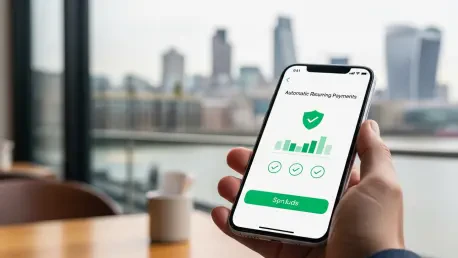
While 37 million transactions a month is an impressive milestone, the reality is that the vast majority of these are fragmented, one-off interactions that do not build long-term utility. The industry has struggled to move beyond this because it lacked a consistent, scalable mechanism for recurring account-to-account payments, leaving users tethered to older, traditional card-based systems. This new framework addresses that specific gap, allowing consumers to approve regular or variable payments directly from their bank accounts without ever having to disclose sensitive card details to a third party. It places the user firmly in the driver’s seat, letting them set specific limits on how much can be taken and exactly how long that permission lasts. For sectors like utilities and financial services, this eliminates the friction of manual monthly entries and turns a clunky digital handshake into a fluid, automated relationship.
How does the collaboration between traditional giants like Barclays and agile fintechs like Monzo and Revolut improve consumer safeguards compared to previous payment methods?
This collaboration is truly vital, as it brings together established entities like NatWest, Santander, and Lloyds alongside digital innovators such as Truelayer and GoCardless to create a unified standard. By building this framework collectively, these institutions ensure the system is practically enforceable and consistent across the entire banking spectrum, rather than being a series of isolated experiments. The framework includes built-in safeguards and dispute resolution processes that offer a reliable safety net often missing in basic bank transfers. Consumers gain an extraordinary level of transparency; they can see exactly who has permission to collect money and have the power to revoke that access instantly through their banking apps. This moves the needle from a “set it and forget it” mentality—which often leads to forgotten, costly subscriptions—to a controlled experience that empowers the account holder.
How do you see this new framework evolving from its initial rollout for charities and utilities into the broader landscape of subscriptions and everyday ecommerce?
We are currently in the foundational phase, targeting government agencies, charities, and utilities where the need for reliable, recurring cash flow is paramount for operations. However, the commercial roadmap suggests a rapid expansion into the wider ecommerce world and more sophisticated subscription models, fulfilling the ambitions of the UK Government’s National Payments Vision published in late 2024. As this system scales, account-to-account payments will begin to compete directly with traditional card networks at the digital checkout, offering significantly lower fees for merchants and a more direct way for consumers to manage their wealth. The ultimate goal is to create a seamless journey where the bank account becomes the central hub for all financial life, whether you are paying a monthly water bill or a global digital streaming subscription.
What is your forecast for the future of open banking?
I predict that recurring account-to-account payments will soon grow to rival the current 37 million monthly one-off transactions we see today. This shift will drastically reduce card-dependency as businesses seek the efficiency of direct bank transfers and consumers prefer the security of not sharing card numbers across dozens of websites. This environment, supported by next-generation technology, will likely spark a new wave of innovation in personalized financial management where your banking app is no longer a passive ledger. Instead, it will become a proactive tool that helps users optimize their recurring spending, identifies better deals for their utilities, and protects their long-term financial health through automated, intelligent oversight.