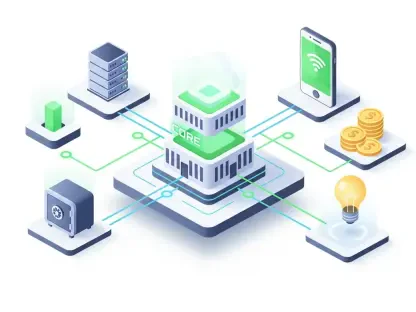

Global commerce operates at an unprecedented velocity, yet the financial infrastructure that supports it remains stubbornly anchored in a paper-based era, creating a costly and inefficient bottleneck for international business. For decades, the world of trade finance has been characterized by its reliance on manual documentation, a complex network of intermediaries, and protracted settlement times that stifle growth, particularly for small and medium-sized enterprises (SMEs). This legacy system not only inflates costs but also introduces significant risks of fraud and human error. However, a profound digital transformation is now underway, spearheaded by the powerful combination of blockchain technology and fintech innovation. These forces are not merely updating the old system; they are fundamentally reshaping the landscape of cross-border payments, promising to build a new ecosystem that is more efficient, transparent, and accessible for participants of all sizes. This evolution signals a decisive shift away from opaque, siloed processes toward an interconnected and automated digital future for global trade.
Forging a New Foundation of Trust
The inherent crisis within traditional trade finance is rooted in its operational friction and deep-seated inefficiencies. Core processes, such as the issuance of letters of credit and the manual verification of shipping documents, involve a multitude of actors including banks, insurers, and customs agencies. This convoluted structure results in significant delays, with cross-border payment settlements often taking between three to five business days to complete. Furthermore, the associated transaction fees can consume a substantial portion of a deal’s total value, often ranging from 3% to 7%. These exorbitant costs and prolonged timelines create formidable barriers to entry, disproportionately impacting SMEs that lack the capital and resources of larger corporations. This systemic inefficiency not only limits their ability to compete in the global marketplace but also ties up essential working capital, hindering their capacity for innovation and expansion. The urgent need for a more streamlined, cost-effective, and equitable system has become the primary catalyst for the widespread exploration and adoption of transformative technologies.
Blockchain technology has emerged as the architectural solution to the system’s core challenge of establishing trust among disparate parties. Its defining feature—a decentralized, secure, and immutable ledger—creates a “single source of truth” that is shared among all transaction participants, from the importer and exporter to their financiers and logistics providers. This shared and real-time visibility dramatically reduces the potential for fraud, clerical errors, and commercial disputes that frequently plague paper-based systems. A pivotal mechanism enabling this transformation is the smart contract, a self-executing agreement with the terms of the transaction directly written into code on the blockchain. These contracts automatically trigger predefined actions, such as the release of payment to a supplier, the moment a specific condition, like the confirmed receipt of goods at a port, is met and cryptographically verified on the ledger. This level of automation can compress transaction settlement times from several days into mere minutes, thereby unlocking working capital and boosting liquidity across the supply chain.
The Engine of Access and Democratization
While blockchain provides the robust and secure back-end infrastructure, it is the fintech sector that is building the accessible, user-centric front-end experiences that bring this technology to the masses. These agile firms leverage modern digital platforms and mobile applications to eliminate the friction commonly associated with traditional international banking. In stark contrast to their legacy counterparts, fintech payment providers utilize advanced technology to offer services such as real-time currency conversion at competitive rates, instant or near-instant payment settlement, and significantly reduced transaction fees. By optimizing the payment rails and removing unnecessary intermediaries, these companies are making global commerce more affordable and manageable for businesses of every scale. This focus on a seamless user experience is critical for driving adoption and demonstrating the tangible benefits of a fully digitized trade finance ecosystem, moving beyond theoretical advantages to deliver real-world value.
Perhaps the most crucial contribution of the fintech sector is its role in democratizing access to trade finance, especially for SMEs that have been historically underserved by conventional lenders. By employing alternative data sources—such as a company’s real-time transaction history, supply chain performance metrics, and digital sales volumes—and applying sophisticated artificial intelligence and machine learning algorithms, digital lending platforms can more accurately and holistically assess the creditworthiness of smaller businesses. This data-driven underwriting model allows SMEs to secure working capital and trade finance products that were previously reserved for large corporations with extensive credit histories and substantial collateral. Furthermore, the integration of AI not only opens up new financing avenues but also enhances security across the ecosystem by improving fraud detection capabilities and ensuring compliance with complex and ever-changing international anti-money laundering regulations, making the entire system safer and more dynamic for all participants.
Charting the Path to a Digital Future
The most revolutionary potential is unlocked when blockchain’s capacity for creating automated trust is combined with fintech’s unwavering focus on user experience and accessibility. Together, they form a seamless, end-to-end digital trade finance ecosystem that is far greater than the sum of its parts. For instance, a fintech platform built upon a blockchain foundation can offer cross-border payments that are not only instantaneous and low-cost but also fully traceable and verifiable on an immutable public ledger. This powerful combination drastically reduces counterparty risk and provides an unprecedented level of transparency for all stakeholders involved in a transaction. This synergy is particularly transformative for businesses in emerging markets, where limited banking infrastructure and a lack of access to traditional credit have historically been major barriers to participating in international trade. Digital platforms powered by this combined tech stack can empower small exporters in these regions to connect directly and securely with global markets, bypassing the need for extensive documentation and costly intermediaries.
Despite the immense potential and clear momentum, the journey toward full-scale adoption was understood to be fraught with significant challenges. The analysis revealed that progress was often slowed by the absence of standardized global regulations for digital assets and blockchain-based transactions, creating a fragmented and uncertain legal landscape. A persistent lack of interoperability between competing blockchain platforms also created “walled gardens” that hindered the seamless flow of information and value across different networks. Moreover, integrating these nascent technologies into the deeply entrenched legacy systems of global finance required substantial capital investment and a high degree of collaboration among traditional competitors, regulators, and technology providers. However, the prevailing outlook was one of determined optimism. It was clear that concerted efforts by global institutions, forward-thinking governments, and a vibrant startup ecosystem were progressively dismantling these barriers, paving the way for a smarter, more efficient, and ultimately more equitable global financial system.