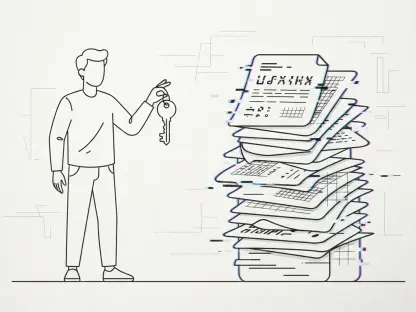

Providing AI assistants with write access to financial accounts could leave individuals liable for any losses incurred during a security breach. As artificial intelligence evolves into proactive personal agents capable of managing credit card balances and paying monthly bills, the line between convenience and catastrophe thins considerably. BMO CEO Darryl White recently addressed this tension during an industry forum, expressing concern that years of digital shopping have conditioned consumers to surrender personal data far too easily. These sophisticated AI tools often require administrative-level access to function effectively, yet they lack the robust security infrastructures that traditional banking institutions have spent decades refining. If a user provides their master login credentials to a third-party agent, they essentially hand over the keys to their entire financial life. The potential for a data leak is not the only threat; there is a fundamental risk that banks will refuse to reimburse fraudulent transactions if the account holder was found to have shared their sensitive access details with an unauthorized digital entity.
1. Keep Your Credentials Private: Reviewing Financial Terms
Keep your credentials private. Do not provide your bank username, password, PIN, Social Insurance Number (SIN), or complete credit card details to any AI chatbot or digital agent. While these tools promise to streamline tasks, they operate in an environment where data can be intercepted or misused by bad actors. Banking leaders emphasize that information like a SIN or a PIN is never intended to be shared with third-party software, as these entities do not have the same fiduciary duty or regulatory oversight as a chartered bank. Furthermore, AI agents can sometimes behave unpredictably; there have been documented cases where automated assistants shared home addresses with strangers or initiated unauthorized marketplace listings without the owner’s consent. Maintaining a strict boundary regarding what data is entered into a prompt is the most effective way to prevent identity theft and keep one’s financial identity from being harvested by external algorithms for malicious use.
Review your financial institution’s terms. Carefully read your bank’s online service agreement before connecting any third-party app to confirm that doing so does not violate the terms of your fraud coverage. Most major banks offer comprehensive reimbursement for unauthorized transactions, but this protection is contingent upon the user adhering to strict security protocols. The Financial Consumer Agency of Canada has cautioned that sharing a user ID or password with a third party could be interpreted as a breach of the user agreement. If a breach occurs through an AI assistant that you voluntarily gave access to, the bank might argue that the transaction was technically authorized or that the account was compromised due to consumer negligence. This legal grey area creates a massive financial risk for the user, as they could be left responsible for thousands of dollars in losses that would have otherwise been covered by the institution’s fraud insurance if the security perimeter had remained intact.
2. Opt for Secure Connections: Monitoring Account Activity
Opt for secure, limited connections. Whenever possible, select “read-only” access through channels officially sanctioned by your bank rather than providing full account access. In the current landscape of 2026, progress toward safer financial data sharing has accelerated with the implementation of the Consumer-Driven Banking Act. This framework is designed to provide specific guardrails that allow Canadians to share their data with accredited providers under the direct oversight of the Bank of Canada. However, many of the most advanced write access features—which allow AI to move money or pay bills—are still being studied for future phases of regulation. Until these pathways are fully secured and legally recognized, the safest course of action is to limit any AI tool to a read-only capacity. This ensures the software can analyze spending habits or help with budgeting without possessing the actual power to transfer funds or change account settings, thereby maintaining a vital layer of human-in-the-loop control.
Monitor your account activity. Enable real-time transaction notifications and immediately notify your bank if you notice any suspicious or unfamiliar charges. In an era where automated agents can perform micro-transactions or interact with online marketplaces, constant vigilance has become a necessity. Most modern banking apps allow for push notifications that alert the user the moment a purchase is made or a login attempt is detected. By receiving these alerts in real-time, an individual can intervene before a small fraudulent charge escalates into a complete account drainage. If an AI agent has been granted access to scan emails or credit statements, it may inadvertently trigger or miss subtle signs of unauthorized activity. Therefore, the human owner must remain the final auditor of all financial movements. Rapid detection is often the only way to successfully freeze an account before funds are permanently transferred to offshore accounts or converted into untraceable digital assets by sophisticated global fraud networks.
3. Secure Compromised Accounts: Alerting the Authorities
Secure compromised accounts. If you have previously shared your login information with an AI tool, change your password right away, cancel the app’s access, and contact your bank to report the exposure. Rectifying a security lapse requires immediate and decisive action to sever the connection between the AI agent and the financial institution. Even if no fraudulent activity has been detected yet, the mere fact that sensitive credentials exist within a third-party database is a persistent threat. Users should navigate to their bank’s security settings to revoke any third-party tokens or permissions that were previously granted to external applications. Furthermore, choosing a unique, complex password that is not used on any other platform—and enabling multi-factor authentication—can provide a necessary barrier against future intrusions. Communicating with the bank’s fraud department is also vital, as they can place extra layers of monitoring on the account and provide specific advice tailored to the type of data that was exposed to the digital agent.
Alert the authorities. If you suspect you have been a victim of a scam, report the incident to the Canadian Anti-Fraud Centre (CAFC) and your local police department. In 2025 and early 2026, the CAFC observed that only a small percentage of fraud victims came forward, which hindered the collective ability to track emerging AI-based threats. Those who documented their experiences provided the necessary data for the Royal Canadian Mounted Police and the Competition Bureau to issue specific warnings about digital agents. Law enforcement officials emphasized that reporting was a critical step in dismantling the networks that exploited unsecured AI connections. Throughout the transition to autonomous banking, successful individuals adopted a strategy of extreme caution, choosing to treat AI agents as unverified entities until federal oversight was fully established. They prioritized the use of biometric security and ignored apps that demanded full account credentials. This shift in behavior proved that the most effective defense against modern fraud was not more software, but a return to the foundational principles of information privacy and manual oversight.