
The vibrant street markets and modern convenience stores of Southeast Asia are unified by the near-universal presence of QR codes, yet a hidden technological barrier has long prevented a traveler from the Philippines from seamlessly paying a vendor in Thailand using their local mobile app. This fragmentation of national payment systems, a major hurdle for regional commerce and tourism, has attracted the attention of an unlikely player: Tether, the issuer of the world’s most prominent stablecoin. The company’s recent strategic investment into the financial technology startup SQRIL marks a significant and calculated foray into the foundational infrastructure of global payments, signaling a deliberate strategy to build the “plumbing” of tomorrow’s financial world rather than just the consumer-facing products that flow through it. This move suggests a future where value transfer is as simple as scanning a code, regardless of currency or country.
A Vision for a Seamless Payment Network
Solving the Fragmentation Puzzle
The paradox of QR code payments in emerging markets is their simultaneous success and isolation. In nations like the Philippines, Vietnam, Indonesia, and Thailand, these systems have become deeply embedded in daily economic life, facilitated by the guidance of central banks aiming to promote financial inclusion and cashless transactions. This rapid adoption has created incredibly efficient domestic payment ecosystems where consumers can transact with ease. However, these national networks were designed as walled gardens, operating on unique standards and protocols with no built-in mechanism for interoperability. This creates a significant point of friction in an increasingly interconnected global economy. For a tourist, it means juggling multiple apps or resorting to cash and costly currency exchange services. For a small business, it means being unable to easily accept payments from foreign visitors, limiting potential revenue and complicating cross-border commerce on a micro level. SQRIL was founded to dismantle these digital walls, addressing the critical need for a universal translator between these disparate but individually powerful payment languages.
The Technology Behind the Connection
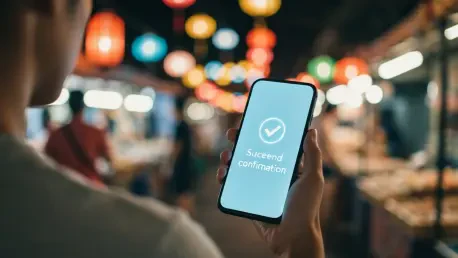
At its core, SQRIL functions as a sophisticated, behind-the-scenes “payment switch,” avoiding the crowded market of consumer-facing wallets and applications. The company’s innovative approach is built upon an API-based technical layer that serves as a bridge, connecting the otherwise incompatible national QR networks. Instead of competing with established financial players, SQRIL partners with them. Through a single, streamlined API integration, institutions ranging from traditional giants like Barclays to agile neobanks like Revolut can instantly grant their entire customer base the ability to make payments abroad. The experience is designed to be entirely frictionless. A customer traveling internationally can use their familiar home banking app to scan any local QR code. They see the transaction in their native currency and authorize it as they normally would. Simultaneously, the merchant receives the payment instantly in their local currency, completely unaware of the complex backend processes. SQRIL manages the entire lifecycle of the transaction, from real-time foreign exchange conversion to the intricate inter-bank settlement, abstracting away the complexity to deliver a simple, seamless point-of-sale experience for everyone involved.
Tether’s Quiet Shift Towards Core Infrastructure
A Strategic Diversification Beyond Stablecoins
Tether’s investment in SQRIL is a clear indicator of a broader strategic evolution, one that prioritizes foundational infrastructure over direct consumer engagement with its core stablecoin product, USDT. Notably, there is no evidence to suggest that stablecoins are being integrated into SQRIL’s current payment flows. This deliberate separation underscores that the investment is not a veiled attempt to drive USDT adoption in retail transactions. Instead, it represents a calculated, long-term bet on the underlying architecture of the global financial system. This move aligns perfectly with Tether’s recent pattern of diversification, where the company has increasingly focused on building, acquiring, or supporting the essential technologies that other products and services will be built upon. By backing SQRIL, Tether is not just investing in a single company; it is investing in the concept of global payment interoperability itself, positioning itself as a key enabler and architect of a more connected financial future, regardless of the specific currency or asset being transacted.
Building the Financial Plumbing of Tomorrow
The SQRIL investment is not an isolated event but a key component of Tether’s deliberate pivot toward becoming a diversified technology powerhouse. This strategy is further evidenced by a series of ambitious initiatives that extend far beyond the realm of stablecoins. The company has made significant strides in the field of artificial intelligence, notably by expanding its QVAC Genesis II dataset and releasing it for open-source use to fuel the development of large language models. Furthermore, Tether has announced its exploration of a unique non-custodial mobile wallet focused on Bitcoin and USDT. This wallet aims to differentiate itself by running AI models directly on the user’s device, a departure from the industry’s reliance on cloud-based infrastructure. These ventures, much like the support for SQRIL, are not about capturing the end-user market directly. Instead, they represent a coherent and sophisticated strategy to control the essential, often invisible, “plumbing”—the data, the networks, and the protocols—that will underpin the next generation of technology and finance.
The Path Forward and Potential Hurdles
Confronting the Regulatory Maze
Despite possessing a technically elegant solution to payment fragmentation, SQRIL’s greatest challenges are not rooted in code but in compliance. The global payments landscape is governed by a dense and disparate patchwork of local, not international, regulations. Each country maintains its own specific rules concerning everything from anti-money laundering (AML) protocols and foreign exchange controls to financial settlement procedures and transaction monitoring requirements. While SQRIL’s technology can technically link any two systems, it cannot magically harmonize these divergent and often conflicting legal frameworks. As the company executes its expansion plans, moving from its current operational base in Southeast Asia into new, complex markets across Africa and Latin America, this regulatory burden is set to increase exponentially. Consequently, SQRIL’s ultimate success will be determined as much by its ability to navigate these intricate legal landscapes and foster regulatory cooperation as it will by its technological prowess and execution. The path to a globally interoperable payment network is paved with legal agreements, not just API calls.
An Investment in a Future Standard
Tether’s strategic backing of SQRIL represented a quiet but profound endorsement of a future where financial innovation flows from emerging markets to the developed world. SQRIL’s appeal was magnified by its non-competitive posture; it sought to empower existing banks and e-wallets rather than replace them, positioning itself as a neutral connector. This collaborative model made it a far more attractive partner for established institutions and regulators who remained cautious of disruptive foreign platforms aiming to own the customer relationship. The investment was a calculated wager on the vision articulated by SQRIL’s leadership—a vision where the QR code, a technology that flourished in the developing world, would become a global standard for payments. This move underscored a belief that the intricate machinery of global finance was on the cusp of a significant shift, and the success of this venture was set to unfold not in flashy consumer-facing apps, but within the complex, interconnected systems that form the backbone of the world’s economy.