
The once-clear line separating your favorite tech app from your local bank branch is rapidly dissolving, and few companies embody this shift more than PayPal. As the digital payments giant formally seeks to become a bank, it ignites a firestorm of debate that extends far beyond its own corporate strategy. This move is not merely an expansion; it is a direct challenge to the very structure of American finance, forcing a national reckoning over who should have the power to hold and lend money.
From Digital Wallet to Would-Be Bank: PayPal’s High-Stakes Financial Gamble
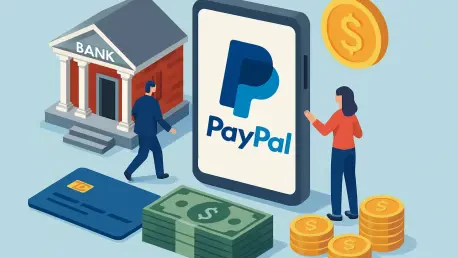
PayPal’s journey from a simple online payment button to a global financial services powerhouse has been a masterclass in evolution. For years, it has quietly operated at the edges of traditional banking, facilitating over $30 billion in loans and working capital for its 420,000 small business customers worldwide, all while relying on third-party banking partners. Now, by applying for a specialized industrial loan company (ILC) charter, the company is making a bold play to bring these functions in-house, transforming from a financial intermediary into a direct, federally insured institution.
This application marks a pivotal moment, threatening to fundamentally alter the relationship between technology and finance for millions of small enterprises. For these businesses, PayPal is already an indispensable tool for processing payments and managing cash flow. The prospect of an all-in-one “PayPal Bank” offers the allure of seamless, integrated financial services. Yet, this convenience comes with a complex set of questions about risk, regulation, and the competitive balance of the entire banking sector.
At its core, PayPal’s ambition exposes the deep-seated tensions within the U.S. financial system. The move leverages what critics call a regulatory loophole, fueling a fierce debate about the foundational separation of commerce and banking. The outcome of this application will not only determine PayPal’s future but could also set a powerful precedent, shaping the rules of engagement for a new generation of tech-driven financial institutions for decades to come.
Unpacking the ILC Uproar: The Fault Lines in PayPal’s Banking Ambition
The Strategic Play: Why PayPal Aims to Sideline Third-Party Banks
The primary driver behind PayPal’s banking ambition is a straightforward strategic calculation: vertical integration. By establishing its own bank, the company aims to internalize the core banking services—lending, deposit-taking, and payment processing—that it currently outsources. This move would allow PayPal to offer its vast network of small business clients a more cohesive financial ecosystem, directly controlling everything from FDIC-insured savings accounts to card network connections.
The financial incentives for this strategy are immense. Cutting out intermediary banks allows PayPal to capture a larger portion of the value chain, reduce operational costs, and streamline its product development. As articulated by company leadership, the goal is to enhance efficiency and better support the growth of American small businesses. This vision of a self-contained financial platform is powerful, promising a frictionless experience for users deeply embedded in the PayPal ecosystem.
However, the path to becoming a bank is fraught with internal challenges. Building a federally insured depository institution requires a profound cultural shift for a technology-first company. The rigorous demands of regulatory compliance, risk management, and governance are a world away from the fast-paced, iterative culture of Silicon Valley. Recognizing this, PayPal has appointed leadership with deep experience in the ILC sector, signaling a serious commitment to navigating these execution risks.
A Widening Front: How Tech and Auto Giants Are Storming Banking’s Gates
PayPal’s application is not happening in a vacuum; it is part of a broader, accelerating trend of non-financial corporations seeking to enter the banking industry. Automotive giants like Nissan and GM Financial, along with investment firms such as Edward Jones, have also pursued ILC charters. These companies see banking capabilities as a way to gain a competitive edge, offering more flexible and integrated financing options directly to their dealer networks and customers.
This movement is particularly pronounced in the FinTech sector. Buy Now, Pay Later (BNPL) firms like Sezzle are actively exploring the ILC charter as a strategic tool to navigate an increasingly complex regulatory environment. With state-level regulations on BNPL products tightening, securing a federal charter is seen as a way to create a more predictable and unified operating framework, effectively sidestepping a patchwork of disparate state laws.
The collective push from these diverse industries poses a formidable competitive threat to the established financial order. Community banks, in particular, face the prospect of competing against household names with massive customer bases, deep pockets, and sophisticated technological infrastructure. This wave of new entrants is poised to significantly disrupt the traditional banking landscape, forcing incumbent institutions to innovate or risk being left behind.
The Regulatory “Loophole”: Exploiting the Separation of Commerce and Banking
The controversy surrounding PayPal’s application centers on the unique nature of the ILC charter. This charter allows a company to own an FDIC-insured bank without being classified as a bank holding company. The critical consequence of this distinction is that the parent company—be it a tech firm or an automaker—avoids the comprehensive, consolidated supervision of the Federal Reserve that applies to traditional bank holding companies.
This exemption strikes at the heart of a long-standing principle in U.S. financial regulation: the separation of banking and commerce. This principle was established to prevent the concentration of economic power and to mitigate potential conflicts of interest that could arise if commercial enterprises controlled the flow of credit. Critics argue that the ILC charter creates a dangerous loophole, allowing large corporations to enjoy the benefits of banking without submitting to the same level of oversight.
Furthermore, the rise of tech-led banks challenges the assumption that these new entities carry the same risk profile as their traditional counterparts. With diverse commercial interests ranging from e-commerce to data analytics, these companies could introduce new, unforeseen risks into the federally insured banking system. This raises pressing questions about financial stability and whether the existing regulatory framework is equipped to supervise these hybrid entities.
A Political Firestorm: The Legislative Battle Over Who Gets to Be a Bank
The push by companies like PayPal into banking has ignited a sharp political divide in Washington. Vocal critics, including Senators Elizabeth Warren and John Kennedy, have led the charge to close the ILC pathway, proposing legislation that would place a moratorium on new charters. They contend that allowing tech giants and other large corporations to operate banks creates an uneven playing field and poses a systemic threat to the financial system.
Regulatory sentiment toward ILCs has proven to be fluid, often shifting with changes in presidential administrations. The regulatory environment under the Trump administration was seen as more favorable, prompting a wave of applications. In contrast, the current FDIC has expressed more skepticism, although recent statements from its leadership suggest the door may not be completely closed, creating a climate of uncertainty for applicants.
Ultimately, the future of the ILC charter itself hangs in the balance. The ongoing legislative and regulatory battles could culminate in permanent changes to the Bank Holding Company Act, potentially shutting down this avenue into banking for good. The fate of PayPal’s application is thus intertwined with a much larger political struggle over the very definition of a bank in the 21st century.
The Bottom Line for Consumers and Competitors: Adapting to a New Financial Order
The debate over allowing commercial firms to own FDIC-insured institutions boils down to a conflict between innovation and stability. Proponents argue that these new entrants will foster greater competition, drive down costs, and lead to more consumer-friendly financial products. Opponents, however, warn of the risks associated with inadequate oversight, anti-competitive practices, and the potential for a crisis sparked by entities whose primary business is not banking.
For traditional banks, the rise of these tech-driven financial ecosystems is an urgent call to action. To remain competitive, they must accelerate their own digital transformations, focusing on creating seamless user experiences. Moreover, they can leverage their long-standing strengths—deep customer relationships, community trust, and a proven track record of regulatory compliance—as key differentiators in an increasingly crowded marketplace.
Small business owners, meanwhile, face a new set of choices. Banking with a platform like PayPal could offer unparalleled convenience and integration with their daily operations. However, they must also carefully evaluate the potential risks, considering factors like data privacy, customer service, and the long-term stability of an institution that is not a traditional bank at its core.
The Future of Finance Is Being Written Now: Why This Fight Is Bigger Than PayPal
PayPal’s bank charter application is far more than a single company’s corporate maneuver; it serves as a crucial test case for a paradigm shift in the American financial system. The decision on this and similar applications will set a powerful precedent, determining whether the wall separating commerce and banking will be reinforced or dismantled for good.
The long-term implications of this transformation are profound. The outcome of this debate will directly impact financial stability, consumer choice, and the concentration of economic power. Allowing large technology companies to become banks could usher in an era of unprecedented innovation, but it could also lead to new systemic risks and further entrench the dominance of a handful of corporate giants over the daily lives of consumers and small businesses.
This moment demands active engagement from all stakeholders. The question of how technology will reshape the definition of a bank is not one to be decided behind closed doors. Lawmakers, regulators, industry leaders, and the public must all participate in a deliberate and thoughtful conversation to ensure that the financial system of the future is not only innovative but also safe, fair, and resilient.