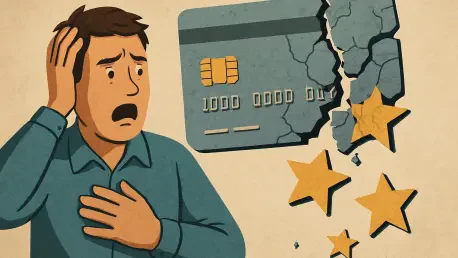

The cash-back, airline miles, and other perks that millions of Americans have come to expect from their credit cards could be at risk due to a contentious legislative proposal gaining traction in the Senate. The National Taxpayers Union (NTU) has issued a stern warning against an amendment that mirrors the Credit Card Competition Act (CCCA), arguing that this well-intentioned effort to foster competition would ultimately dismantle the popular rewards system and introduce significant security vulnerabilities into the nation’s payment infrastructure. The debate centers on a fundamental question: can government intervention successfully lower costs for merchants without imposing unintended, and potentially severe, consequences on the average consumer? This unfolding conflict pits merchant interests against those of financial institutions and consumer advocacy groups, with the financial habits of millions hanging in the balance.
The Core of the Controversy
The legislative battle is rooted in the complex and often opaque system of interchange fees, the charges merchants pay every time a customer swipes a credit card. While proponents of the new bill see it as a necessary step to break the dominance of major card networks and lower consumer prices, opponents view it as a drastic and misguided federal overreach.
A Push for Market Competition
At its heart, the proposed legislation seeks to inject more competition into the credit card processing market, a space long dominated by a few key players. The bill would mandate that the Federal Reserve create regulations requiring credit cards to offer at least two unaffiliated payment network options for processing transactions. This means a card could not exclusively rely on a single network for all its routing. The primary goal is to provide merchants with a choice, allowing them to route a transaction through a network that charges a lower interchange fee. Proponents of this measure, largely representing retail and merchant groups, argue that the current system lacks sufficient competition, leading to inflated fees that are ultimately passed on to customers in the form of higher prices. They believe that by forcing networks to compete on price for each transaction, the overall cost of acceptance will decrease, and these savings will translate into lower retail prices for all consumers, regardless of how they pay. The legislation is framed as a pro-consumer move designed to correct a market imbalance and curb the power of the largest payment networks.
An Unprecedented Federal Intervention
In direct opposition to this view, the National Taxpayers Union has characterized the proposal as a “backdoor price control” and the most significant federal intrusion into the electronic payments system since the Dodd-Frank Act. In a formal communication to the Senate Committee on Agriculture, Nutrition, and Forestry, the organization argued that attaching such a measure to the Digital Commodities and Intermediaries Act would be a grave error. The NTU’s position is that the government should not be dictating the operational mechanics of private payment networks. They contend that this is not a genuine effort to foster organic competition but rather a heavy-handed regulatory mandate that artificially manipulates market outcomes. The organization warns that such an interventionist approach sets a dangerous precedent, potentially opening the door for further government control over other sectors of the financial industry. This perspective is bolstered by a coalition of 28 other conservative, free-market, and consumer groups who see the bill as a fundamental disruption of a functioning, albeit complex, economic ecosystem that could lead to widespread negative consequences.
Potential Ramifications for Consumers and Security
Beyond the philosophical debate over government intervention lies a set of practical concerns about how the legislation would impact the daily financial lives of Americans. Opponents predict a domino effect, where changes aimed at helping merchants would ultimately harm consumers by eliminating valued benefits and weakening the security of the entire payment network.
The Disappearance of Consumer Perks
The most immediate and tangible impact for consumers, according to the NTU, would be the swift erosion and likely elimination of credit card rewards programs. Interchange fees, the very target of the legislation, are the primary funding source for cash-back offers, travel points, and other popular perks. By significantly reducing this revenue stream for card issuers, the bill would remove the financial incentive to offer these benefits. Consequently, consumers could see their rewards-earning cards become obsolete. The NTU also anticipates that financial institutions would seek to recoup lost revenue through other means, such as the introduction of higher annual fees or the tightening of credit standards, which would reduce access to credit for many Americans. This is seen as a particularly perilous development at a time when national credit card balances have reached an all-time high, as it would add financial pressure on households that rely on these financial tools. The argument is that the promised savings on retail goods would be negligible and far outweighed by the loss of direct financial benefits and increased costs associated with card ownership.
Compromising Cybersecurity for Cost
A perhaps less obvious but equally critical concern raised by the bill’s opponents revolves around cybersecurity. The current payment networks have invested billions of dollars over decades to build highly secure, sophisticated systems for fraud detection and prevention. The proposed legislation, by forcing merchants to be given cheaper network options, would inherently incentivize a shift away from these established, secure systems toward less reliable and potentially vulnerable alternatives. The NTU warns that this race to the bottom on cost would inevitably weaken cybersecurity protections for electronic payments across the board. Routing transactions through less-proven networks could expose the financial data of millions of taxpayers to increased risk from hackers and fraudulent activity. This would undermine consumer confidence and destabilize the very payment ecosystem the bill purports to improve. The organization stressed that forcing a preference for lower-cost processing over secure processing was a dangerous trade-off, one that would put the financial stability of countless individuals and small businesses in jeopardy without offering any proven benefit to taxpayers or consumers.