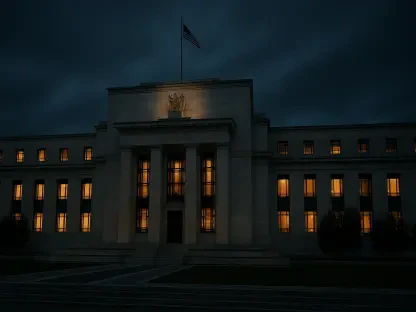

The delicate equilibrium of the American financial sector faces an unprecedented challenge as the legislative push for digital asset integration threatens to bypass the foundational safeguards that have sustained community banking for generations. Current debates surrounding the Clarity Act highlight a critical inflection point where the demand for modern efficiency clashes with the necessity of depository stability. At the center of this tension is a perceived “stablecoin loophole” that industry representatives warn could systematically drain capital from local institutions. This analysis examines the potential for a massive shift in the domestic monetary landscape and the long-term risks posed to the American depository model.
The Emerging Threat to Community Banking and Local Stability
The ongoing legislative struggle reveals a fundamental disagreement regarding the future of digital assets and their role in the broader economy. While proponents of the Clarity Act argue for a streamlined framework to foster innovation, the Independent Community Bankers of America identifies a structural impasse that favors high-tech firms over traditional depository institutions. The core concern involves the creation of an unlevel playing field where digital asset issuers could capture significant market share without adhering to the rigorous safety and soundness standards required of licensed banks.
Industry leadership has signaled that the current language of the bill creates an existential threat by allowing non-bank entities to perform bank-like functions. This situation is described as an impasse because any framework that facilitates yield-generating digital assets without federal oversight effectively compromises the integrity of the sovereign currency. By analyzing the legislative nuances, it becomes clear that the primary objective for banking advocates is to close ambiguities that permit stablecoins to function as unregulated deposit alternatives, thereby protecting the stability of local financial ecosystems.
A Historical Perspective on the American Depository Model
The American banking system has historically relied on a model of trust and local reinvestment to drive domestic growth. Since the mid-twentieth century, the recycling of local deposits into small business loans, agricultural credit, and mortgages has served as the primary engine for rural and suburban development. This framework was built on the premise that wealth generated within a community should remain accessible to that community through a regulated intermediary. Oversight by agencies such as the Federal Reserve and the Federal Deposit Insurance Corporation ensured that these institutions remained solvent and accountable.
In recent years, the rapid ascent of fintech has begun to test the resilience of this traditional arrangement. Innovations in digital payments have often prioritized speed and global reach over local stability, leading to an erosion of the barriers that once separated commerce from banking. Understanding this evolution is vital to recognizing why the current stablecoin debate is more than a technical disagreement. It represents a pivot away from the century-old philosophy of localized capital management toward a centralized, technology-driven financial structure that lacks the same community-focused mandates.
The Economic Impact of Deposit Flight and Yield-Bearing Digital Assets
The Peril of Unregulated Deposit Mirrors
The primary economic risk identified in the 2026 market landscape involves the emergence of “shadow banks” through the issuance of yield-bearing stablecoins. If digital asset companies are permitted to offer interest or yield on their tokens without being subject to the same capital and liquidity requirements as traditional banks, they effectively become unregulated deposit mirrors. This creates a systemic vulnerability where capital flows toward the path of least resistance, potentially leaving the public exposed to massive losses if a large issuer fails without a federal safety net.
The Threat to Localized Lending Ecosystems
Beyond immediate consumer risks, the transition toward stablecoins threatens to trigger a massive deposit flight that could drain an estimated $1.3 trillion from the traditional banking sector. Such a shift would likely cause a severe contraction in local lending, with projections suggesting an $850 billion decline in available credit for small businesses and farms. Unlike community banks, which are structurally tied to their geographic regions, global digital asset firms have no requirement to reinvest their holdings back into the local American economies that provided the capital.
Challenging the Regulatory Consensus on Market Risk
There is currently a sharp divergence between industry warnings and the assessments provided by federal economic advisers. While some government analysts have downplayed the likelihood of a rapid transition to stablecoins, banking leaders argue that these assessments rely on outdated data from a pre-legislative era. The prevailing view among financial institutions is that once a formal framework like the Clarity Act is enacted, the movement of money will not be incremental but transformative, fundamentally altering the velocity and destination of capital across the country.
The Future of Financial Regulation and Digital Integration
Looking forward from 2026 to 2028, the trajectory of financial policy will be defined by the quest for regulatory proportionality. There is a growing push to ensure that any entity performing the “same activity” as a bank is subject to the “same regulation,” regardless of the technology used. This movement seeks to prevent a bifurcated financial system where tech firms operate under lenient rules while traditional banks carry the full weight of compliance. Future shifts may involve the creation of specialized national trust charters that attempt to bridge this gap, yet the risk of regulatory arbitrage remains a significant concern for small-town finance.
Strategic Takeaways for the Banking Sector and Lawmakers
The analysis of the current legislative environment suggests that the banking industry must maintain an uncompromising stance on yield-bearing assets. Any compromise that allows stablecoins to offer interest without bank-level oversight is viewed as a non-starter for the preservation of the depository base. Furthermore, lawmakers are being urged to consider the geographic concentration of economic impact. A loss of deposits in a rural community bank has a far more devastating local consequence than a similar loss in a global, systemically important financial institution.
Protecting the Integrity of the American Financial Landscape
The investigation into the stablecoin bill loophole revealed a profound vulnerability in the proposed legislative framework. Stakeholders determined that the potential for deposit flight outweighed the immediate benefits of rapid digital expansion. This analysis indicated that the survival of the community banking model depended on strict regulatory parity. Ultimately, the defense of the American depository system stood as a testament to the enduring value of localized finance over decentralized, unregulated mirrors. Actionable strategies were established to ensure that future innovations prioritized the stability of small-town economic engines.