
The petition filed with the Inter-American Commission on Human Rights could set a regional precedent for how biometric databases are managed during bank failures. This legal challenge arrives at a critical juncture following the intervention of Ueno Bank by the Central Bank of Paraguay in late 2026, an event that has fundamentally destabilized public trust in digital financial infrastructure. At the center of the unfolding controversy is the existence of a massive database containing the highly sensitive biometric records of approximately three million individuals, representing nearly half of the entire population of Paraguay. Digital rights organizations, most notably TEDIC, have raised alarms, suggesting that the situation transcends a simple failure of fiscal management to become a significant breach of digital sovereignty. As the state assumes control over the failing institution, the primary concern of many observers has shifted from financial liquidity to the existential threat posed by the potential exposure or sale of permanent biological identifiers that can never be reset.
Exploring the Risks of Mass Data Collection
The Transition: From Financial Services to Data Management
Testimony provided by the president of the Central Bank of Paraguay suggests that the operational core of Ueno Bank functioned less like a traditional financial institution and more like a sophisticated database administrator. The bank’s business model appeared to leverage its banking license as a strategic tool designed to mine biometric data for future commercial ventures rather than providing standard lending or deposit services. This shift in corporate strategy highlights a dangerous trend in the region where essential financial services are used as a pretext for harvesting the biological markers of an entire nation. While the executive leadership at TEDIC remains cautious about labeling the intent as purely data-driven, the scale of the collection remains unprecedented in the country’s history. The integration of technology arms like ITTI created a feedback loop that prioritized data accumulation over financial health, leading to a massive digital vulnerability that now threatens the privacy of millions of citizens.
The expansion of this database was not accidental but rather a deliberate integration of financial and technological services meant to capture a wide demographic. By utilizing the Tutti app and specialized software from ITTI, the group was able to create a comprehensive digital ecosystem that tracked user interactions far beyond simple banking transactions. This approach allowed the entity to accumulate vast amounts of metadata, including device locations and transaction frequencies, which were then linked directly to the biometric profiles of users. Experts argue that this setup effectively transformed a regulated bank into an unregulated data repository, operating in a space where the boundaries between finance and surveillance became increasingly blurred. The subsequent intervention by the Central Bank has now left this treasure trove of information in a precarious state, as the legal ownership of the processed data remains contested among various stakeholders, liquidators, and state regulators.
The Mechanics: How Biometric Information Was Aggregated
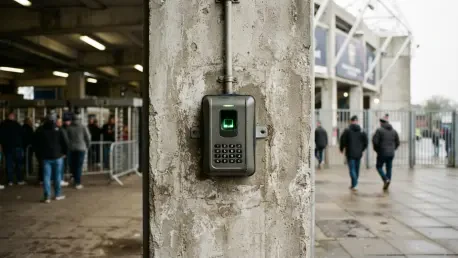
The aggregation of this massive database was achieved through a calculated strategy of coerced consent, where biometric scanning became a mandatory gateway to daily life and social participation for the average citizen. People were effectively forced to submit to facial recognition and digital fingerprinting to attend soccer matches and visit major agricultural expos like the 2025 Expo Paraguay. By integrating these invasive systems into public events and state-mandated services through agreements with the National Sports Secretariat, the bank and its tech partners successfully removed the element of meaningful choice. For many individuals, providing a biometric scan was not a voluntary preference but a prerequisite for participating in cultural activities or entering public venues. This created a comprehensive map of the population’s movements and social habits, all stored within a private corporate infrastructure that lacked sufficient public oversight, transparency, or the ability for users to opt out.
Furthermore, the reach of the biometric collection system extended into the lives of the most vulnerable citizens through the Social Security Institute. Retirees were required to submit to biometric verification as part of a proof-of-life protocol to receive their monthly pension payments, effectively mandating the surrender of biological data for economic survival. This systemic integration meant that even those who never intended to use Ueno Bank’s financial products were brought into its data ecosystem through secondary agreements with public institutions. The mandatory nature of these scans across different sectors of society meant that a significant portion of the Paraguayan population had no realistic way to avoid these systems without facing significant social or economic exclusion. This widespread harvesting of facial maps and fingerprints has created a centralized point of failure that now poses a long-term risk to the privacy of millions who had no choice but to comply with the digital demands of the institution.
The Permanent Risk: Why Biometrics Differ from Passwords
Biometric data, which includes iris scans, facial maps, and fingerprints, presents a unique and irreversible risk profile because these markers cannot be changed if they are stolen or leaked. Unlike a password that can be reset or a credit card that can be canceled, a person’s biological identifiers are permanent and immutable throughout their lifetime. Experts in digital rights warn that deploying such high-stakes technology for mundane verification tasks is akin to using an atomic bomb to kill a mosquito, creating a disproportionate risk for the user. If this information is compromised, individuals face a lifetime of vulnerability to identity theft, unauthorized surveillance, and predatory marketing. Once a facial template is leaked into the digital underground, it can be used to bypass security systems for years to come. This permanence makes the security of the Ueno Bank database a matter of national security rather than just a corporate concern, as biological privacy is now at risk.
The resolution of the Ueno Bank crisis ultimately determined whether the nation would move toward a society built on trust or one defined by authoritarian oversight and constant surveillance. By elevating the legal battle to the Inter-American Commission on Human Rights, advocates established a landmark case with profound implications for the digital landscape across Latin America. The primary challenge for the Central Bank remained the protection of digital identities, ensuring they were not treated as financial assets to be liquidated during the bank’s closure. Moving forward, the government had to prioritize the creation of decentralized data management systems that reduce the incentive for mass collection. Investing in privacy-enhancing technologies and ensuring the total independence of the data protection authority became the only viable path to restoring public confidence. This crisis served as a stark reminder that the digital rights of citizens must be anchored in law before technology is deployed.