
Criminal syndicates are increasingly layering drug proceeds through legitimate businesses such as luxury real estate and currency exchange houses in major global cities, highlighting a transition from primitive cash smuggling to a sophisticated financial infrastructure that operates with corporate-level efficiency. At the core of this transformation is the “narco broker,” a specialized intermediary who bridges the gap between illicit production and formal banking. The recent arrest of Bojun He, known as “El Chino,” in Mexico City underscores this trend. Law enforcement recovered $2 million and 43 million pesos, marking a significant blow to the Unión Tepito cartel’s financial wing. This operative did not merely manage cash but facilitated a complex network of arms and human trafficking spanning from Tijuana to Cancún. Such cases reveal how modern crime syndicates exploit the speed of international trade and the inherent weaknesses of the banking system to sanitize wealth.
The Strategic Shift Toward Narco Brokers
Dominance of Chinese Financial Networks
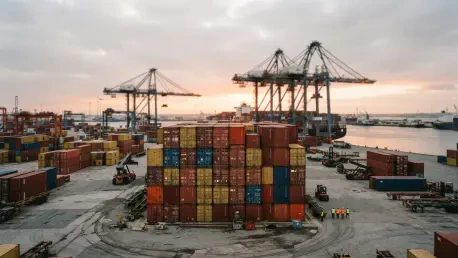
Chinese financial networks have risen to become the second-largest source of money laundering services for Mexican cartels, trailing only the United States in the total volume of funds moved. These syndicates, which include both traditional triad-affiliated groups and independent entrepreneurs, provide a unique strategic advantage by embedding their activities within the massive flow of legitimate maritime trade. On any given day, thousands of shipping containers arrive at Mexican ports from Asian manufacturing hubs, creating a logistical “haystack” that makes it nearly impossible for customs officials to perform comprehensive inspections. By manipulating the declared value of consumer electronics, textiles, and telecommunications equipment, these brokers can disguise capital flight as routine commercial transactions. This method allows billions of dollars to circulate without triggering the red flags associated with traditional wire transfers or bulk cash movements.
The operational success of these networks is built upon decades of refinement and the lessons learned from high-profile enforcement actions of the past. Historical figures such as Zhenli Ye Gon, who was famously linked to the precursor chemical trade, set the stage for the current generation of operatives. Today’s brokers have professionalized the industry even further, integrating themselves into the very fabric of the legal economy to ensure their services remain indispensable to major criminal organizations. By maintaining a footprint in both the Mexican marketplace and Asian industrial centers, these intermediaries create a closed loop that is extremely difficult for international law enforcement to dismantle. The integration of advanced logistics and deep-seated business relationships ensures that the flow of illicit capital remains constant, even when individual leaders are removed by targeted police operations.
Competitive Advantages in Commission Rates
One of the primary reasons for the rapid expansion of Chinese laundering syndicates is their ability to disrupt the illicit financial market through aggressive pricing strategies. Traditionally, professional money launderers charged exorbitant fees, often ranging between 10% and 15% of the total amount cleaned, to compensate for the high risks involved in moving bulk currency across borders. However, these new international brokers have significantly lowered the barrier to entry by offering commission rates as low as 3% to 5%. This price reduction is not merely a competitive tactic but a reflection of the increased efficiency brought about by trade-based laundering and informal banking systems. For cartels, these lower overhead costs translate directly into higher net profits, making Chinese brokers the preferred partners for large-scale operations. This shift has forced traditional laundering entities to either lower their own rates or lose market share.
The economic incentives created by these low commission rates have fundamentally changed how cartels approach their financial management. Rather than viewing money laundering as a necessary but expensive burden, criminal leaders now treat it as a manageable cost of doing business that can be optimized through strategic partnerships. This professionalization has led to a more stable and predictable environment for criminal enterprises, allowing them to reinvest their savings into expanding their territorial control or purchasing more sophisticated weaponry. The result is a self-reinforcing cycle where the availability of cheap, reliable laundering services fuels the growth of the very organizations they serve. Furthermore, the competitive nature of this illicit market encourages continuous innovation among brokers, who must constantly find new ways to minimize risk and maintain their low price points while keeping their operations hidden.
The Technical Architecture of Modern Laundering
The Mechanics of Informal Banking
The technical foundation of these global laundering operations is an informal banking system known as Fei Qian, or “Flying Money,” which operates similarly to the historical Hawala networks of the Middle East. This system is designed to bypass formal financial institutions entirely, relying instead on a decentralized network of brokers who balance accounts through a series of internal ledgers. In a typical transaction, a Chinese investor seeking to move capital out of China—perhaps to circumvent strict government limits on foreign currency withdrawals—will provide renminbi to a local agent. Simultaneously, a Mexican cartel that has accumulated vast amounts of U.S. dollars from drug sales in America will provide the equivalent value to the investor’s associates located in the United States. This “mirroring” of funds allows wealth to be effectively transferred across international borders without a single dollar ever physically crossing a line.
At the heart of the Fei Qian system is a deep-seated culture of trust and personal accountability among the brokers involved. Unlike the formal banking sector, which relies on legal contracts and government oversight, these informal networks operate on reputation and the threat of severe consequences for those who violate the unspoken rules of the trade. Transactions are often tracked using simple ledgers or encrypted messaging apps, making them nearly invisible to traditional surveillance methods. Because the money never moves through conventional channels, it does not trigger the automated anti-money laundering alerts that modern banks use to identify suspicious activity. This lack of a physical or digital trail makes it exceptionally difficult for investigators to reconstruct the movement of funds or identify the ultimate beneficiaries. The success of this system highlights the limitations of current financial regulations in detecting these sophisticated, trust-based exchanges.
Institutional Failures and Global Oversight
The immense scale of these illicit operations is frequently made possible by significant failures in the internal controls of major financial institutions. A notable example of this occurred when the Financial Crimes Enforcement Network imposed a substantial fine on Bank of America after discovering that billions of dollars in suspicious transactions had passed through its systems without adequate scrutiny. These transactions were linked to the very Chinese laundering networks that service Mexican cartels, highlighting a systemic vulnerability within the global banking infrastructure. Despite the existence of rigorous compliance protocols, the sheer volume of daily transactions often overwhelms the automated monitoring systems designed to catch illicit activity. In many cases, these institutions prioritize transaction speed and client convenience over thorough due diligence, creating openings that narco brokers are quick to exploit.
To combat the expansion of these networks, international authorities recognized that traditional law enforcement methods were no longer sufficient on their own. Regulators moved toward a more integrated model that combined financial intelligence with ground-level investigations to disrupt the brokers’ operations. They focused on enhancing transparency in maritime trade and strengthening the reporting requirements for high-value real estate transactions to close the most common loopholes used by syndicates. By fostering greater cooperation between the banking sector and government agencies, they aimed to create a more hostile environment for illicit capital. These proactive measures were intended to shift the risk-reward balance back in favor of the rule of law, ensuring that the legal economy remained protected from organized crime. Moving forward, the emphasis stayed on technological innovation and cross-border partnerships to match the agility of modern narco brokers.