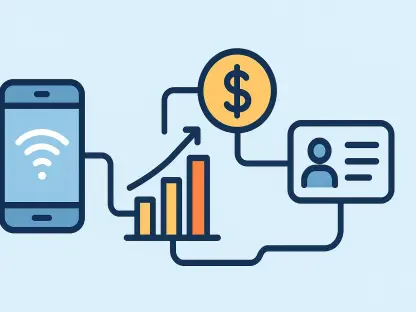

In the vibrant markets of Port-au-Prince, the rhythmic chime of an incoming text message frequently signals a completed transaction rather than a simple social greeting between friends or neighbors. While traditional banks often require brick-and-mortar buildings and mountain-high paperwork, millions of Haitians are bypassing the queue entirely using nothing more than a basic mobile phone. In a nation where 89% of the population lacks a formal bank account, the familiar ring of a MonCash notification has become the heartbeat of local commerce. This is not just an app; it is a vital lifeline that has turned a simple Digicel device into a personal vault, a storefront, and a bridge to the global economy.
The Digital Wallet Redefining Economic Survival
The widespread adoption of digital wallets has fundamentally altered how the average citizen interacts with the national economy. In areas where the nearest bank branch might be a day-long journey away, the ability to store value on a SIM card provides a level of security that physical cash simply cannot match. For the small-scale merchant or the rural farmer, this technology eliminates the constant threat of theft and the logistical nightmare of transporting large sums of money across difficult terrain.
Mobile finance has essentially democratized the concept of the “safe-deposit box” for those previously ignored by the formal sector. By removing the barriers of high minimum balances and complex documentation, the platform allows even the most marginalized individuals to participate in a structured economic system. This transition from a purely cash-based existence to a digital one has created a sense of financial autonomy that was previously reserved for the urban elite.
Beyond the Vault: Why Mobile Finance is Haiti’s New Foundation
The traditional financial system in Haiti faces an uphill battle against geography, recurring natural disasters, and a lack of physical infrastructure. When the 2010 earthquake decimated physical bank branches, the need for a decentralized, digital solution became a matter of national resilience. MonCash emerged not as a luxury, but as an essential response to these systemic hurdles, filling the void where formal institutions could not reach. By understanding the unique intersection of high mobile phone penetration and low banking access, the platform has positioned itself as the primary engine for financial inclusion.
Rather than waiting for the construction of expensive physical branches, the digital model leverages existing cellular networks to deliver services instantly. This infrastructure is inherently more resilient to the environmental shocks that frequently plague the region. When roads are blocked or buildings are compromised, the digital flow of capital remains uninterrupted, ensuring that the economy can continue to breathe even during periods of intense crisis.
A Comprehensive Ecosystem for the Unbanked Population
The evolution from an emergency aid distribution tool known as TchoTcho to the sophisticated MonCash ecosystem represents a massive leap in functional utility. What began as a method for NGOs to distribute relief funds has matured into a complex network supporting peer-to-peer connectivity. Instant transfers between individuals are rapidly replacing the high-risk, slow-moving cash economy, allowing families to share resources across the country in seconds. This speed is particularly critical for households that rely on immediate access to funds for healthcare or emergency repairs.
Strategic partnerships with international entities like MoneyGram have further expanded this ecosystem by integrating the Haitian diaspora. Families can now receive international remittances directly to their phones, bypassing dangerous physical pickup points and reducing the fees associated with traditional couriers. Furthermore, the hybrid model of over 6,000 physical agents provides the necessary “last mile” service, allowing users to convert digital credit into physical cash whenever necessary. This network ensures that the digital software remains grounded in the physical reality of local communities.
Expert Perspectives on the “Fintech for Good” Movement
Industry leaders and economic analysts point to this platform as a premier case study in how telecommunications can drive social equity. Under the leadership of CEO Nathaelle Chavenet, the focus has shifted from a transaction-heavy tool to a customer-centric mission aimed at long-term economic empowerment. Financial experts highlight that by partnering with traditional institutions like Sogebank and Unibank, the service is not competing with banks but rather acting as the gateway that introduces the marginalized population to formal credit and savings structures for the first time.
This collaborative approach allows the fintech sector to provide the front-end accessibility while traditional banks provide the back-end stability. Analysts argue that this synergy is the most effective way to build a verifiable financial history for individuals who have never appeared in a credit bureau. By documenting transaction history through mobile use, the platform creates a digital footprint that can eventually be used to secure small business loans or insurance products, effectively pulling people out of the informal shadow economy.
Strategies for Navigating and Utilizing Digital Money Systems
Transitioning from cash to digital requires a shift in daily business operations, especially for small vendors who must learn to trust a screen over a banknote. Practical steps for integration include utilizing merchant codes to accept payments without the need for expensive card readers. Additionally, maximizing security in mobile banking involves educating users on the importance of PIN protection and navigating the platform safely to avoid phishing attempts. These skills are becoming as fundamental to modern Haitian life as traditional literacy.
The future of these systems lies in leveraging interoperability to build a comprehensive financial profile. Utilizing the connections between mobile wallets and traditional bank accounts allows users to move beyond simple transactions toward active wealth building. As new credit and savings features are introduced, the population will have the tools to plan for the future rather than just surviving the present. The focus was shifted toward a more resilient and integrated financial future where every citizen, regardless of their location, gained the ability to participate fully in the global marketplace. This progress ensured that the digital divide was bridged by innovative solutions tailored to local needs.