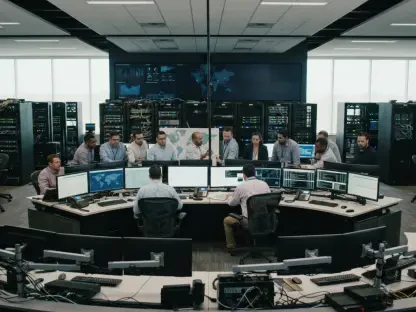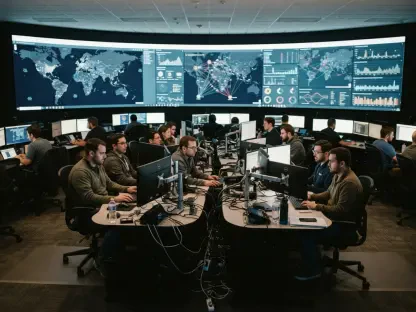

Financial Services Commission Chairman Kim Joo-hyun and other high-ranking officials are finalizing the administrative framework for a massive injection of capital into index-linked products. This decisive action comes as the nation grapples with an aggressive contraction in equity markets, where the benchmark Kospi and the technology-centric Kosdaq recently plummeted by more than 5 percent in a single session. This volatility is not merely a local phenomenon but a reflection of broader global anxieties, specifically a sharp retreat in U.S. technology sectors that traditionally lead global growth. As semiconductor giants like Nvidia and AMD witnessed double-digit percentage drops, the ripple effects were felt immediately across the Pacific, prompting a flight to safety among both institutional and retail investors. South Korean financial authorities are now working around the clock to prevent this localized correction from spiraling into a systemic crisis that could undermine economic stability.
Strategic Leadership and Market Stabilization
Crisis Management Framework: Evaluating Sentiment and Fundamentals
In response to the rapid erosion of market value, the Deputy Prime Minister and Finance Minister convened an urgent meeting with the primary architects of the country’s financial policy. This high-level assembly included the Governor of the Bank of Korea and the Financial Supervisory Service Governor, focusing on a unified front to calm the turbulent exchange. The leadership consensus emerged that the current instability is fundamentally driven by short-term sentiment rather than a collapse of industrial productivity or corporate health.
The task force identified three primary headwinds: growing skepticism regarding artificial intelligence profitability, potential shifts in U.S. data center regulations, and tightening semiconductor export controls. Despite these challenges, the ministry maintains that the long-term growth trajectory of the tech sector is resilient. Officials are urging market participants to look beyond the immediate noise of the trading floor. This perspective is vital for preventing a “panic-selling” loop, where emotional responses override rational analysis of future corporate earnings potential.
The Market Stabilization Fund: A Buyer of Last Resort
The centerpiece of the government’s defense strategy is the rapid preparation of a market stabilization fund, designed to function as a buyer of last resort during extreme downward pressure. This fund is a collaborative pool financed by major financial institutions and market participants who have a vested interest in maintaining a functional exchange. By purchasing index-linked products, the fund provides a necessary floor that prevents indices from falling below psychological thresholds. The administrative framework has been streamlined for immediate activation.
Historical precedent plays a significant role here, as the government previously established a similar fund during the initial shocks of the 2020 pandemic. In that instance, the mere signal of the fund’s existence was enough to restore confidence and trigger a market rebound before capital was even fully deployed. The current administration is leveraging this past success to achieve a similar stabilizing effect today, hoping that the credible threat of intervention will discourage predatory trading practices and encourage long-term holders to maintain their positions.
Regulatory Adjustments and Corporate Support
Easing Share Buyback Restrictions: Empowering Corporate Valuations
To empower domestic corporations to defend their own market valuations, the government has announced a temporary easing of daily limits on share buyback orders for the next three months. Under standard regulatory conditions, South Korean firms face strict limitations on the number of shares they can repurchase in a single day to prevent manipulation. However, in the face of current volatility, these restrictions are being viewed as barriers to self-preservation. By allowing companies to aggressively repurchase their own stock, the government is facilitating a direct increase in demand.
This temporary lifting of buyback caps represents a significant shift in regulatory philosophy, moving from strict oversight to active support for corporate stability. Specifically, the government is relaxing the standard cap that typically limits daily repurchases to 10 percent of the total declared amount or 25 percent of the average daily volume. During this emergency window, firms can deploy capital more strategically to absorb excess supply and stabilize prices. This intervention is expected to be particularly effective for mid-cap technology stocks that often lack massive liquidity.
Surveillance and Short Selling Controls: Enhancing Market Oversight
Financial authorities have simultaneously moved to intensify oversight, with an aggressive focus on identifying and penalizing illegal short selling. This practice has been identified as a primary factor in accelerating the recent market crash, particularly within the high-volume semiconductor sector. Recent data indicated that short-selling transactions reached staggering levels, concentrating on national champions such as Samsung Electronics and SK Hynix. In response, regulators have launched a surveillance initiative to ensure that all trading activity adheres to strict legal standards.
Beyond the crackdown on short selling, the government is also closely monitoring the levels of margin lending and the potential for forced liquidations that could trigger a “margin call” cascade. When asset prices drop rapidly, investors who borrowed funds are often forced to sell their holdings, which drives prices even lower. To prevent this, the Financial Supervisory Service is working with brokerage houses to manage these risks and provide a buffer for retail investors. This holistic approach ensures that the technical mechanics of the trading floor do not contribute to a system failure.
Regional Comparisons and Economic Outlook
Regional Responses to Market Stress: Contrasting Seoul and Taipei
South Korea’s approach to market stabilization offers a compelling contrast to strategies deployed by other Asian economies, most notably Taiwan. While Seoul has focused on providing liquidity, easing buyback rules, and enhancing surveillance, Taiwan’s regulators have opted for more direct and restrictive prohibitions. For instance, Taiwan recently banned short-selling listed shares at prices below the previous day’s closing level and raised collateral requirements. These measures are designed to halt downward momentum through direct intervention in market mechanics.
Korea’s preference for a multi-pronged, fiscal-heavy approach is aimed at maintaining its status as a sophisticated, open market while still protecting national interests during global volatility. By keeping the door open for more stringent measures if conditions deteriorate, the government maintains tactical flexibility. This allows the administration to scale its intervention based on the severity of the market’s reaction to global developments, such as U.S. monetary policy. Officials remain in constant communication with regional counterparts to coordinate actions and share critical market data.
Future Economic Trajectory: Navigating Global Technology Cycles
Looking toward the horizon, the administration views the current turmoil as a temporary volatility spike caused by external factors rather than a structural failure. The ultimate success of these measures will depend on a stabilization of global tech sentiment and clarity regarding U.S. regulatory policies. As long as the demand for advanced semiconductors remains robust and South Korean firms maintain their competitive edge, the fundamental case for the market remains strong. The government’s efforts are essentially a bridge to carry the system through irrational fear.
The South Korean government successfully implemented a series of rapid-response protocols that addressed both the technical and psychological drivers of the downturn. By finalizing the stabilization fund and easing buyback restrictions, the administration created a significant buffer against the headwinds of global tech volatility. These actions demonstrated a clear commitment to protecting the national financial system from speculative pressures. Moving forward, the authorities maintained a state of surveillance to prevent illegal trading activities from undermining recovery, ensuring that core economic pillars remained resilient.