
PSBank provides a transparent 9.25% rate for ten-year fixed home acquisition loans, contrasting with other major players that do not publish official long-term rates. This level of clarity is increasingly vital in a market where Overseas Filipino Workers (OFWs) frequently encounter opaque pricing structures and aggressive marketing campaigns for introductory “honeymoon” periods. As of late 2026, the Philippine residential sector is undergoing a significant transition, characterized by high property valuations and a notable surplus of condominium inventory in Metro Manila. For modern investors, the primary challenge involves distinguishing between superficial sales pitches and the underlying economic realities of a high-interest environment. Successfully navigating this landscape requires a meticulous approach to long-term financial modeling, as the initial affordability of a mortgage can quickly vanish once promotional rates expire. Prospective buyers are now finding that the most successful investments are those grounded in conservative projections rather than the optimistic yield promises often seen in previous years. Developing a deep understanding of these trends is the first step toward securing a stable asset in the homeland while managing the risks of a shifting financial market that demands greater transparency and fiscal discipline from all participants.
Macroeconomic Shifts: The Impact of Rising Interest Rates
The broader economic environment in 2026 is heavily influenced by the Bangko Sentral ng Pilipinas (BSP) and its persistent efforts to maintain price stability through aggressive monetary policy. By the latter half of the year, the target reverse repurchase rate reached a baseline of 5.00%, a move that has sent ripple effects across the entire commercial banking sector. This shift marks the definitive end of the era of ultra-cheap credit, forcing OFWs to rethink their strategies regarding loan duration and rate locking. When the benchmark rate rises, banks are compelled to increase their mortgage pricing to maintain margins, which directly translates to higher monthly amortizations for the average borrower. Consequently, the selection of a “fixing period”—the duration for which an interest rate remains locked—has emerged as the single most important decision in the home financing process. Choosing a shorter one-year lock may offer some immediate relief, but it exposes the buyer to the volatility of annual repricing, which can be devastating if inflation remains stubborn or climbs unexpectedly during the 2026 to 2028 period. A long-term perspective is now required to survive these cycles.
While some market participants remain hopeful for a significant decline in interest rates in the near term, the current atmosphere of market uncertainty suggests a more cautious approach for the average family. Financial advisors are increasingly recommending a three- to five-year fixed period as a balanced strategy, providing a buffer against immediate rate hikes while allowing for potential refinancing if the economy stabilizes later in the decade. Simultaneously, the Metro Manila condominium sector is grappling with a severe oversupply, with reports suggesting that price corrections of up to 40% could occur in specific high-density segments. This potential for volatility indicates that the 2026 market favors value-driven buyers who prioritize properties with unique selling points or those located in emerging hubs rather than saturated urban centers. Investors who ignore these macroeconomic indicators risk purchasing at a cyclical peak, only to find themselves underwater on a mortgage when the actual market value of the property adjusts to more realistic demand levels. Success in this environment requires a departure from the “buy and hold” mentality toward a more active assessment of local supply and demand dynamics.
Property Type Comparison: Condominiums Versus Landed Estates
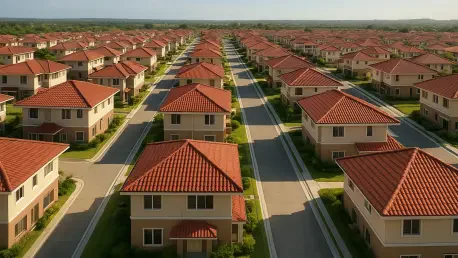
When deciding between a high-rise condominium and a traditional house-and-lot, OFWs must carefully weigh the long-term benefits of land ownership against the lifestyle convenience of urban residential towers. In the current climate, a house-and-lot remains the gold standard for capital appreciation, particularly in “growth corridors” like Cavite, Laguna, and Bulacan, which are now benefiting from completed infrastructure projects. These landed estates offer a degree of permanence and control that is often missing in high-density developments, as the underlying land value tends to appreciate even when the structure itself ages. However, these properties demand a more intensive management style, requiring regular physical inspections and maintenance that can be challenging for those stationed overseas for years at a time. Without a trusted local representative or a professional property management service, an unattended house can quickly become a liability rather than an asset, highlighting the importance of logistical planning alongside financial investment. The physical security of the asset is just as critical as the financial security of the mortgage, especially when the owner is thousands of miles away.
Condominiums are frequently marketed to the diaspora as “turnkey” passive income vehicles, yet the reality in 2026 is increasingly complex due to high vacancy risks and the steady climb of association dues. Many OFWs have been lured by optimistic rental yield projections that fail to account for the competitive nature of a saturated rental market where tenants have significant leverage. Potential investors are now being cautioned to ignore these generic marketing brochures and instead perform rigorous due diligence by investigating actual comparable rents and the total cost of high-quality furnishing. In a market where new towers are completed every quarter, the risk of a unit remaining empty for extended periods is a very real threat to the expected return on investment. Furthermore, the rising costs of utilities and security are driving up monthly dues, which can consume a substantial portion of any rental income generated, turning what was supposed to be an income-producing asset into a monthly drain on foreign-earned savings. For a condominium to be viable in 2026, it must possess a prime location near established business districts or major transit hubs that guarantee a steady stream of high-quality tenants.
Financial Structures: Comparing Public and Private Lending
The current lending landscape is sharply divided between the stability of state-backed programs and the dynamic but often more expensive offerings of private commercial banks. The Pag-IBIG Fund continues to serve as a cornerstone for many Filipino families, offering socialized housing rates as low as 3% for qualified low-income earners and a standard 10-year repricing rate hovering around 7.125%. These government-mandated programs provide a level of predictability that is rarely found in the private sector, making them an attractive primary option for OFWs who meet the membership requirements. The ability to lock in a rate for a decade through a public institution offers a significant hedge against the inflationary pressures currently facing the private banking industry. For many, the security of knowing exactly what their payments will be for the next ten years outweighs the potentially higher loan limits or faster processing times offered by commercial entities, especially when budgeting from a foreign currency perspective. This stability allows for better long-term planning, as families can project their expenses with a high degree of accuracy without fearing the sudden “payment shock” of market-driven interest rate resets.
In contrast to public options, private commercial institutions like BDO and BPI provide greater flexibility in loan structures but typically include a higher risk premium to account for long-term economic uncertainty. For a ten-year fixed rate, these banks may quote interest anywhere from 8.50% to over 10.00%, reflecting a cautious outlook on future inflation and market liquidity. A notable trend in late 2026 is the movement of several major lenders away from publishing long-term fixed rates entirely, preferring instead to push borrowers toward shorter terms that transition to annual repricing after the first five years. This shift places more risk on the shoulders of the borrower, as it leaves the mortgage vulnerable to the prevailing market rates in the late 2020s. Consequently, OFWs must be extremely diligent when comparing bank offers, ensuring they understand not just the initial monthly payment, but the specific terms and conditions that will govern their loan once the initial fixed period has concluded. The flexibility of private banks, such as faster approval times and higher loan-to-value ratios, must be balanced against the potential for significantly higher costs over the twenty-year life of a typical home loan.
Strategic Financial Planning: Managing Long-Term Costs and Risks
Calculating the total cost of credit is essential, as even a seemingly minor variance in interest rates can lead to a staggering difference in the total amount paid over the life of a multi-million peso loan. For instance, a ₱5 million loan amortized over a 20-year period sees its monthly payment increase by more than ₱5,000 when the interest rate moves from a promotional 6.25% to a standard 8.00%. Over the full term of the mortgage, this adjustment results in over ₱1.2 million in additional interest payments, a sum that could have otherwise been used for retirement savings or other investment opportunities. This stark mathematical reality underscores why OFWs must prioritize the total cost of credit and the duration of the fixed-rate period over the attractive headline rates displayed in advertisements. Understanding the amortization schedule is vital, as it reveals how much of each payment goes toward the principal versus the interest, particularly in the early years of the loan when interest costs are at their peak. Being aware of these numbers prevents the common pitfall of overextending one’s budget based on a temporary rate that is guaranteed to increase.
Success in the property market required a shift from emotional purchasing to a rigorous, data-driven methodology that accounted for every possible hidden expense. Those who achieved the best results insisted on receiving comprehensive written disclosure statements and projected amortization schedules long before any reservation fees were paid. Beyond the interest rates, seasoned investors accounted for ancillary costs such as Mortgage Redemption Insurance, documentary stamp taxes, and potential prepayment penalties that could have hindered the goal of early loan retirement. It was found that mitigating currency risks involved setting aside a “mortgage buffer” in Philippine pesos to guard against fluctuations that could have made a mortgage funded by foreign earnings more expensive overnight. Future participants were advised to prioritize liquidity and diversification, ensuring that no more than 30% of their gross foreign income was committed to debt service. By adopting these stringent financial controls and conducting on-the-ground inspections during visits home, OFWs transformed their real estate aspirations into stable, long-term wealth generators that withstood the economic shifts of the decade. Moving forward, the focus remained on identifying sustainable value and maintaining a high credit rating to leverage better terms in a competitive market.