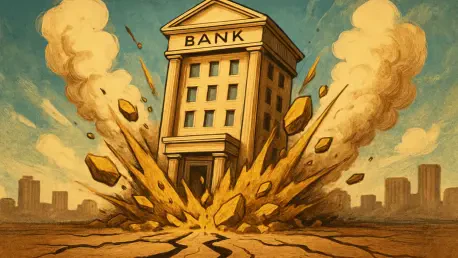

In Malawi, an extraordinary financial paradox is unfolding where the nation’s largest commercial banks are reporting record-breaking profits, creating a stark and unsettling contrast with the severe economic hardship faced by the general populace and the private sector. Four major publicly listed banks are on track to amass an astounding K630 billion in collective profits in 2025, a figure that represents an 88% leap from the K335 billion earned just the year before. This surge in profitability, however, is not rooted in a thriving, productive economy but is instead fueled by a cycle of high-interest lending to a government struggling with its own fiscal challenges. While this scenario paints a picture of a robust and stable financial sector, a closer examination reveals a precarious economic structure that benefits a select few while potentially jeopardizing the nation’s long-term prosperity and industrial growth. The implications of this dynamic raise critical questions about the sustainability of an economy where the financial industry thrives at the expense of its other vital components.
The Anatomy of a Profit Surge
A Government-Fueled Financial Engine
The unprecedented profitability currently enjoyed by Malawi’s leading commercial banks, including National Bank of Malawi (NBM) plc, FDH Bank plc, NBS Bank plc, and Standard Bank plc, stems predominantly from one highly lucrative source: the government. These institutions have strategically pivoted toward extensive lending to the cash-strapped Malawian government, securing high-interest returns with minimal associated risk. This approach has proven to be a reliable formula for generating substantial profits, as government debt is often considered among the safest assets a bank can hold. While the Reserve Bank of Malawi (RBM) has reported that the banking sector remains financially stable, boasting strong assets and a low ratio of non-performing loans, this surface-level health masks a deeper, more systemic issue. The dependency on government lending creates a closed loop where public funds are essentially recycled back to the financial sector at a premium, a practice that, while profitable for shareholders, does little to stimulate the broader productive economy and foster genuine, widespread economic development.
The Crowding-Out Effect on Private Enterprise
The banking sector’s intense focus on government lending has created a significant and detrimental “crowding-out” effect, effectively sidelining the private sector, which is the traditional engine of job creation and innovation. With banks able to secure guaranteed, high-yield returns from government securities, there is little incentive to engage in the riskier, more complex process of lending to small and medium-sized enterprises or large industrial ventures. Consequently, private businesses find themselves starved of the affordable credit necessary to expand operations, invest in new technology, and create employment opportunities. This credit scarcity stifles competition and industrial growth, leaving the real economy to stagnate. Financial experts have voiced strong concerns about this trend, highlighting that while the banking sector’s balance sheets look impressive, the foundation of the national economy is being progressively weakened. The result is a dangerous cycle where the financial industry prospers in isolation while the sectors capable of generating sustainable, long-term growth are deprived of essential capital.
The Broader Economic Consequences
A Tale of Two Economies
The current economic landscape in Malawi can be described as a bifurcated system, characterized by a stark division between a flourishing financial sector and a struggling real economy. On one side, banks and their shareholders are reaping the rewards of a low-risk, high-return lending strategy centered on government debt. On the other side, ordinary Malawians, entrepreneurs, and established businesses are grappling with the harsh realities of shrinking disposable incomes, limited job prospects, and prohibitively high borrowing costs. This widening gap fosters an environment of economic disparity where wealth becomes concentrated within the financial industry rather than being distributed through productive investment and wage growth across various sectors. This schism is not sustainable, as a healthy economy requires a symbiotic relationship between its financial system and its productive base. When one thrives at the direct expense of the other, it points to a fundamental imbalance that could lead to greater economic instability and social strain in the future.
The Long-Term Burden on Taxpayers
The cycle of government borrowing at punishingly high interest rates to fund its operations ultimately places a heavy and enduring burden on the nation’s taxpayers. While this arrangement is immediately profitable for the lending banks, the cost of servicing this ever-growing public debt falls squarely on the shoulders of the citizenry. The funds used to pay the high interest on these loans are diverted from essential public services such as healthcare, education, and infrastructure development, further impeding the country’s overall progress. Consumer advocates, including John Kapito of the Consumers Association of Malawi (Cama), have been vocal in their criticism of this dynamic, pointing out that it represents a transfer of wealth from the general public to the financial elite. This model essentially mortgages the country’s future, creating a scenario where today’s banking profits are paid for by tomorrow’s austerity and diminished public services, trapping the nation in a cycle of debt and economic stagnation.
A Path Toward a More Balanced Economy
The situation in Malawi calls for a strategic reevaluation of its economic priorities. The reliance on high-interest government debt as the primary driver of banking profitability has created a distorted and fragile economic structure. To foster a more sustainable and inclusive model, policymakers and financial leaders should consider a decisive shift toward policies that incentivize lending to the private sector. This involves creating a more favorable environment for businesses through regulatory reforms, offering targeted support for key industries, and ensuring that access to affordable credit becomes a reality for entrepreneurs and innovators. The challenge is to recalibrate the risk-reward equation for banks, making private-sector lending a more attractive proposition. By redirecting capital toward productive enterprises, the nation could unlock its potential for job creation, industrial growth, and genuine, broad-based prosperity, moving away from a system that benefits a few toward one that uplifts all.