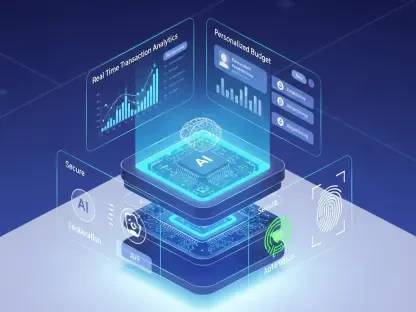

The rapid convergence of institutional banking and decentralized architecture has shifted from speculative experimentation to a functional necessity for global economic stability. Traditional financial systems, long burdened by antiquated settlement cycles and fragmented data silos, are undergoing a radical metamorphosis. This shift is not merely about digitizing existing paper trails but rather about rethinking the fundamental nature of value exchange. By merging the regulatory oversight of legacy institutions with the hyper-efficiency of cloud-native and ledger-based systems, a new paradigm of financial interoperability is being established.
Introduction to Contemporary FinTech Collaborations
Financial technology partnerships have emerged as the primary vehicle for modernizing legacy banking systems and introducing digital-native solutions to the mass market. Driven by the need for interoperability, these collaborations combine the regulatory stability of traditional institutions with the agility of tech-focused entities. This review examines the core principles of these partnerships, focusing on how they integrate distributed ledgers, artificial intelligence, and cloud infrastructure to redefine the global technological landscape.
Unlike previous waves of digital banking that focused primarily on the user interface, current collaborations prioritize the deep-layer integration of logic and value. This involves a fundamental restructuring of how banks communicate with one another and with their clients. By utilizing shared protocols, these entities are moving toward a frictionless environment where geographic and technical barriers are increasingly irrelevant, allowing for a more democratized access to sophisticated financial instruments.
Core Pillars of Financial Technology Modernization
Tokenization and Distributed Ledger Technology: The Efficiency Engine
The shift toward tokenized assets represents a fundamental change in how value is recorded and moved. By utilizing distributed ledger technology (DLT), financial institutions can convert traditional securities, such as bonds, into digital tokens. This component ensures a “single source of truth,” significantly improving data integrity and drastically reducing the time required for settlement in capital markets. The beauty of this system lies in its ability to automate compliance and ownership transfers through smart contracts, eliminating the need for expensive third-party intermediaries.
Furthermore, tokenization allows for fractional ownership, which opens up high-value asset classes to a broader range of investors. This democratization of capital markets is a direct result of the operational efficiencies gained through DLT. While traditional systems might take days to settle a complex bond trade, a tokenized environment operates in real-time, providing immediate liquidity and reducing the counterparty risk that often plagues high-volume institutional finance.
Artificial Intelligence and Semantic Modeling: Building Agentic Frameworks
Modern FinTech is increasingly reliant on agentic AI frameworks that go beyond simple chatbots to handle complex decision-making processes. By employing semantic modeling, such as Palantir’s Ontology, these systems can unify disparate data points across complex lifecycles like mortgage processing. This technology functions by automating governed workflows, allowing for higher precision and faster decision-making than traditional manual oversight. It allows the system to “understand” the relationship between data points rather than just processing them as isolated figures.
The implementation of these models ensures that every step of a financial transaction is transparent and auditable. When an AI agent manages a mortgage application, it can cross-reference property values, credit history, and regulatory requirements simultaneously. This level of synchronization reduces the likelihood of human error and significantly accelerates the approval process, transforming a weeks-long ordeal into a matter of hours while maintaining a rigorous audit trail for compliance officers.
Cloud-Based Payment Infrastructure: Beyond Physical Hardware
The transition from physical hardware to cloud-native processing allows for the rapid deployment of contactless payment solutions on a global scale. Using tokenized credentials stored in the cloud, mobile applications can now emulate physical cards, facilitating seamless transactions at point-of-sale terminals without the need for traditional plastic infrastructure. This shift is particularly vital in regions where physical card distribution is logistically challenging, allowing for instant financial inclusion through mobile devices.
Moreover, cloud-native systems offer a level of scalability that legacy on-premise servers simply cannot match. Financial service providers can now handle massive surges in transaction volume without performance degradation. This infrastructure also facilitates the integration of diverse payment methods into a single platform, allowing merchants to accept everything from traditional fiat to digital assets through the same cloud-integrated interface, thereby simplifying the retail experience for both sides of the transaction.
Recent Innovations and Emerging Industry Shifts
Current trends indicate a move away from experimental pilots toward full-scale integration of digital assets. A notable shift is the rise of bank-issued stablecoins for global settlement, moving digital currency out of the niche crypto space and into mainstream B2B remittances. These assets provide the stability of fiat currency with the programmable speed of blockchain technology, allowing corporations to move capital across borders without the delays and fees associated with the traditional SWIFT network.
Furthermore, the industry is witnessing a consolidation of regional peer-to-peer (P2P) services into unified platforms. Traditional banks are increasingly collaborating to launch API-integrated systems that compete directly with third-party apps. This strategy allows banks to retain customer loyalty by offering the convenience of modern fintech within the secure environment of a regulated institution. This move marks a defensive yet innovative response to the growing dominance of non-bank financial service providers.
Real-World Applications and Sector Impact
Modernizing Capital Markets and Mortgage Operations
In Canada, the successful trial of tokenized bonds via “Project Samara” has demonstrated the viability of DLT for large-scale institutional finance. By issuing a $100 million short-term bond on a distributed ledger, the project proved that institutional trust and decentralized speed are not mutually exclusive. This application showed that DLT can reduce administrative overhead by creating a transparent, immutable record of ownership that is accessible to all authorized participants in real-time.
Simultaneously, in the housing sector, AI-driven platforms are being deployed to streamline the mortgage lifecycle. These platforms reduce the friction typically associated with home loan processing by automating document verification and risk assessment. The result is a more predictable experience for the borrower and a lower cost of operation for the lender. These advancements suggest that the future of large-scale lending lies in the hands of intelligent systems that prioritize accuracy and speed over manual bureaucracy.
Enhancing Retail Payments and Global Remittances
Emerging markets, particularly in Africa, are utilizing Tap-to-Pay features to bridge the gap between mobile wallets and traditional retail. By integrating cloud-based tokenization into existing mobile apps, providers have enabled millions of users to participate in the formal economy without ever owning a physical bank card. This leapfrog technology bypasses the need for costly physical infrastructure, providing a blueprint for financial inclusion in developing economies where mobile penetration is high.
On a global scale, partnerships between major networks and fintech firms are enabling the use of stablecoins to optimize cross-border money transfers. These collaborations ensure faster liquidity for issuers and acquirers alike by removing the need for pre-funded accounts in multiple jurisdictions. This shift not only lowers the cost of remittances for individual users but also provides corporations with a more efficient way to manage international treasury operations and supply chain payments.
Current Challenges and Technical Obstacles
Despite rapid progress, the technology faces significant hurdles regarding regulatory harmonization across different jurisdictions. The lack of a unified legal framework for digital assets often leads to a fragmented landscape where certain technologies are permitted in one region but restricted in another. This inconsistency creates a barrier for companies looking to deploy global solutions, as they must navigate a patchwork of local laws that are often slower to evolve than the technology itself.
Integrating decentralized technologies with centralized legacy systems remains a technical challenge that requires robust cybersecurity measures. Legacy cores were not designed to communicate with distributed ledgers, creating “integration debt” that can be difficult and expensive to resolve. Additionally, the widespread adoption of AI in financial decision-making necessitates ongoing development in “governed workflows” to ensure transparency. There is a persistent need to mitigate “black box” algorithms to maintain public trust and comply with ethical standards.
Future Trajectory of Financial Convergence
The future of financial technology points toward a fully integrated ecosystem where the distinction between “traditional” and “digital” finance disappears entirely. Future developments will likely focus on the interoperability of different D-L-T networks, creating a “network of networks” that allows value to flow as freely as data does on the internet. As these systems become more mature, we can expect the rise of autonomous financial agents that manage investment portfolios and liquidity with minimal human intervention.
Long-term, these advancements will likely lead to a global financial infrastructure that is more inclusive and operates in real-time. The refinement of AI and the standardization of tokenization protocols will enable a level of personalization in financial services that was previously impossible. This convergence will not only make transactions faster and cheaper but will also create entirely new business models based on micro-transactions and automated value streaming, fundamentally changing our relationship with capital.
Summary of Findings and Industry Outlook
This review highlighted a unified push toward digital asset integration, infrastructure modernization, and sophisticated AI implementation. The industry successfully moved tokenization from a theoretical concept to a practical tool for capital markets, while bank-issued stablecoins began to redefine the speed of global settlements. These partnerships proved essential for reducing the friction that historically slowed down institutional finance, providing a more robust foundation for the next decade of economic growth.
The findings suggested that the successful integration of these technologies required a delicate balance between innovation and regulation. While the technical hurdles were significant, the collaborative efforts between tech firms and banks created a more resilient and transparent financial ecosystem. Ultimately, the shift toward agentic AI and cloud-native payments was seen as the primary driver of modern financial inclusion, setting the stage for a future where high-speed, secure, and accessible finance became the global standard.