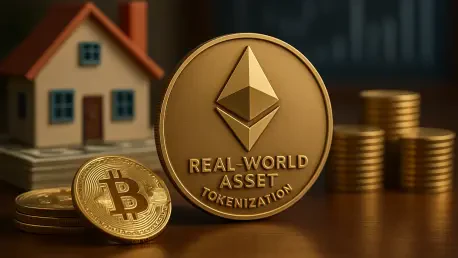

The dream of owning a piece of something truly magnificent, like an iconic supercar preserved under museum-like conditions, has long been confined to the realm of fantasy for most enthusiasts and investors. Real-World Asset (RWA) Tokenization represents a significant advancement in the intersection of finance and blockchain technology, transforming this fantasy into a tangible possibility. This review will explore the evolution of this technology, its key features and mechanics, and the impact it has had on making illiquid assets accessible. The purpose of this review is to provide a thorough understanding of the technology’s current capabilities, practical applications, and its potential for future development.
An Introduction to RWA Tokenization
Bridging the Physical and Digital Worlds
At its core, RWA tokenization is the process of creating a digital representation of a physical asset on a blockchain. This digital twin, or token, is inextricably linked to the underlying asset through a secure legal and technical framework. The token serves as a verifiable claim of ownership, allowing rights associated with the physical object to be managed, traded, and recorded within a digital ecosystem.
This bridge between the tangible and the virtual is not merely a matter of convenience; it represents a fundamental re-imagining of property rights. By digitizing ownership, the cumbersome, slow, and often expensive processes associated with traditional asset transfers are replaced by the speed and transparency of blockchain transactions. This seamless integration enables assets that were once geographically and logistically constrained to enter a global, 24/7 marketplace.
The Core Principle From Illiquid to Fractional
The most transformative aspect of RWA tokenization is its ability to convert singular, high-value assets into fractional, accessible units. An asset is considered illiquid if it cannot be easily sold or exchanged for cash without a substantial loss in value, a characteristic common to collectibles, fine art, and real estate. Tokenization dismantles this barrier by dividing the asset’s economic rights into thousands or even millions of smaller digital shares.
This fractionalization democratizes investment opportunities that were previously exclusive to high-net-worth individuals. An enthusiast can now purchase a small, affordable stake in a multimillion-dollar classic car or a luxury property, gaining exposure to its potential appreciation. Consequently, what was once a static, indivisible object becomes a dynamic and liquid financial instrument available to a much broader audience.
Relevance in a Modern Investment Landscape
In an economic climate where investors are increasingly seeking diversification beyond traditional stocks and bonds, RWA tokenization offers a compelling new frontier. It unlocks alternative asset classes, such as collectibles and private equity, providing a hedge against market volatility and an opportunity for uncorrelated returns. This technology empowers individuals to build more resilient and personalized portfolios aligned with their passions and interests.
Moreover, for the owners of these high-value assets, tokenization provides a novel mechanism to unlock liquidity without relinquishing full ownership or control. A collector can sell a minority stake in an asset to generate capital while retaining a majority share and, in many cases, physical custody. This creates a more efficient market, benefiting both existing owners and new investors.
The Architectural Framework of Asset Tokenization
The Legal Structure Establishing Legitimate Ownership
The legitimacy of any tokenized asset hinges on a robust legal structure that guarantees the token holder’s claim. A common and effective approach involves placing the physical asset under the ownership of a dedicated legal entity, such as a special purpose vehicle (SPV) or a European foundation. This entity is then recorded as the official owner in the relevant national registries, creating a clear and defensible chain of title.
The economic rights to the asset are then issued by this legal entity in the form of digital tokens. This structure ensures that each token represents a genuine, legally enforceable share of the asset’s value. By separating legal ownership from the fractional economic rights, the framework protects investors and provides the necessary legal clarity for the model to function reliably.
The Technology Layer Blockchain and NFTs as Digital Receipts
Blockchain technology provides the transparent and immutable foundation for RWA tokenization. Every transaction, from the initial issuance of tokens to subsequent trades on a secondary market, is permanently recorded on a distributed ledger. This creates an auditable and tamper-proof history of ownership that is superior to traditional paper-based registries.
Non-fungible tokens (NFTs) are increasingly used in this context, but their function extends far beyond digital collectibles. Here, an NFT serves as a modern depository receipt—a unique digital certificate that proves ownership of a specific fraction of the underlying asset. The choice of a high-performance blockchain, such as Solana, is often strategic, ensuring that transactions are fast and cost-effective, which is essential for managing a high volume of small-value shares.
The Economic Model Creating Accessible Markets
A sustainable economic model is crucial for aligning the interests of all participants: the asset owner, the investors, and the platform operator. Typically, the platform charges an initial success fee upon the asset’s tokenization and listing. To facilitate liquidity, a small trading fee is often embedded directly into the smart contract of the tokens.
This model creates a dynamic ecosystem. For example, a portion of the trading fees can be shared with the original asset owner, who often acts as the custodian. This unique arrangement incentivizes the custodian to support an active secondary market, as trading activity generates a revenue stream that can offset the costs of storage, insurance, and maintenance.
Key Innovations and Emerging Trends
The Shift from Abstract Theory to Tangible Application
For years, asset tokenization was discussed primarily in theoretical terms, often associated with complex financial instruments. A significant recent trend is the pivot toward tangible, emotionally resonant assets. Collectible cars, for instance, serve as an ideal proving ground because they exist at the intersection of passion and investment.
This move toward relatable assets has been instrumental in demystifying the technology. When potential investors can see and understand the underlying asset—a specific Porsche or Ferrari—the value proposition becomes much clearer. This has accelerated the transition of tokenization from a niche technological concept to a practical, mainstream financial solution.
Abstracting Complexity for a Seamless User Experience
The most successful RWA platforms are those that effectively hide the underlying technological and legal complexity from the end-user. The goal is to provide an experience that is as intuitive and straightforward as using a conventional brokerage or e-commerce app. Investors should be able to focus on the asset they are acquiring, not on the mechanics of blockchain or the intricacies of European foundation law.
This focus on user experience is critical for mass adoption. By abstracting away the backend processes, platforms can appeal to a broader, non-technical audience. This seamless integration ensures that the technology serves as an enabler rather than a barrier, making fractional ownership a simple and enjoyable process.
Building Community-Driven Investment Ecosystems
Beyond the financial mechanics, tokenization is fostering the growth of community-driven ecosystems. When investors buy a share of a collectible car, they are not just making a financial transaction; they are joining a community of like-minded enthusiasts. This shared passion creates a powerful network effect that can enhance engagement and stabilize the asset’s market.
Platforms that recognize this social dimension actively cultivate a sense of community by focusing on specific asset classes with strong cultural touchpoints. This strategy builds a loyal user base and transforms the investment platform into a hub for enthusiasts to connect, share knowledge, and collectively participate in the preservation and appreciation of passion-driven assets.
Real-World Applications The Commody Case Study
Tokenizing Collectible Cars a Premier Use Case
The Lithuanian fintech platform Commody provides a powerful case study in the practical application of RWA tokenization. The company focuses on collectible cars, an asset class characterized by high value, low liquidity, and a deeply passionate following. This makes it an ideal candidate for a model that seeks to democratize access and unlock capital.
Commody’s approach demonstrates a meticulous integration of legal, technical, and economic components. By targeting a market driven as much by emotion as by financial rationale, the platform showcases how tokenization can solve real-world problems for both collectors and enthusiasts, turning a static hobby into a dynamic investment opportunity.
Unlocking Liquidity for High-Value Collectibles
In its initial offering, Commody tokenized a Porsche valued at €128,500, dividing its economic rights into just over 5,000 fractional units priced accessibly. The original collector retained a majority stake, allowing him to unlock significant capital from his asset while maintaining a vested interest and control. The remaining shares were quickly acquired by a community of investors.
This case validates the core premise of tokenization: creating a win-win scenario. The collector gains liquidity, and a new class of investors gains exposure to a professionally managed, high-value collectible. The vehicle itself is stored in a specialist facility and fully insured, with its mileage managed to preserve value—a level of professional custodianship now made accessible to fractional owners.
Potential Expansion to Other Passion-Driven Assets
The success of the collectible car model provides a clear blueprint for expansion into other passion-driven asset classes. The same framework of a secure legal entity, blockchain-based receipts, and a community-focused market could be readily applied to rare motorcycles, luxury watches, fine art, or even vintage wines.
However, a strategic focus on a single vertical, to begin with, is crucial for building a cohesive and engaged community. By first establishing a strong foothold in the automotive world, platforms like Commody can cultivate a loyal user base before branching out. This measured approach ensures that each new asset class is supported by a dedicated and knowledgeable investor community.
Challenges and Strategic Mitigations
Navigating Regulatory and Jurisdictional Complexities
One of the most significant hurdles for RWA tokenization is the fragmented and evolving regulatory landscape. The classification of digital tokens—whether as securities, commodities, or a new type of asset—varies widely across jurisdictions. This ambiguity can create compliance challenges for platforms operating globally.
Strategic mitigation involves establishing operations in jurisdictions with clear legal frameworks for digital assets, such as certain European Union member states. Building a robust legal structure from the outset, with clear documentation outlining the rights of token holders, is essential for building trust and ensuring long-term viability. Proactive engagement with regulators is also key to navigating this complex terrain.
Ensuring Asset Security and Professional Custodianship
A digital token is only as valuable as the underlying physical asset it represents. Therefore, ensuring the security, insurance, and professional management of that asset is paramount. Failure to do so would undermine investor confidence and expose the entire model to significant risk.
The solution lies in partnering with reputable, specialized custodians who can provide secure storage, proper maintenance, and comprehensive insurance. The costs associated with this professional management are often borne by the majority stakeholder or factored into the platform’s economic model. This guarantees that the asset’s value is preserved, protecting the interests of all fractional owners.
Fostering Secondary Market Liquidity
For tokenization to fulfill its promise of transforming illiquid assets, a vibrant and accessible secondary market is essential. Without the ability to easily buy and sell tokens after the initial offering, the problem of illiquidity is only partially solved. Building this market presents a classic chicken-and-egg problem: traders are attracted to liquid markets, but markets need traders to become liquid.
Platforms can address this by designing economic incentives that encourage trading. Embedding a small transaction fee in the token’s smart contract and sharing a portion of that fee with the original asset owner or market makers can stimulate activity. Furthermore, building a strong community around the assets creates a natural pool of engaged buyers and sellers, helping to bootstrap market liquidity over time.
The Future of Digital Ownership
The Path Toward Mainstream Adoption
The journey of RWA tokenization toward mainstream adoption will be driven by continued simplification and regulatory clarity. As more successful case studies emerge and the user experience becomes increasingly seamless, public trust and understanding will grow. The technology will fade into the background, and people will focus on the outcome: owning a piece of an asset they value.
Wider adoption will also depend on the integration of tokenized assets into the broader financial ecosystem. When traditional banks, wealth managers, and institutional investors begin to recognize and incorporate these digital assets into their portfolios, RWA tokenization will have truly arrived.
The Long-Term Impact on Traditional Asset Classes
The principles of RWA tokenization have the potential to fundamentally reshape traditional asset classes far beyond collectibles. Imagine a future where commercial real estate, private company equity, and infrastructure projects are routinely fractionalized and traded on global digital markets. This would dramatically increase liquidity and price discovery in markets that are currently opaque and inefficient.
This shift would lower barriers to entry for investors and provide project owners and companies with new avenues for capital formation. In the long term, tokenization could become the standard for issuing, managing, and trading ownership in a vast array of real-world assets, making markets more efficient and accessible for everyone.
Potential for New Financial Products and Services
As the market for tokenized real-world assets matures, it will spur the creation of entirely new financial products and services. Tokenized assets could be used as collateral for decentralized loans, allowing owners to borrow against their holdings without selling them. Asset managers could create diversified funds composed of tokens from various asset classes, offering investors easy exposure to a professionally curated portfolio.
Furthermore, the programmable nature of tokens allows for the creation of innovative financial instruments with embedded rules for dividends, voting rights, or automated compliance checks. This design flexibility opens up a world of possibilities for tailoring financial products to meet specific investor needs and regulatory requirements.
Conclusion A New Paradigm for Asset Ownership
Summary of Key Findings
This review finds that Real-World Asset Tokenization is successfully transitioning from a theoretical concept to a practical and powerful financial tool. By combining robust legal structures with the transparency and efficiency of blockchain technology, it effectively bridges the gap between physical assets and digital markets. Its core innovation lies in fractionalization, which unlocks liquidity and democratizes access to previously exclusive, high-value asset classes.
Final Assessment of RWA Tokenization’s Potential
The potential of this technology extends far beyond its current applications. RWA tokenization represents a fundamental evolution in how ownership is defined, managed, and transferred. As the technology matures and regulatory frameworks adapt, it is poised to enhance the efficiency and accessibility of global markets, impacting everything from collectibles and real estate to private equity and infrastructure finance.
The Quiet Normalization of Fractional Ownership
Ultimately, the most profound impact of RWA tokenization is the quiet normalization of shared ownership. It provides a viable and secure answer to the age-old desire to own a part of something valuable and rare. By proving a model that is understandable to investors, legally sound, and technologically efficient, this trend is steadily making fractional ownership a conventional and accessible part of the modern investment landscape.