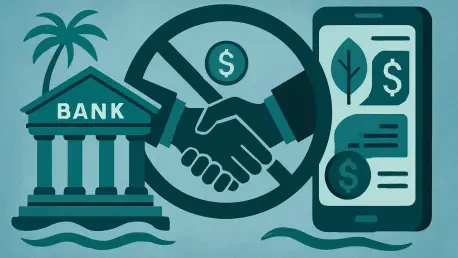

Today we’re speaking with Priya Jaiswal, a recognized authority in Banking, Business, and Finance, whose expertise in market analysis and international business trends gives her a unique perspective on the evolving relationship between traditional banks and nimble fintechs. The recent acquisition of the GreenFi brand by Coastal Financial offers a fascinating case study in this new era of partnership. We’ll explore the strategic thinking behind this unique deal structure, the delicate balance of managing multiple fintech relationships, the shift in economic models, and the critical importance of governance and brand stewardship in the wake of past challenges.
Coastal now owns the GreenFi brand while Mission Financial continues operations. How will you manage the day-to-day division of responsibilities, and what specific strategic advantages does this structure offer over a full operational acquisition? Please provide some step-by-step details of your collaboration model.
This is a really clever, almost surgical, approach to an acquisition that avoids many of the headaches of a full merger. What Coastal is doing is acquiring the most valuable asset—the brand and the customer relationship—while leaving the operational mechanics to a trusted partner. In this model, you can imagine Coastal setting the strategic direction. They are now in charge of the brand’s long-term stewardship, its governance, and its oversight. Mission Financial, in turn, can focus entirely on what it does best: operating the program, building out the products, and delivering that strong customer experience Tim Newell mentioned. It’s a beautiful division of labor that lets both parties play to their strengths without the friction of a full integration.
Owning a consumer-facing brand like GreenFi could create perceived conflicts of interest with other banking-as-a-service partners. How will Coastal manage its relationships with other fintechs to address these concerns, and what metrics will signal that all partnerships remain equitable?
That is the absolute key risk here, as the Raymond James analysts correctly pointed out. Coastal has another significant partner in Dave, and it needs to walk a very fine line to avoid any perception of favoritism. The solution has to be built on radical transparency and clearly defined operational firewalls. Coastal will need to prove that the team managing the GreenFi brand relationship is separate from the teams supporting its other BaaS partners. Success will be measured by the performance of those other partners. If their growth continues, if their service levels remain high, and if they feel they are getting the same access to the bank’s resources as before, then the model works. But any dip in support for their other partners will immediately raise red flags and could damage their broader BaaS platform.
In many BaaS partnerships, banks compensate fintechs for generating deposits. With Coastal now owning the GreenFi brand, how does this shift the economic model? Could you provide specific examples of how this helps Coastal move “up the value chain” beyond simple cost savings?
Moving “up the value chain” is the perfect way to describe it. Previously, Coastal was in a transactional relationship; it was likely paying GreenFi a fee for every dollar of deposits gathered. That’s a pure cost center. By acquiring the brand, they’ve transformed that expense into an asset. It’s not just about saving money on those fees. Now, Coastal has direct control over a mission-driven product offering that resonates with a growing consumer segment. This gives them the power to deepen the integration, expand the product set under the GreenFi banner, and capture the entire economic benefit of that customer relationship over the long term. They’ve moved from being a simple utility provider for the brand to being the owner of the entire customer journey.
Given the material weakness identified last year in BaaS financial reporting, what specific governance and oversight controls has Coastal implemented for the GreenFi brand? Please walk us through the new checks and balances that will prevent similar issues from arising in this deeper partnership.
This acquisition is Coastal’s chance to publicly demonstrate that they’ve learned from past mistakes. That material weakness was a serious issue, involving the overstatement of assets and liabilities. By taking direct responsibility for GreenFi’s “governance, oversight and long-term brand stewardship,” they are putting themselves on the hook. You can expect they’ve implemented a far more rigorous oversight framework. This would likely involve dedicated compliance personnel who are deeply embedded with the GreenFi program, more frequent and stringent internal audits, and direct reporting lines to Coastal’s audit committee. They can’t afford a repeat, so the level of scrutiny on GreenFi’s financial reporting will be exponentially higher than what it was under a standard BaaS partnership.
GreenFi’s brand has lineage tracing back to Aspiration, which faced notable financial and legal challenges. What specific steps will Coastal take to build consumer trust and differentiate the new brand from its predecessor’s history? Please detail your brand stewardship and marketing strategy.
This is perhaps the biggest intangible challenge. Aspiration’s bankruptcy and its co-founder’s guilty plea for wire fraud cast a very long shadow. A simple name change to GreenFi isn’t enough to erase that history from a consumer’s mind. Coastal’s primary strategy must be to lean into its own reputation as a stable, regulated bank. Their marketing will have to pivot from a pure “climate-friendly” message to one that screams “safe and sound.” They need to be incredibly transparent about the new ownership structure, highlighting that GreenFi is now backed and governed by a community bank. This builds a moat of trust around the brand that it simply did not have before, effectively telling customers that the chaotic startup days are over and an era of stability has begun.
What is your forecast for the future of bank-fintech partnerships? Do you see more banks moving from a service model to an ownership model with their key partners?
I believe the Coastal-GreenFi deal, along with the U.S. Bank-BTIG acquisition, signals a real maturation of the banking-as-a-service market. For years, the model was primarily rental, with fintechs leasing a bank’s charter. Now, banks are realizing that some of their tenants are building incredibly valuable businesses on their foundation. So, I absolutely forecast a trend where banks move from being landlords to owners. We will see more strategic acquisitions of key fintech partners, especially those that have demonstrated strong product-market fit and customer growth. It allows the bank to capture a much larger share of the economic value while also gaining critical control over compliance and risk—the two areas that keep banking executives up at night.