
In the rapidly evolving world of U.S. payments, the launch of the Federal Reserve’s FedNow system marked a pivotal moment. Yet, many of the nation’s largest financial institutions took a measured approach to adoption. To unpack this, we’re joined by Priya Jaiswal, a recognized authority in banking and finance with deep expertise in market analysis and FinTech trends. She provides a rare look inside the strategic decisions that drive a major bank’s technological roadmap. We’ll explore the critical government mandate that served as a catalyst for action, the tangible benefits of instant payments for both individuals in crisis and businesses under pressure, the persistent challenge of achieving universal network connectivity, and what the future holds for real-time payments across the American financial landscape.
The Treasury Department’s decision on FEMA payments was the main driver for PNC joining FedNow. Could you walk us through the internal discussions that followed that announcement and the specific steps your team took to finally integrate with the system two years after its launch?
That Treasury announcement was truly the inflection point. Before that, the conversation around FedNow was largely about network redundancy and incremental reach, as we already had strong real-time payment capabilities. But when the Bureau of the Fiscal Service designated FedNow as the rail for FEMA disaster payments, the entire dynamic shifted. The discussion pivoted from a technical debate to a moral imperative. We have a massive retail banking franchise, and the idea of our customers being unable to receive critical, life-sustaining funds during a natural disaster simply because we weren’t connected to a specific rail was untenable. It became a matter of public trust and customer care. The steps afterward involved a rapid re-prioritization of our payments technology roadmap, allocating dedicated engineering resources to build and test the integration, and ensuring our systems could securely handle these new, high-stakes government disbursements.
You noted the importance of giving retail clients access to immediate disaster funds. Beyond this crucial need, what other specific customer pain points have you seen FedNow solve, and can you share an example of how it has improved the banking experience for an individual or family?
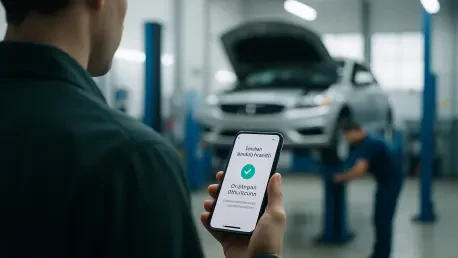
The FEMA use case is certainly the most dramatic, but the underlying pain point it solves is the anxiety of waiting for money you desperately need. That feeling extends to many everyday situations. Imagine a family whose car breaks down unexpectedly. The insurance company approves the claim for the repair, but with traditional payment methods, they might wait days for the check to arrive and clear. With an instant payment, that money is in their account before they’ve even left the mechanic’s shop. That’s not just a convenience; it’s the difference between being able to get to work the next day or not. It removes a significant layer of financial stress from an already difficult situation, transforming the banking experience from a passive waiting game into an empowering, immediate solution.
The article mentions using instant payments for emergency payroll. Could you share a specific anecdote of how this feature helped a corporate client? What metrics are you tracking to measure the adoption of FedNow for business needs compared to other established payment rails?
We had a situation with a corporate client where an administrative error caused them to miss the ACH cutoff for payroll right before a three-day holiday weekend. In the past, this would have been a catastrophic failure. The business owner was frantic, imagining dozens of employees unable to pay their bills or enjoy the holiday. The only options would have been expensive, cumbersome wire transfers for each employee. Instead, we were able to facilitate an emergency payroll run using instant payments. Within an hour, every employee had their full paycheck in their account. The sense of relief from the client was immense. In terms of metrics, we’re obviously tracking volume and transaction value, but we’re more interested in the qualitative adoption. We’re analyzing how often it’s used for these “business emergency” scenarios versus more routine payments, like paying contractors. This helps us measure its value as both a crisis-management tool and a driver of everyday business efficiency compared to legacy rails.
PNC already reached about 80% of banks via other real-time networks. What specific challenges did you face in reaching the remaining 20% of institutions, and how does partnering with the Fed’s network of 1,500 banks change your strategy to achieve universal connectivity?
Achieving that first 80% of reach is, relatively speaking, the easier part. You connect with the other large banks and payment hubs through established networks like The Clearing House. The final 20% is the real challenge—it represents a highly fragmented landscape of thousands of smaller community banks and credit unions. Creating individual connections is not scalable, and many of these institutions lack the resources to join multiple private networks. This is where the Fed’s role is so transformative. The Federal Reserve is the one entity that has existing connections and a trusted relationship with nearly all 9,000 financial institutions in the country. By joining FedNow, we’re not just adding another network; we are tapping into the Fed’s unparalleled reach. It provides a single, efficient on-ramp to connect with that long tail of smaller banks, fundamentally changing our strategy from a piecemeal approach to a much more direct path toward our goal of 100% connectivity.
What is your forecast for FedNow adoption among the thousands of U.S. financial institutions that have not yet joined, and what key use cases do you believe will be most compelling for them?
My forecast is for a significant acceleration in adoption over the next 18 to 24 months. We are moving past the early adopter phase. Right now, about 1,500 of the nation’s 9,000 financial institutions are on board, but the network effect is beginning to take hold. As more government agencies and large corporations create compelling reasons to use the system—like the FEMA payments—it creates a powerful pull. The most compelling use cases for the remaining banks will be those that directly impact their customers’ financial well-being. I believe business-to-consumer disbursements will be the primary driver. This includes everything from instant insurance claim payouts and product rebates to merchant settlement and earned wage access. For smaller community banks, being unable to receive these types of payments for their customers will become a competitive disadvantage. It will shift from being a “nice-to-have” technology to an essential piece of infrastructure for retaining customers in an increasingly on-demand world.