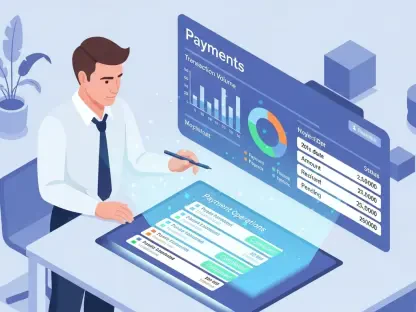

With a sharp eye for the real-world impact of financial technology, Priya Jaiswal has become a recognized authority for her analysis of how innovation—or the lack thereof—affects the daily lives of consumers and small business owners. Her work cuts through the hype to ask a fundamental question: Are we making banking better, or just faster? In our conversation, we explored the critical disconnect between sleek user interfaces and genuine financial well-being, delving into the persistent fragmentation in small business banking, the hidden dangers of new credit tools for younger generations, and the proactive, human-centered features that seem just out of reach in the U.S. market. Ultimately, our discussion centered on a powerful challenge to the industry: to start solving for people’s real lives, not just their transactions.
You quote analyst Tiffani Montez, who says the industry optimizes for convenience over relevance, just shifting friction. Besides a slick UI, what is a key example of this? Walk us through a specific fintech feature that ultimately fails to help a user’s real financial journey.
A perfect example is the proliferation of “smart” categorization tools in budgeting apps. On the surface, it feels incredibly convenient. The app automatically tags your spending—this was coffee, this was groceries, this was transportation. It looks beautiful, with pastel-colored charts and graphs. But this is a classic case of shifting friction. The real, difficult work of financial planning isn’t categorizing past expenses; it’s making tough future decisions. These apps don’t guide you on whether you should be putting that money into a high-yield savings account or paying down debt. They streamline the view of what you’ve already done without truly helping you make a better decision tomorrow, which is where the real financial stress lies.
You shared a personal story about writing a check to move money between your business and personal accounts. Why does this fragmented experience persist for entrepreneurs? Please outline the concrete steps a bank or fintech could take to finally create a truly unified financial platform for them.
This problem persists because, frankly, our industry still treats small business owners like they are two completely different people. There’s the “consumer” you and the “business” you, and never the twain shall meet. We’re forced into a world of multiple logins and siloed profiles. The first concrete step to fix this is to build a single, unified dashboard where an entrepreneur can see their entire financial picture—business cash flow right next to personal savings. The next step is intelligent automation; for instance, creating rules to automatically sweep profits from the business account to a personal investment account or a tax savings bucket. Finally, the platform needs to offer advisory tools that understand this blended reality, helping with things like projecting how a good business month could accelerate a personal goal, like saving for a down payment. It’s about recognizing the person, not just the account type.
With data showing 79% of BNPL usage is by Gen Z, often to bridge income gaps, how can we address the concerns raised by Stessa Cohen? What practical, tech-driven safeguards could be implemented to help young people manage this credit tool responsibly and avoid accumulating debt?
Stessa Cohen’s point that we treat teenagers like “miniature adults” is a powerful warning. The data is clear: for many young people, BNPL isn’t just for an impulse purchase; it’s a tool to survive between paychecks. To address this, we could implement dynamic, personalized guardrails. Imagine a system that, instead of just approving a transaction, provides a clear visual of how this purchase will impact your next three pay cycles. We could build in “cooling-off” periods for non-essential purchases or offer a feature that automatically suggests moving a similar amount into a savings “Money Box” before committing. The key is to use technology not just to grant credit, but to build financial literacy and foresight directly into the payment process, safeguarding young users from the spiral of unsecured debt.
You praise Nubank for features like “Street Mode” and “Money Boxes.” Why do you believe we don’t see these kinds of proactive safety and financial planning tools in the U.S. market? What are the primary barriers—be it regulatory, technological, or cultural—preventing their adoption here?
I don’t believe the primary barriers are technological or even regulatory; I think they are cultural and strategic. The U.S. fintech ecosystem has historically chased features that feel safe and are optimized for the already-banked. The focus has been on streamlining transactions and creating a frictionless payment experience because that’s where the obvious revenue is. Features like Nubank’s “Street Mode” solve for a real-world fear—getting your phone stolen—and “Money Boxes” encourage mindful saving. These are proactive, empathetic solutions. Their absence here points to a lack of imagination and a core focus on transactional speed over holistic well-being. We’ve been so busy making banking faster that we haven’t stopped to ask if we’re making it safer or smarter.
Pam Kaur states, “We have yet to solve for people’s real lives.” How can a product team begin to do this in a tangible way? Describe the key metrics or discovery processes they should adopt to start innovating for financial stability and fairness, not just transactional speed.
Product teams need to fundamentally shift their definition of success. Instead of measuring daily active users or transaction volume, the key metrics should become things like a user’s savings rate growth, their debt-to-income ratio reduction, or the number of times they’ve avoided an overdraft fee because of a proactive alert. The discovery process has to move beyond the lab. It means sitting in a family’s kitchen and watching them struggle with bills, or following a small business owner for a day to feel the anxiety of managing cash flow. It’s about understanding the emotional and systemic context people live inside. Only then can we move from designing slick interfaces to designing systems that actually build confidence and stability.
What is your forecast for the next two years in fintech? Will we see a genuine shift toward solving for people’s real lives, or will the focus remain on optimizing convenience for the already-banked?
My forecast is one of cautious, hard-won progress. The economic pressures of the last couple of years, with tightening budgets and stressed households, are forcing a conversation that goes beyond convenience. We’re starting to see the cracks in a system that was built for speed, not stability. I believe we will see more innovators, perhaps nudged by international players like Nubank, begin to build features that address real-world anxieties around safety and financial planning. However, the industry’s inertia is immense. The real shift will only happen when we stop asking “How can we make this transaction easier?” and start asking, with genuine intent, “Who are we innovating for, and how can we tangibly improve their financial life?” That’s the true heart of the matter, and it’s the hardest thing to change.