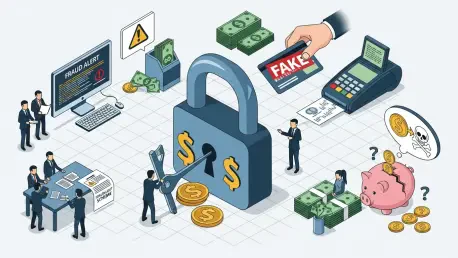

The moment a victim realizes their life savings has vanished into a digital void is rarely the start of the crime; it is actually the final, devastating heartbeat of a process that began weeks earlier. While the modern financial infrastructure allows for nearly instantaneous global transactions, it has also created a playground for sophisticated criminal industries that navigate digital gaps with surgical precision. To truly protect consumers, the focus must shift from simply reacting to theft at the teller window toward dismantling the invisible pipeline that allows scammers to reach their targets in the first place.
The Invisible Pipeline of Financial Fraud
Financial fraud is no longer a series of isolated incidents but a high-efficiency industry that exploits the disconnect between telecommunications, social media, and banking. Scammers utilize automated systems to cast wide nets, often reaching thousands of potential victims through a single deceptive ad or text message. By the time a consumer opens their banking app, the psychological manipulation is complete, and the bank is left to deal with the fallout of a transaction the customer has been coerced into authorizing.
This systemic exploitation highlights a fundamental flaw in current defense strategies: they are heavily weighted toward the end of the scam lifecycle. When security measures only trigger at the point of payment, they miss the opportunity to intervene during the grooming phase. Breaking this cycle requires a holistic view of the fraud journey, identifying every digital touchpoint as a potential site for disruption rather than viewing the bank as the sole guardian of the consumer’s assets.
The High Stakes of the “Last Mile” Problem
In the contemporary fraud landscape, banks are often relegated to the “last mile,” the final point where money moves and the damage becomes permanent. The financial impact is staggering, with the average victim losing approximately $17,000, a sum that can be life-altering for most households. Relying solely on financial institutions to catch these transactions is a high-risk strategy because, by the time a payment is initiated, the scammer has already successfully bypassed the victim’s internal alarms through social engineering.
This urgency has sparked a global conversation about why the burden of prevention rests so heavily on the financial sector while the platforms that facilitate the initial contact often operate with minimal liability. If a scam begins with a fraudulent social media advertisement or a spoofed phone call, the companies providing those services are the ones who let the predator into the victim’s home. Addressing this “last mile” problem means acknowledging that a bank cannot always fix a problem that started on a different continent through a different screen.
Breaking the Cycle: Strategic Points of Intervention
The Power of Human Intervention at the Branch Level. Data from the AARP’s BankSafe Initiative reveals that intervention by trained bank employees can stop a scam in its tracks roughly 50% of the time. When staff are empowered to delay suspicious transactions and ask probing questions, they act as a vital safety net. This success underscores the need for continuous training and internal intelligence sharing, ensuring that red flags identified by a teller in one branch are quickly communicated across the entire institution.
Regulatory Expectations and the Myth of the “Small Bank” Loophole. Regulators are increasingly making it clear that a financial institution’s size is no excuse for inadequate fraud prevention. Whether it is a global powerhouse or a local fintech startup, institutions are expected to understand evolving fraud typologies. For smaller entities, this often means leveraging sophisticated third-party vendors. However, the responsibility did not end with a contract; banks had to maintain rigorous oversight of these partners to ensure they met the same stringent standards as the bank itself.
The Shift Toward Shared Liability Models. A growing consensus among experts suggested that social media and telecommunications companies must be brought into the accountability loop. Since the vast majority of scams originated via a text message, a phone call, or a social media ad, these platforms were effectively the “upstream” source of the problem. Advocates pushed for legislative changes that would require these tech giants to share the financial liability for fraud, incentivizing them to clean up their platforms before a scammer ever reached a bank’s doorstep.
Expert Insights on the Future of Fraud Prevention
According to Jilenne Gunther of AARP, the effectiveness of bank-level intervention highlights a critical opportunity: if banks can stop half of all scams at the very end of the process, a coordinated effort at the beginning would be devastating to the fraud industry. Former regulators like Avy Mallik point out that the methodology of detection must be as dynamic as the scammers themselves. Industry leaders from institutions like Fifth Third Bank emphasize that threat intelligence should not be a siloed asset but a shared weapon used to update defense protocols in real-time.
These experts agreed that while banks remained the final gatekeepers, the “siloed” approach to security was what scammers exploited most effectively. By sharing data across industries, the financial sector could identify patterns that a single bank might miss. The goal was to transform the digital ecosystem from a series of disconnected islands into a fortified network where a scammer’s tactics were identified and neutralized as soon as they appeared on any platform.
Strategies for a Proactive Defense Framework
Moving from a reactive to a proactive stance required a concrete framework that involved all stakeholders in the financial ecosystem. Telecom and social media companies began implementing stricter verification for advertisers and automated messaging services to filter out known fraudulent patterns before they reached a consumer’s device. This upstream verification acted as the first line of defense, significantly reducing the volume of fraudulent attempts that required bank-level intervention.
Financial institutions also prioritized the implementation of “positive friction” within their user interfaces. By designing prompts that forced users to pause and verify the identity of a recipient during high-risk transactions, banks successfully broke the trance of social engineering. Furthermore, strengthening third-party vendor management through regular audits ensured that detection algorithms kept pace with the latest tactics. These combined efforts shifted the paradigm from mere loss mitigation to a comprehensive culture of prevention.