
The rapid evolution of generative artificial intelligence has fundamentally altered the threat landscape for global financial institutions, making the verification of human biological presence the most critical challenge of the current decade. As the banking industry navigates the midpoint of the 2020s, the convergence of high-speed digital finance and hyper-realistic synthetic media has created a crisis of confidence. Traditional security perimeters, once defined by firewalls and encryption, are now vulnerable to attackers who can manifest as trusted clients or high-level executives with a few lines of code. This transition marks a departure from the era of digital banking into a period where the very definition of a “user” is under constant interrogation.
The current state of the banking industry reflects an environment where the sophistication of “persona theft” has eclipsed the old problems of simple credential theft. In the past, securing an account meant protecting a password or a physical token; today, an attacker can synthesize a client’s voice, facial expressions, and even behavioral nuances in real time. This shift has forced major market players to reconsider the foundations of digital trust. For instance, the expansion of identity networks like World demonstrates a growing market appetite for verification systems that go beyond the screen. By utilizing specialized hardware and biometric signatures, these networks are attempting to create a “proof of personhood” that can withstand the onslaught of AI-generated mimicry within the crypto banking and traditional finance ecosystems.
The regulatory and security standards are moving rapidly toward a deepfake-resistant baseline. Financial institutions are no longer satisfied with static liveness checks that can be fooled by high-resolution video loops or sophisticated facial mapping software. Instead, there is a clear push for integrated identity proofing that functions as a continuous layer of the transaction process. This evolution is particularly visible in the way crypto-adjacent banks are restructuring their onboarding and approval workflows. As these institutions manage vast treasuries and high-frequency transfers, the impact of a single successful impersonation could be catastrophic, leading to a total re-evaluation of what constitutes a “verified” instruction in a world where seeing is no longer believing.
Navigating the Shift Toward Human-Centric Verification
Emerging Threats and Evolving Consumer Safeguards
The synthesis of human faces and voices has progressed to a point where traditional liveness checks are frequently bypassed by sophisticated generative adversarial networks. These AI models can simulate the micro-movements of a human face or the specific cadence of a voice during a live video call, making it nearly impossible for a standard automated system to distinguish between a biological human and a synthetic construct. This vulnerability is not merely a technical glitch but a fundamental flaw in the way digital interfaces were designed. Banks that rely on one-time video submissions are finding that these assets can be manipulated or entirely fabricated, leading to unauthorized account access on an unprecedented scale.
The risks are amplified within the crypto banking sector, where the inherent speed and irreversibility of blockchain transactions create a high-stakes environment. In traditional banking, a fraudulent wire transfer might be recalled or frozen if detected within a certain window. However, a crypto transfer initiated by a deepfake impersonator often results in an immediate and permanent loss of capital. This has made business accounts and decentralized autonomous organization treasuries prime targets for high-value corporate fraud. Attackers are increasingly focusing on “human nodes”—individuals with the authority to sign off on large movements of funds—using deepfakes to simulate emergency requests from senior leadership to bypass internal controls.
To counter these threats, banks are beginning to integrate real-time video verification that employs advanced behavioral biometrics. These systems look for “biological tells” that AI has yet to master, such as the specific way light reflects off the human retina or the unique rhythmic patterns of blood flow in the face. Moreover, there is an increasing shift toward monitoring behavioral biometrics throughout a session rather than just at login. By analyzing how a user moves their mouse, types on a keyboard, or holds their phone, banks can create a continuous identity profile that is far more difficult to spoof than a static image or a one-time password.
Market Projections and the Economics of Identity Fraud
Current market data suggests that fraud losses related to AI impersonation are rising at a rate that threatens the profitability of digital-first financial institutions. The cost of launching a deepfake attack has plummeted, while the potential rewards remain astronomically high. This economic imbalance has fueled a surge in specialized criminal enterprises that offer “fraud-as-a-service,” providing low-level actors with the tools necessary to impersonate high-net-worth individuals. Consequently, the financial sector is seeing a direct correlation between the accessibility of generative AI and the volume of synthetic identity theft reported by neobanks and traditional institutions alike.
The deepfake-resistant security market is forecasted to experience significant growth from 2026 to 2028 as banks scramble to patch these structural vulnerabilities. This period will likely see a massive influx of capital into startups specializing in multi-modal biometric authentication and hardware-based identity verification. Specialized tools that were once considered niche or experimental are now becoming mandatory components of the banking stack. Neobanks, in particular, are expected to lead the adoption curve, as their lack of physical branches makes them more susceptible to remote identity fraud and more reliant on cutting-edge digital defenses to maintain customer trust.
The adoption rates of these specialized verification tools among fintechs and traditional institutions will likely reach a saturation point within the next twenty-four months. Organizations that fail to implement deepfake-resistant protocols will find themselves increasingly uninsurable, as cyber-liability providers adjust their premiums to reflect the heightened risk of AI-driven attacks. This shift is creating a new competitive landscape where security is no longer a back-office function but a core product feature. Customers are beginning to prioritize institutions that can prove they are interacting with a real person, turning identity verification into a primary driver of user acquisition and retention.
Overcoming the Failures of Legacy Security Frameworks
The technological limitations of standard Know Your Customer and Know Your Business protocols have been laid bare by the rise of synthetic identity. These legacy systems were designed for a world where document-based verification was a reliable proxy for identity. However, when a deepfake can produce a convincing video of a person holding a forged but “perfect” digital ID, the entire premise of remote document authentication collapses. The gap between the point of onboarding and the moment of a high-value transaction represents a massive “blast radius” where an attacker can exploit the trust established during a one-time verification event to commit ongoing fraud.
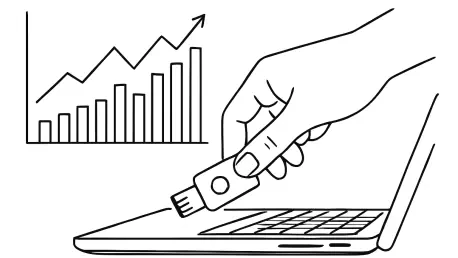
To bridge this gap, banks must move away from session-based identity and toward a model of continuous, verifiable human presence. This requires a layered defense strategy that integrates hardware security keys and phishing-resistant multi-factor authentication. By moving the “root of trust” away from software and into physical hardware, institutions can ensure that even if a persona is faked, the physical requirement for a transaction remains secure. These hardware-centric models, when combined with real-time biometric checks, create a formidable barrier that significantly increases the cost and complexity for any potential attacker.
Furthermore, the integration of layered defense models allows banks to limit the damage of a successful impersonation. By implementing granular permission structures and mandatory “step-up” authentication for any transaction that deviates from established behavioral patterns, banks can catch fraud in progress. This approach treats every transaction as a potential risk rather than assuming that a logged-in user is inherently legitimate. The goal is to create a friction-filled environment for attackers while maintaining a seamless experience for actual customers, using AI to detect the subtle differences between a human user and an automated or synthetic one.
The Evolving Regulatory Landscape for Synthetic Identity
Regulators are increasingly concerned with the decreasing cost and increasing accessibility of AI impersonation tools, leading to a new wave of compliance mandates. The focus is shifting from simple checkbox exercises to dynamic risk management functions that require banks to prove the “personhood” of their clients on an ongoing basis. This regulatory pressure is not just about preventing money laundering; it is about maintaining the overall stability of the financial system in an age where synthetic actors could potentially manipulate markets or drain systemic liquidity through coordinated attacks.
The impact of stablecoin payment volumes on security standards cannot be understated, as these assets become a bridge between the traditional and decentralized financial worlds. As the volume of stablecoin transactions grows, the need for mandatory liveness detection and rigorous identity proofing becomes more urgent. Regulators are beginning to demand that payment providers and banks implement the same level of scrutiny for digital asset transfers as they do for high-value fiat wires. This includes the potential for global mandates regarding “proof of personhood,” which would require individuals to maintain a verified digital identity that is cryptographically linked to their biological self.
Compliance is evolving from a reactive department into a proactive security shield. In the future, the ability of a bank to demonstrate its deepfake-resistance will likely be a key metric in regulatory audits. This will involve not just having the right software but proving that the institution has the operational protocols to handle an impersonation attempt. This includes training staff to recognize the subtle signs of synthetic media and ensuring that automated systems are constantly updated to counter the latest advancements in generative AI. The regulatory landscape is moving toward a future where “human-in-the-loop” verification is not just a best practice but a legal requirement for certain classes of transactions.
The Future of Trust in an AI-Saturated Financial World
The financial industry is trending toward a model of “identity as a service,” where continuous and verifiable human presence becomes the new standard for trust. This model relies on decentralized identity networks that allow users to carry their “proof of personhood” across different platforms without needing to re-verify their biological identity at every turn. Such systems could use zero-knowledge proofs to confirm that a user is a real human being without revealing sensitive biometric data to every institution they interact with. This approach balances the need for high-level security with the increasing demand for data privacy in a digital world.
As AI agents become more involved in future financial transaction protocols, the line between human-initiated and machine-initiated actions will continue to blur. AI agents may soon manage complex portfolios or execute high-frequency trades on behalf of individuals, but the ultimate authority must still reside with a verified human. This will require new protocols that can distinguish between an authorized AI agent and a malicious synthetic actor. Innovation in identity proofing will become “table stakes” for both Web3 and traditional banking ecosystems, as the ability to secure the human-to-machine link becomes the defining challenge of the AI era.
Market disruptors are already emerging in the form of real-time deepfake detection layers that can be integrated into existing communication tools like Zoom or Microsoft Teams. These layers act as a digital “truth filter,” alerting users if the person on the other end of a call shows signs of synthetic manipulation. In the long term, these technologies will likely be integrated directly into the banking interface, providing a seamless layer of protection that operates in the background of every interaction. The banks that successfully navigate this transition will be those that view identity not as a static record but as a dynamic and vital link to their customers’ biological reality.
Strengthening the Link Between Human Authority and Financial Action
The analysis of the current financial landscape demonstrated that the transition from static credentials to deepfake-resistant operational protocols was no longer optional. It was discovered that institutions which relied on traditional methods were increasingly vulnerable to sophisticated persona theft, leading to significant financial and reputational damage. The research highlighted that the “human node” remained the primary target for attackers, who used generative AI to exploit the trust inherent in voice and video communications. Consequently, the necessity for a more robust, hardware-linked identity verification system became the focal point for any strategy aiming to preserve the integrity of high-value transactions.
Strategic recommendations for these institutions focused on the implementation of dual-approval thresholds and strict whitelisting for all digital asset movements. The findings suggested that no single individual should have the power to authorize large transfers based solely on a remote communication, regardless of how convincing the persona appeared. By requiring a second, independent verification from another human actor using a different communication channel, banks effectively mitigated the risk of a single deepfake success. This layered approach to authority ensured that the financial “blast radius” of an attack remained contained, even in the event of a compromised identity.
Furthermore, the study concluded that viewing identity verification as a core insurance policy was essential for long-term stability. The cost of deploying advanced liveness detection and behavioral biometrics was found to be a fraction of the potential losses from a single catastrophic event. Financial institutions were encouraged to treat these security measures as foundational investments rather than administrative burdens. The data indicated that the most successful banks were those that prioritized an unbreakable link between human authority and financial action, recognizing that trust in the digital age was a direct result of biological certainty.
Ultimately, the investigation showed that the success of banks in the AI-saturated world depended on their ability to stay ahead of the synthetic curve. It was observed that the integration of real-time deepfake detection and decentralized identity networks provided a necessary safeguard against the escalating threat of impersonation. Moving forward, the focus was placed on creating a “human-centric” security architecture that protected the individual from the power of the algorithm. By establishing these unbreakable links, banks not only secured their own assets but also provided a stable foundation for the continued growth of the global digital economy.