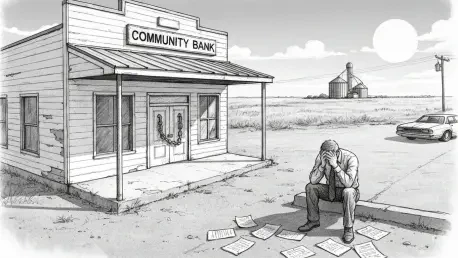

In a quiet Oklahoma town, the collapse of First National Bank of Lindsay (FNBL) has unraveled a staggering story of deceit that reads like a financial thriller, with its former CEO, Danny Seibel, now facing a federal indictment for bank fraud and misconduct. This small community bank, once a trusted pillar for local residents, shuttered its doors in October 2024 under the weight of alleged fraudulent practices that drained its resources and shattered public confidence. Seibel, who held sway over nearly every aspect of FNBL’s operations for almost three decades, stands accused of masterminding a scheme that not only misled regulators but also betrayed the very people who relied on the bank. What began as a local institution’s struggle has now sparked a national conversation about oversight in smaller banks. This article explores the intricate web of allegations against Seibel, the devastating impact on the Lindsay community, and the critical lessons for the banking industry at large.
Unraveling the Allegations of Fraud
The accusations against Danny Seibel paint a troubling picture of unchecked power and deliberate deception at FNBL. According to the Department of Justice, Seibel exploited his roles as CEO and president to issue loans to friends and associates, many of which were never repaid. Instead of holding borrowers accountable, he allegedly falsified bank records to disguise the losses, creating an illusion of stability. Text messages uncovered in the indictment reveal a startling pattern: Seibel manually credited funds to overdrawn accounts at borrowers’ insistence, even when no actual deposits existed. This wasn’t just bending the rules—it was a systematic effort to hide the truth. Despite his apparent frustration with constant demands for more money, as seen in his communications, Seibel continued to comply, often exceeding legal lending limits. This web of fraudulent loans and doctored records didn’t just jeopardize the bank’s finances; it set the stage for a much larger collapse that no one saw coming until it was too late.
Beyond the loans, Seibel’s alleged actions dug an even deeper hole for FNBL. Prosecutors claim he used the bank’s own funds to cover overdrafts and existing debts, essentially robbing Peter to pay Paul. This wasn’t a one-off mistake but a sustained pattern of manipulation that eroded the bank’s capital over time. Specific instances cited in court documents highlight the audacity of his moves, such as adding hundreds of thousands of dollars to a borrower’s account with a negative balance to mask the reality. Meanwhile, he reportedly misrepresented the bank’s financial health during board meetings, understating overdue loans by millions. This deception wasn’t just a betrayal of trust to shareholders and employees; it was a calculated gamble that kept everyone in the dark about FNBL’s dire straits. The scale of these actions raises tough questions about how such misconduct went undetected for so long in a tightly knit community where personal relationships often blur professional boundaries.
Regulatory Blind Spots and Obstruction
As the allegations against Seibel mounted, so did evidence of his efforts to dodge regulatory scrutiny. The Office of the Comptroller of the Currency (OCC) conducted an examination in 2024, only to be met with falsified documents that hid unauthorized changes to loan data, according to the indictment. Seibel’s alleged obstruction went as far as providing doctored reports to mask the extent of his manipulations. When discrepancies inevitably surfaced, panic ensued—court filings show him texting a bank employee to delete incriminating messages, a desperate attempt to cover his tracks. This wasn’t just negligence; it was a bold challenge to federal oversight. Moreover, his failure to implement an anti-money laundering program added another layer of misconduct. Advising customers to keep cash deposits below mandatory reporting thresholds further exposed FNBL to legal risks. Such flagrant disregard for compliance didn’t just undermine the bank’s integrity—it made a mockery of the systems meant to protect the financial sector.
However, the regulatory lapses weren’t solely on Seibel’s shoulders. The fact that such extensive fraud persisted under the noses of federal watchdogs points to broader systemic gaps. Small community banks like FNBL often operate with limited staff, meaning one individual can wield outsized control, as Seibel did across multiple roles including CFO and compliance officer. This concentration of power likely enabled his actions to go unchecked for years. When the OCC finally stepped in, the damage was already catastrophic. The agency’s findings of fraudulent records and capital depletion left no choice but to close the bank. This saga highlights a critical flaw: while regulators have the authority to act, their interventions often come after the harm is done. The question remains whether earlier and more proactive oversight could have saved FNBL, or if small banks are inherently vulnerable to such internal threats in the absence of robust checks and balances.
Fallout from the Bank’s Closure
The shuttering of FNBL by the OCC in October 2024 marked a grim milestone as the second U.S. bank failure of that year, leaving the Lindsay community reeling from the loss of a local cornerstone. With assets totaling roughly $107.8 million, the bank was deemed “unsafe” to continue operations due to the severe depletion of its funds and the pervasive fraud uncovered in its records. While First Bank & Trust Co. of Duncan stepped in to acquire insured deposits, providing a lifeline to account holders, the emotional and economic toll on the town can’t be understated. For many residents, FNBL wasn’t just a place to bank—it was a symbol of trust and stability in a small, close-knit area. The closure eroded that confidence, leaving behind a lingering skepticism about financial institutions. Seibel, if convicted, faces up to 30 years in prison and fines reaching $1 million, a penalty that reflects the gravity of the charges but does little to heal the community’s wounds.
Beyond the immediate impact, the ripple effects of FNBL’s collapse extend to how local businesses and individuals navigate their financial futures. Small towns often rely heavily on community banks for loans, payroll, and daily transactions, and losing such an institution can stifle economic activity. Longtime customers now face the hassle of transitioning to a new bank, while others question whether their funds are truly safe anywhere. The situation also casts a shadow on other small banks in the region, as depositors grow wary of similar risks. Meanwhile, the legal proceedings against Seibel, unfolding in the U.S. District Court for the Western District of Oklahoma, will likely draw national attention. The outcome could set a precedent for how executive misconduct is handled in the banking sector, but for Lindsay residents, the focus remains on rebuilding trust. This disaster serves as a poignant reminder that the actions of one individual can upend an entire community’s financial foundation.
Broader Implications for Banking Oversight
The downfall of FNBL isn’t just a local tragedy—it’s a wake-up call for the entire banking industry, particularly for smaller institutions where oversight can be thin. Seibel’s ability to juggle multiple critical roles, from CEO to compliance officer, without sufficient checks allowed him to operate with near-total impunity. This case exposes a glaring vulnerability: when power is concentrated in too few hands, the risk of abuse skyrockets. Community banks, often strapped for resources, may lack the staff or systems to enforce internal accountability, making them ripe for exploitation. The lesson here is clear—stronger internal controls and independent audits aren’t just nice-to-haves; they’re essential to prevent fraud from taking root. Regulatory bodies like the OCC must also adapt, finding ways to monitor smaller banks more closely without overburdening them, a delicate balance that could determine the future stability of similar institutions across the country.
Looking ahead, this incident fuels a pressing debate about how to safeguard public trust in the financial system as a whole. FNBL’s collapse underscores that executive misconduct doesn’t just harm one bank—it chips away at confidence in the broader sector. Federal agencies and lawmakers may need to revisit policies on executive roles and compliance in smaller banks, potentially mandating stricter separation of duties or more frequent audits. For the industry, the takeaway is a renewed emphasis on transparency and vigilance. Banks of all sizes must prioritize ethical leadership and robust oversight to protect depositors and prevent similar disasters. As the legal case against Seibel progresses, it will likely serve as a cautionary tale, reminding financial leaders that cutting corners or bending rules can lead to catastrophic consequences. Ultimately, rebuilding trust will require not just punishing wrongdoers, but ensuring that the systems meant to protect communities are fortified against such breaches in the future.