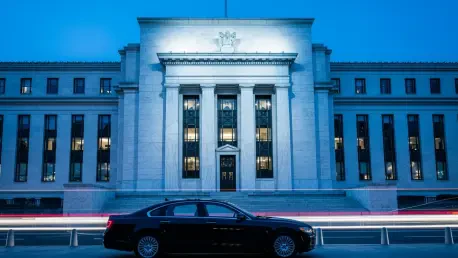

The once-impenetrable barrier between the White House and the Federal Reserve is currently undergoing its most significant stress test in modern history as political rhetoric meets monetary reality. This shifting dynamic marks a departure from decades of traditional distance, where the executive branch avoided public commentary on interest rate decisions to maintain market confidence. Today, the relationship between the Oval Office and the Eccles Building is defined by what experts call productive friction. The central question is no longer whether the President will attempt to influence the Fed through public discourse, but whether the institution possesses the institutional fortitude to process such pressure without compromising its mandate.
The Tug-of-War Between the Oval Office and the Eccles Building
The relationship between the executive branch and the central bank is evolving into a more vocal and transparent confrontation. While past administrations preferred a stoic distance, the current political climate features an executive branch that isn’t afraid to pick up the megaphone to demand specific economic outcomes. This thinning wall suggests that the era of the Fed operating in a vacuum is over, replaced by a landscape where political expectations and economic data often collide in the public square.
This transition from Jerome Powell to potential successors like Kevin Warsh represents more than a change in leadership; it signals a shift in how the government views the role of the central bank. Financial insiders are watching closely to see if the institution remains a technocratic anchor or if it begins to drift toward the short-term goals of the political cycle. The shift brings a new dynamic to Washington where the financial sector anticipates a more favorable regulatory climate, even as it fights to keep the voting committee insulated from mandates.
Why Central Bank Autonomy Is the Bedrock of Global Markets
The independence of the Federal Reserve is a vital shield against the short-termism of election cycles, ensuring that monetary policy remains focused on long-term price stability. Historically, central banks that lose their autonomy tend to prioritize immediate economic boosts, such as lower interest rates, which often lead to runaway inflation and currency devaluation. In today’s volatile environment, the ability to make unpopular, data-driven decisions is the only mechanism preventing a return to the devastating stagflation seen in previous decades.
Geopolitical conflicts, particularly in the Middle East, continue to threaten global energy supply chains and oil prices, adding a layer of complexity to monetary strategy. A central bank that is beholden to political whims might ignore these inflationary signals to keep the economy perceived as strong in the short term. However, the integrity of the dollar and the stability of global markets depend on the Fed’s power to tighten policy when the data demands it, regardless of the pressure coming from the White House.
Decoding the Friction: Discourse versus Decision-Making
A critical distinction must be made between a President’s right to voice an opinion and their actual power to dictate policy. The current administration has signaled a move toward high accessibility, offering an open door to financial leaders that stands in stark contrast to previous eras of regulatory isolation. This accessibility allows for a robust exchange of ideas, but it also creates a public perception that the Fed’s decisions are up for negotiation. The challenge lies in ensuring that this dialogue does not evolve into a direct command structure.
The potential appointment of Kevin Warsh introduces new worldviews on how artificial intelligence and labor productivity should influence monetary strategy. While some view these perspectives as innovative, others worry they could be used to justify keeping rates lower for longer than the data suggests is safe. Despite executive demands for lower rates, the banking industry remains cautious, citing Iranian conflict and global risks as primary reasons to maintain a steady, non-reactive hand in monetary policy.
Industry Perspectives: Charlie Scharf on the New Regulatory Landscape
Wells Fargo CEO Charlie Scharf suggests that the financial industry is entering an era where transparency and disagreement go hand in hand. He argues that vocal critiques from the executive branch are not inherently disqualifying to the Fed’s mission, provided the separation of final decision-making remains intact. According to Scharf, the banking sector values the current administration’s willingness to engage in robust dialogue, but there is a clear consensus among voting members that policy must remain tethered to economic indicators.
Scharf highlights that the transition in Washington has fostered a sense of “regulatory accessibility” that was absent in recent years. This shift allows for faster deal approvals and a more business-friendly environment, but it also puts the Fed in the spotlight. The banking industry continues to look toward the Fed as the ultimate arbiter of stability, trusting that the institution will prioritize the health of the broader economy over any specific political agenda.
A Framework for Monitoring Monetary Integrity
To ensure the Federal Reserve successfully maintained its boundaries, observers focused on specific indicators of institutional health. They evaluated whether interest rate shifts aligned with core inflation data and labor market trends or if they mirrored the timing of political pressure. Stakeholders closely monitored the appointment process for the next Fed Chair to see if the nominee prioritized long-term productivity over short-term stimulus. By tracking these variables, the market determined whether the institution’s core mission remained intact.
The influence of regulatory accessibility was also a point of intense scrutiny to ensure that an open door for the banking industry did not lead to a closed door for objective risk assessment. This period of economic history demonstrated that the financial sector could navigate a period of productive friction if the technical independence of the central bank was upheld. Ultimately, the focus shifted toward building a more resilient framework where political dialogue coexisted with a professional, data-driven approach to maintaining the global status of the American dollar.