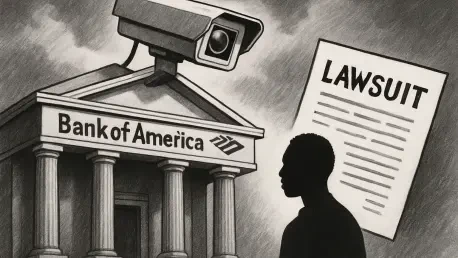

The digital trail left by a simple credit card transaction has become the focal point of a major legal battle testing the boundaries of financial privacy in the United States. A proposed class-action lawsuit filed against Bank of America alleges that the financial giant engaged in an unprecedented and illegal surveillance campaign targeting its own customers in the wake of the January 6, 2021, U.S. Capitol riot. This case places the institution at the center of a national debate over the role of corporations in law enforcement, the security of private financial data, and the potential for political profiling.
The Core Allegations: Data-Mining and Customer Profiling
At the heart of the lawsuit is the claim that Bank of America systematically data-mined its customer records to create a list of potential suspects for federal investigators. According to the complaint, the bank isolated transactions made by any of its customers in the Washington, D.C., metropolitan area between January 5 and 7, 2021. This broad geographic dragnet, the plaintiff argues, went far beyond the scope of typical financial crime detection and constituted a proactive, warrantless search of private information.
The allegations extend beyond simple location tracking into the realm of behavioral profiling. The lawsuit contends that Bank of America cross-referenced the D.C. transaction data with customers’ entire purchase histories to flag anyone who had ever bought a firearm. This practice created a specific profile that linked presence in the capital with a constitutionally protected activity, which the plaintiff asserts weaponized customer data to cast a wide net of suspicion over individuals who had committed no crime.
Setting the Scene: Financial Surveillance in a Post-Jan. 6 America
This legal challenge did not emerge in a vacuum but is deeply rooted in the political and investigative turmoil that followed the events of January 6. As federal agencies launched a massive nationwide investigation to identify participants in the riot, pressure mounted on private sector entities, including financial institutions, to assist in these efforts. The lawsuit examines the fine line between lawful cooperation and proactive surveillance, forcing a modern re-evaluation of long-standing financial privacy laws.
The case directly invokes the Right to Financial Privacy Act of 1978, a cornerstone of consumer protection designed to prevent the government from accessing citizens’ financial records without proper legal process. The plaintiff argues that Bank of America’s alleged actions circumvented this law by voluntarily compiling and sharing data that law enforcement could not have obtained without a warrant or subpoena. Consequently, the lawsuit has become a test case for how these decades-old privacy protections hold up in an era of big data and intense political polarization.
Examining the Lawsuit: Claims, Defenses, and Potential Consequences
The Plaintiff’s Case
The legal argument put forth by plaintiff Neil Castellon centers on the accusation that Bank of America transformed its role from a financial custodian into a surveillance arm of the state. The complaint details how the alleged data-mining operation constituted an illegal search that violated customers’ reasonable expectation of privacy. By proactively analyzing and filtering customer data based on criteria like location and purchase history, the bank is said to have acted as an investigative agent without the legal authority to do so.
Furthermore, the lawsuit asserts that this alleged collaboration with federal authorities exceeded the standard requirements of the Bank Secrecy Act, which mandates reporting of specific suspicious transactions, not the wholesale profiling of entire customer segments. The plaintiff’s case rests on the idea that the bank’s actions were not about detecting financial crime but about surveilling individuals based on their physical presence and past behaviors, thereby infringing upon fundamental civil liberties.
Bank of America’s Defense
In response to the allegations, Bank of America has maintained a firm and consistent defense, characterizing the lawsuit as being entirely “without merit.” The institution’s public statements emphasize that it acted responsibly and in accordance with all established legal frameworks. Its defense strategy hinges on the assertion that its interactions with the Treasury Department and law enforcement were not only lawful but were part of its duty as a regulated financial entity.
The bank’s position suggests that its actions were guided by regulatory requirements and obligations to aid in matters of national security. By framing its conduct as compliant with “all applicable legal obligations,” Bank of America implies that it was responding to legitimate directives from government partners, not initiating an independent surveillance program. This defense seeks to portray the bank as a responsible corporate citizen fulfilling its role in a complex and challenging investigative environment.
Broader Implications for Banking and Privacy
The outcome of this lawsuit carries significant weight for the entire financial industry and the future of consumer privacy. A ruling in favor of the plaintiff could establish a powerful new precedent, sharply curtailing the ability of banks to proactively share customer data with government agencies without explicit legal instruments like warrants. This could force a widespread re-evaluation of data analysis practices and reinforce the legal wall between financial institutions and law enforcement.
Conversely, a victory for Bank of America could signal a shift in the balance of power, potentially encouraging greater data-sharing partnerships between the financial sector and the government. Such a result might be interpreted as a legal endorsement of using sophisticated data analytics for surveillance purposes, raising profound questions about the sanctity of financial data. The case, therefore, stands as a critical inflection point in the ongoing debate over corporate responsibility in the digital age.
The Political Dimension and Future Outlook
The “Weaponization” of Finance Debate
This legal battle intersects directly with a charged political narrative concerning the “weaponization” of federal agencies and corporate entities against political opponents. The lawsuit explicitly references testimony from the House Judiciary’s Subcommittee on the Weaponization of the Federal Government, grounding its claims in a broader congressional inquiry into alleged government overreach. This connection elevates the case from a simple privacy dispute to a symbol in the larger culture war over institutional trust and accountability.
The allegations also fuel the growing “debanking” controversy, where critics, including former President Donald Trump and Republican lawmakers, accuse financial institutions of discriminating against customers for their political views. The lawsuit’s focus on profiling customers based on firearm purchases taps into this sensitive issue, framing the bank’s actions not just as a privacy violation but as a form of politically motivated targeting that threatens free association and expression.
What’s Next for the Lawsuit and Financial Institutions
The legal road ahead for this class-action suit is likely to be long and complex, with critical phases including class certification and discovery that will be closely watched by legal experts, privacy advocates, and the financial industry. The proceedings will scrutinize the precise nature of Bank of America’s interactions with federal agencies, potentially revealing new details about the extent of corporate-government collaboration in the post-Jan. 6 environment.
Regardless of the verdict, the case is poised to leave a lasting impact on industry practices and regulatory oversight. It raises urgent questions for both corporations and lawmakers: What are the appropriate limits of financial surveillance in the name of national security? How should existing privacy laws be updated for the digital age? The answers that emerge from this lawsuit will inevitably shape the future of the delicate balance between protecting the nation and preserving individual freedoms.
Conclusion: A High-Stakes Battle Over Data, Privacy, and Politics
Ultimately, the lawsuit against Bank of America crystallized a pivotal conflict at the intersection of financial technology, government power, and civil liberties. It served as more than just a legal challenge; it became a public forum for debating the responsibilities of corporations that hold vast amounts of sensitive personal data and the legal guardrails needed to protect citizens from potential overreach.
The case highlighted the profound tensions between the demand for security and the constitutional right to privacy in an increasingly connected world. It underscored the evolving role of financial institutions as gatekeepers of data and forced a critical re-examination of where the line is drawn between lawful cooperation with authorities and the specter of mass surveillance, leaving an indelible mark on the national conversation about privacy and corporate accountability.