
Understanding Euronet’s Strategic Pivot Toward Omnichannel Dominance
The competitive landscape for European financial services is currently undergoing a radical transformation as traditional banking systems merge with agile fintech solutions. At the heart of this shift is Euronet, a U.S.-based financial powerhouse that has recently made waves by announcing its acquisition of PaynoPain, a Spanish fintech specialist. This move is not merely a corporate expansion; it represents a fundamental effort to control the direct merchant acquiring market across the Iberian Peninsula and beyond. As digital transactions become the standard for both retail and subscription-based services, the ability to offer a seamless, omnichannel experience has become the new industry benchmark. By integrating diverse payment methodologies into a single ecosystem, Euronet is positioning itself to lead the next era of European financial services.
The Evolution of Euronet’s European Acquisition Strategy
2011: The Genesis of PaynoPain in Spain
While Euronet was already a global player in ATM and money transfer services, PaynoPain was founded in Spain during this period to address the growing need for versatile digital payment solutions. Over the following decade, the Spanish firm developed a robust platform supporting over 50 payment methods, ranging from physical point-of-sale systems to sophisticated subscription billing and mobile card reading technology. This established the technological foundation that would eventually make it a primary target for international acquisition.
August 2025: The CoreCard Corporation Merger
In a definitive move to bolster its underlying credit technology, Euronet entered into a $248 million merger agreement with CoreCard Corporation. This acquisition provided Euronet with the high-level processing power and credit management software necessary to support large-scale merchant operations. It served as a critical precursor to their later regional acquisitions, ensuring that the company had the infrastructure to handle complex, high-volume financial data across multiple borders.
Early 2026: Entry into the Greek Merchant Sector
Continuing its aggressive expansion roadmap, Euronet reached an agreement to acquire the merchant acquiring branch of Greece’s CrediaBank. This move signaled Euronet’s intent to move beyond its traditional service offerings and act as a direct acquirer for retail businesses. By securing a foothold in the Eastern Mediterranean, the company demonstrated a disciplined investment strategy focused on capturing high-growth markets where digital payment adoption was accelerating.
Late 2026: The Acquisition of PaynoPain and the Formation of the Center of Excellence
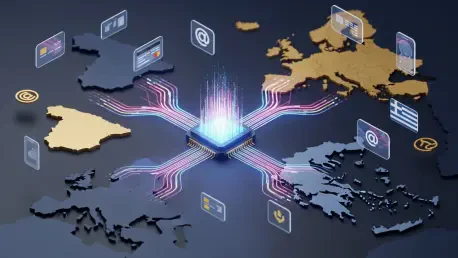
The most recent milestone in this timeline is the finalized agreement to acquire PaynoPain, scheduled for completion in the third quarter of 2026. This deal grants Euronet access to a specialized Payment Service Provider license and a diverse portfolio of European merchants. A central component of this phase is the establishment of a merchant acquiring “Centre of Excellence” in Spain. This facility is designed to serve as a hub for innovation, integrating PaynoPain’s online expertise with Euronet’s existing Ren payments platform to create a unified global payment architecture.
Analyzing the Significance of Integrated Payment Ecosystems
The synthesis of these events highlights a clear trend: the consolidation of fragmented regional players into a unified, cross-border financial ecosystem. The most significant turning point in this journey is Euronet’s transition from a service provider to a direct merchant acquirer, which allows them to capture a larger share of the transaction value chain. By bridging the gap between traditional physical retail and modern digital commerce, Euronet is addressing a critical market need for scalability and technological flexibility. These acquisitions suggest that the future of European payments will be defined by platforms that can offer “all-in-one” solutions, reducing the complexity for merchants who previously had to juggle multiple vendors for different payment types.
Competitive Nuances and the Future of the Ren Platform
The integration of PaynoPain’s technology into Euronet’s Merchant Services division introduces several nuances to the competitive landscape. Unlike traditional banks that may struggle with legacy systems, Euronet’s use of the Ren payments platform allows for a more agile deployment of new features, such as advanced mobile card reading and specialized virtual POS systems. However, the success of this strategy depends on the seamless merging of different regulatory frameworks and technical standards across Spain, Portugal, Greece, and other Eurozone members. Expert observers suggest that the real value lies in the “Centre of Excellence,” which could provide Euronet with a persistent innovation advantage. By focusing on technology-driven solutions in high-growth regions, Euronet is not just expanding its footprint; it is rewriting the playbook for how global payment providers operate within localized European markets.