
The financial technology landscape is continuously being reshaped by innovators, and Klarna’s decisive pivot from a “buy now, pay later” specialist into a full-fledged digital banking contender marks a significant development. This strategic expansion is epitomized by the launch of its peer-to-peer (P2P) payment service, a move designed to integrate daily financial transactions into its growing ecosystem. This review aims to dissect this new offering, evaluating its functionality, performance, and overall value proposition for Klarna’s 114 million European users.
The core promise of this service is to challenge the established norms of traditional banking by stripping away the typical friction and fees associated with managing and transferring money. As consumers increasingly demand more seamless and cost-effective financial tools, Klarna’s P2P service enters a competitive field with high expectations. The central question is whether this new feature is merely an add-on for existing customers or a genuinely disruptive force capable of redefining everyday digital banking.
Klarna’s P2P Core Features and Functionality
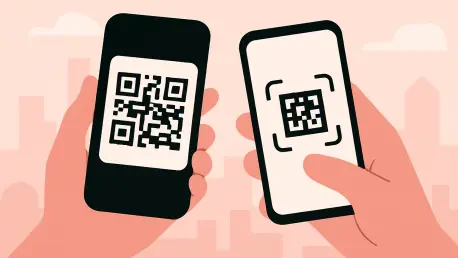
At its heart, the service enables instant, fee-free money transfers between Klarna users across 13 European nations, including major markets like the UK, Germany, and Spain. The process is designed for simplicity. Within the Klarna app, a user can send funds directly to another person’s Klarna account using just a phone number or by scanning a QR code, bypassing the need for cumbersome bank account details and routing numbers.
This streamlined functionality is underpinned by a robust security framework. Klarna leverages advanced fraud detection and eligibility checks, fortified by a partnership with Google Cloud that utilizes sophisticated AI hardware to protect every transaction. This commitment to security is crucial for building user trust in a service that handles personal finances directly.
Moreover, the P2P feature is not a standalone product but a key component of Klarna’s expanding financial suite. It integrates seamlessly with the Klarna Balance, a digital wallet, and the Klarna Card, a Visa-powered card that has already seen significant adoption. This creates a cohesive ecosystem where users can shop, manage balances, and exchange money with peers, all within a single application.
Putting Klarna P2P to the Test: A Performance Breakdown
In real-world application, the “instant” transfer claim holds up remarkably well. Transactions between Klarna accounts are processed in seconds, a stark contrast to the often-delayed processing times of traditional bank transfers, which can take hours or even a business day to clear. This speed and efficiency represent a significant advantage for users needing to split bills or send money to friends quickly.
The user interface is another area where the service excels. The design is clean, intuitive, and consistent with the overall Klarna app experience, ensuring a minimal learning curve. Sending and receiving payments is a straightforward process, with clear prompts and confirmations that make the experience feel both simple and secure for users of all technical abilities.
From a reliability standpoint, the platform demonstrates strong performance. The integration with the Klarna Balance for funding payments is seamless, and the security measures work effectively in the background without creating unnecessary hurdles for legitimate users. The system’s stability and the effectiveness of its fraud prevention protocols provide a dependable environment for financial exchanges.
Advantages and Limitations of Klarna’s P2P System
The primary advantage of Klarna’s P2P system is its convenience for the company’s massive, pre-existing user base. For 114 million people already familiar with the Klarna ecosystem, the ability to send money without fees at high speed is a compelling proposition. This built-in network effect gives the service an immediate and significant user pool to draw from.
However, the service’s most significant limitation is its closed-loop nature. Currently, payments can only be sent and received between Klarna customers, which restricts its utility compared to more open platforms. Furthermore, the absence of cross-border payment functionality means users cannot send money between different countries, even within the European regions it serves.
These geographical and systemic restrictions place Klarna in a unique competitive position. While it may not yet challenge established P2P giants or traditional banking apps on the basis of universal accessibility, its deep integration within its own platform makes it a powerful tool for its dedicated audience. The company has announced plans to address these limitations, but for now, they remain notable drawbacks.
The Verdict: A Strategic Step in Klarna’s Banking Ambitions
In summary, Klarna’s P2P payment service is a well-executed and valuable addition to its digital banking offerings. It scores high on speed, ease of use, and integration within its ecosystem, making it an excellent choice for existing Klarna users. The service successfully delivers on its promise of a faster and cheaper alternative to many traditional money transfer methods.
This offering represents a significant stride in Klarna’s mission to become a comprehensive financial hub. While its current limitations as a closed-loop, regionally focused system prevent it from being a universal solution, its performance within its intended scope is impressive. The P2P service is a strong foundation upon which Klarna can build its broader banking ambitions.
Final Thoughts and Who Stands to Benefit
Klarna’s push into everyday banking signals a clear intent to disrupt the financial status quo, and this P2P service is a logical and powerful extension of that strategy. Its exploration of stablecoin-based options for future payments further underscores a forward-thinking approach aimed at moving beyond legacy banking infrastructure.
The ideal user for this service is an active Klarna customer residing in one of the supported European countries. For those already using the platform for shopping and payments, it provides an incredibly simple and integrated method for exchanging money with friends and family who are also part of the Klarna network.
Ultimately, while the service is highly effective for its target audience, prospective users need to weigh its closed-system nature. It is a potent tool for peer transactions within the Klarna community but cannot yet replace more versatile P2P services or traditional bank transfers for payments to non-users or international recipients.