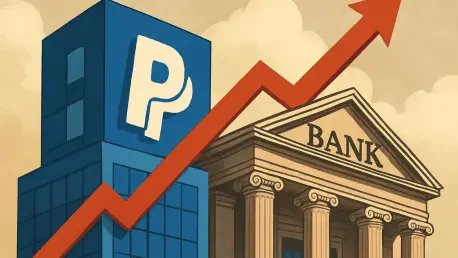

As the line between technology and finance continues to blur, few developments are as consequential as non-financial companies seeking to become banks. PayPal, a titan of digital payments, is the latest to make this move, applying for a special type of charter that has long been a source of intense debate in Washington. To unpack what this means for consumers, small businesses, and the future of banking, we are speaking with Priya Jaiswal, a leading authority on banking regulation and financial markets. We will explore the strategic ambitions behind PayPal’s move, the intense regulatory and political hurdles it faces, why a wave of other major companies are suddenly pursuing similar charters, and what this convergence of tech and banking signals for the entire financial industry.
PayPal has already extended over $30 billion in small business loans. Beyond just knocking out third parties, what specific new products and revenue streams does the proposed PayPal Bank unlock? Please walk me through an example of a process they could now bring in-house.
It’s about far more than just trimming costs by cutting out intermediaries, though that’s certainly a part of it. This move is about building a completely self-sufficient financial ecosystem for their small business customers. For instance, think about payment processing. Right now, PayPal relies on banking partners for direct connections to card networks for settlement. By bringing this in-house, they not only capture the revenue that would have gone to that partner but also gain total control over the speed, reliability, and data from those transactions. Furthermore, by offering FDIC-insured, interest-bearing savings accounts, they can hold their customers’ deposits directly, creating a much stickier relationship and a stable, low-cost source of funding for their lending operations. It’s a strategic play to own the entire financial lifecycle of a small business, from payments to credit to deposits.
The article mentions Mara McNeill’s background at Toyota Financial Savings Bank. Considering the political pushback from lawmakers like Sen. John Kennedy, who see ILCs as a “loophole,” how might her specific experience be used to navigate the regulatory approval process and address these deep-seated concerns?
Hiring Mara McNeill is arguably one of the most critical strategic decisions PayPal has made in this entire process. Her experience isn’t just a bonus; it’s a direct answer to the political and regulatory skepticism. Having been the CEO of Toyota’s ILC, she has firsthand experience operating within this exact charter structure under the watchful eye of regulators. She understands the specific governance, risk management, and compliance frameworks the FDIC will demand. She can walk into meetings with regulators and lawmakers and speak their language, demonstrating that PayPal isn’t trying to exploit a “loophole” but is building a robust, prudently managed institution. Her presence is a powerful signal that they are taking the responsibilities of being a bank seriously and have a leader who has successfully navigated these very same challenges before.
We’re seeing a trend with companies like Nissan, GM Financial, and Edward Jones resubmitting ILC applications. What specific operational advantages and competitive efficiencies are driving this recent surge? Could you provide a metric or anecdote that illustrates the bottom-line impact of securing an ILC charter?
The primary drivers are control and efficiency. For a company like Nissan or GM, their financing arm is a massive and critical part of their business. By operating with an ILC charter, they can create and offer financial products tailored perfectly to their dealers and customers without being constrained by a third-party bank’s risk appetite or strategic priorities. This gives them, as Nissan’s executive put it, the “flexibility to serve dealers more efficiently and competitively.” Imagine the impact of being able to shave just a few basis points off the cost of funds for a multi-billion-dollar auto loan portfolio—the savings are immense. It also insulates them from the risk of a banking partner suddenly deciding to exit the auto finance business. For these companies, it’s about de-risking their operations and capturing more value from the financial services they already facilitate.
Buy now, pay later company Sezzle is reportedly exploring an ILC to get away from the “fight” over state-level regulations. How significant is this patchwork of state oversight for fintechs, and what is the step-by-step process by which an ILC charter would streamline their compliance burdens?
The patchwork of state regulations is an absolute nightmare for any fintech trying to operate nationwide. You have 50 different sets of rules for licensing, interest rate caps, disclosures, and consumer protections. A company like Sezzle has to spend an enormous amount of money and manpower just to stay compliant in every state, and they are constantly fighting legal and legislative battles on multiple fronts. An ILC charter offers a powerful escape from this chaos. The charter, granted by a single state like Utah and supervised federally by the FDIC, would largely preempt that state-by-state regulatory morass. Instead of managing 50 different compliance regimes, Sezzle would answer to one state regulator and one primary federal regulator. This consolidation dramatically simplifies their operations, reduces legal risk, and frees up resources to focus on innovation rather than navigating a complex and often contradictory web of state laws.
What is your forecast for the intersection of fintech and traditional banking, particularly concerning the future of the ILC charter as more non-financial companies seek to enter the space?
I foresee a period of sustained tension and selective convergence. The ILC charter will remain the most contentious pathway for tech and commercial firms to enter banking, and the political opposition, as we’ve seen from figures like Senator Warren, is not going to evaporate. We won’t see the floodgates open, but I expect a slow, steady trickle of approvals for well-capitalized, well-led applicants like PayPal who can make a compelling case. This will force traditional banks to innovate faster and partner more effectively to compete. Ultimately, the ILC will continue to be a crucial, albeit controversial, catalyst that pushes the boundaries of what a “bank” is, forcing both regulators and the industry to adapt to a future where your car company, investment firm, or payment app is also your bank.