
The simple, almost magical act of tapping a smartphone to pay for groceries or a smartwatch to access public transit has become a routine part of modern life, yet it represents a technological revolution quietly reshaping industries. This seamless interaction is powered by Near Field Communication (NFC), a short-range wireless technology that has moved from a niche feature to a cornerstone of digital convenience. Its growing indispensability is reflected in its remarkable market trajectory. The global NFC market, valued at US$25.7 billion just two years ago, is now projected to more than double, reaching an impressive US$55.4 billion by 2033. This expansion is fueled by a compound annual growth rate (CAGR) of 8.9%, a clear indicator of sustained momentum. As consumers increasingly prioritize speed, security, and simplicity, NFC is emerging as the critical enabler, bridging the gap between our physical and digital worlds in ways that extend far beyond the checkout counter.
The Rise of Contactless Commerce
Digital Wallets Reshaping Global Commerce
The explosion in NFC adoption is inextricably linked to the global embrace of digital wallets and mobile payment systems. This shift represents one of the most significant transformations in consumer behavior in decades, moving society rapidly toward a cashless future. In 2024, the number of digital wallet users reached a staggering 4.3 billion worldwide, with a substantial portion—over 2.7 billion people—actively using their mobile devices for in-person transactions. This trend highlights a fundamental preference for the convenience and enhanced security offered by contactless payments over traditional methods like cash or physical cards. The projection that the number of mobile payment users would surpass 4.8 billion by 2025 has largely been realized, cementing the technology’s place in the mainstream. This widespread adoption is not merely a matter of convenience; it is also driven by the robust security protocols, such as tokenization, that protect sensitive financial data during transactions, providing a level of confidence that has been crucial for building user trust and accelerating market penetration.
Beyond the Smartphone A Universal Standard
While smartphones are the most visible application of NFC for payments, the technology’s influence extends to a much broader ecosystem of connected devices, establishing a universal standard for secure, short-range interactions. The same tap-to-pay functionality is now seamlessly integrated into smartwatches, fitness trackers, and even payment rings, allowing consumers to make transactions without ever reaching for their phone or wallet. This proliferation of NFC-enabled form factors is creating a more versatile and interconnected commercial landscape. Furthermore, the technology continues to power the very physical cards it is helping to supplement, with contactless credit and debit cards relying on embedded NFC chips. This standardization is a key strength, ensuring interoperability across different device manufacturers, payment networks, and point-of-sale systems. By providing a consistent and reliable user experience, NFC has lowered the barrier to entry for both consumers and merchants, fostering a frictionless environment where secure transactions can occur with a simple, intuitive gesture.
Powering the Electric Vehicle Ecosystem
Streamlining the Charging Experience
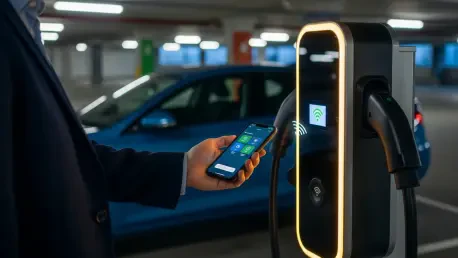
As the world transitions to sustainable transportation, the electric vehicle (EV) market is experiencing exponential growth, but this rapid expansion has introduced new challenges, particularly in the public charging infrastructure. One of the most significant pain points for EV drivers is the fragmented and often frustrating experience of finding and using a compatible charging station. Each charging network has historically required its own proprietary mobile app, membership card, or RFID fob, creating a cluttered and confusing system that complicates a process that should be simple. This lack of standardization acts as a major barrier to wider EV adoption, deterring potential buyers who fear being stranded or unable to navigate the complex web of competing networks. NFC technology is emerging as the pivotal solution to this problem. By integrating NFC readers into charging stations, operators can offer a universal method for authentication and payment. Drivers can simply tap their smartphone or an NFC-enabled credit card to initiate a charging session, completely bypassing the need for multiple apps and memberships.
Fostering a Frictionless Future for Mobility
The integration of NFC into the EV charging ecosystem does more than just simplify payments; it lays the groundwork for a more cohesive and user-centric mobility future. By establishing a universal standard for interaction, NFC promotes interoperability between different charging networks, vehicle manufacturers, and payment providers. This creates a seamless “roaming” experience for drivers, allowing them to access any public charger with the same ease as they would a gas station, regardless of the brand. This convenience is crucial for eliminating “range anxiety” and building the consumer confidence needed to accelerate the switch to electric transportation. Moreover, the secure and streamlined data exchange facilitated by NFC opens the door for innovative services, such as integrated billing that combines charging costs with other mobility expenses or loyalty programs that reward drivers across multiple networks. By removing friction at a critical touchpoint, NFC is not just improving a single process but is fundamentally enhancing the entire EV ownership experience, making it more accessible, intuitive, and appealing to a mainstream audience.
An Integrated Technological Horizon
The journey of Near Field Communication from a specialized technology to a ubiquitous enabler of modern convenience has been remarkable. Its profound impact was first cemented in the realm of mobile payments, where it successfully transformed consumer behavior by making transactions faster, more secure, and effortlessly simple. The technology then demonstrated its versatility by tackling critical friction points in the rapidly expanding electric vehicle market, offering a universal solution to the fragmented charging landscape. These two powerful growth drivers, coupled with its adoption in countless other applications from smart home devices to secure access control, solidified NFC’s role as an indispensable component of our increasingly connected world. The technology’s success was not just a result of its technical capabilities but its ability to provide an intuitive and consistent user experience across diverse platforms and industries, paving the way for a more integrated and seamless future.