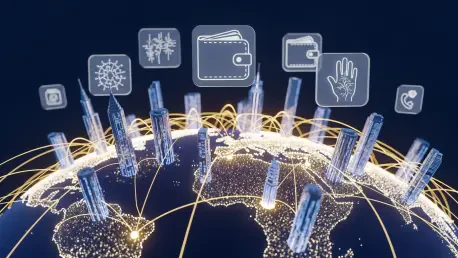

Traditional leather wallets have largely transitioned into historical artifacts as digital alternatives now manage everything from sovereign identity to programmable currency. The reliance on physical hardware has diminished significantly, replaced by a seamless web of interconnected biometric sensors and cloud-based ledgers that recognize a consumer’s unique physiological signature instantly. In major urban centers across the globe, the act of paying has become almost invisible, integrated so deeply into the fabric of daily movement that transactions occur without a single conscious gesture or button press. This transformation is driven by a sophisticated fusion of decentralized finance protocols and legacy banking structures that have finally found a middle ground. As the ecosystem matures, the friction that once defined international commerce is dissolving, replaced by real-time settlement systems that operate every second of the year without delay. Merchant acceptance is no longer a hurdle, as software-defined point-of-sale systems allow any screen or smart surface to facilitate secure, encrypted transfers. By June, the global landscape reflects a world where financial accessibility is increasingly dictated by biometric data rather than physical plastic cards or paper notes.
Biometric Sovereignty: The Shift Toward Frictionless Commerce
Biometric authentication has moved far beyond simple fingerprint scanning on mobile devices to encompass multi-modal physiological recognition systems integrated into the very environment of retail spaces. Modern payment terminals now utilize palm-vein recognition and facial geometry mapping to authorize transactions with near-zero false acceptance rates, ensuring that a person’s body serves as their primary financial key. This evolution has redefined the checkout experience, turning it into a passive background process where the identity of the buyer is verified through intent and physical presence.
This shift has been accelerated by the widespread adoption of decentralized identity frameworks, where sensitive data remains under the user’s control rather than being stored in vulnerable centralized databases. Consequently, the risk of traditional identity theft has plummeted, as the cryptographic link between a person’s physical presence and their digital funds is nearly impossible to replicate for even the most advanced bad actors. These frameworks provide a secure layer that allows consumers to move between different payment providers and merchants without ever needing to re-enter sensitive personal information.
Unified Ecosystems: The Rise of Super-Apps and Embedded Finance
Beyond individual transactions, the rise of the Super-App ecosystem has consolidated various financial functions into unified digital platforms that manage investments, insurance, and daily expenditures. These platforms leverage machine learning to provide hyper-personalized financial insights, often predicting a user’s liquidity needs before they are realized by the individual, offering proactive solutions in real-time to maintain the health of the consumer’s credit. By integrating social interaction with financial utility, these applications have become the primary interface through which the majority of the global population interacts with the economy.
In this environment, Wallet-as-a-Service models have flourished, allowing non-financial brands to embed sophisticated payment capabilities directly into their customer experiences. For example, vehicles now autonomously negotiate and pay for their own energy charging or parking fees using dedicated vehicular wallets, removing the human element from routine logistical costs. This level of automation is supported by high-speed telecommunications networks worldwide that ensure latency-free communication between the merchant’s cloud and the consumer’s financial provider, creating a truly automated economy.
Network Interoperability: Standardizing Global Financial Rails
The historical barriers of cross-border commerce are being dismantled through the global synchronization of real-time payment rails and the universal adoption of the ISO 20022 messaging standard. This common language for financial data allows different national systems to communicate seamlessly, ensuring that a payment sent from one continent arrives and settles in another within seconds, effectively eliminating the long wait times of the past. This interoperability has proven essential for small and medium-sized enterprises that previously struggled with the high costs associated with international trade.
Central banks have established bilateral and multilateral bridges, such as the direct linkage between the FedNow Service in the United States and similar instant-payment systems in Europe and Asia. These connections eliminate the need for multiple intermediary correspondent banks, which previously added significant costs and complexity to international transfers. Additionally, the introduction of retail-focused Central Bank Digital Currencies has provided a digital equivalent to cash that is both programmable and highly liquid, allowing for instant disbursements of government aid or corporate payroll.
Strategic Implementations: Building Resilience in Global Transactions
Strategic leaders across the financial sector prioritized the modernization of legacy core systems to remain competitive in this rapidly accelerating environment. They recognized that the transition required an aggressive move toward cloud-native architectures that supported high-throughput transaction processing without compromising security. Financial institutions implemented zero-trust security frameworks to mitigate the sophisticated threats posed by cyberattacks. These organizations invested heavily in developing interoperable APIs that allowed for the seamless integration of third-party fintech services, thereby expanding their value proposition to a broader demographic.
To ensure long-term resilience, businesses adopted a proactive stance on regulatory compliance, engaging with policymakers to shape the standards for AI-driven risk management. These actions effectively bridged the gap between traditional reliability and modern agility, establishing a robust foundation for continued economic growth. By prioritizing consumer privacy and data sovereignty, the industry successfully fostered the public trust necessary for the widespread adoption of biometric and automated payment technologies. These deliberate steps ensured that the financial ecosystem became more inclusive, efficient, and resilient against both economic volatility and technological disruption.