
The financial landscape of 2025 was fundamentally altered not by a single disruptive technology, but by a series of monumental corporate maneuvers that saw tens of billions of dollars change hands, redrawing the competitive maps in banking and payments. This year was defined by a wave of strategic mergers and acquisitions, each transaction driven by an urgent pursuit of market consolidation, aggressive geographic expansion, and the efficiencies of massive scale. As both established banking titans and agile fintech players vied for dominance, these deals revealed a clear consensus on the blueprint for future success: get bigger, get more focused, or get left behind. The moves made this year are not just entries in a ledger; they are the foundational shifts that will dictate the flow of capital and the structure of a more consolidated global financial system for years to come. The common thread weaving through these distinct transactions is a relentless drive for long-term value creation by absorbing complementary businesses and solidifying a more profitable and unassailable position in an industry undergoing profound transformation.
Mega Deals in Payments and Banking
The Payments Power Play
The most significant transaction of the year was undoubtedly Global Payments’ definitive agreement to acquire payments processor Worldpay for a staggering $24.25 billion, a move that created a titan in the merchant solutions space. This acquisition was the centerpiece of a larger, carefully orchestrated corporate restructuring that also saw Global Payments divest its Issuer Solutions business to FIS for a substantial $13.5 billion. The strategic logic behind this complex two-part maneuver was to radically simplify the company’s focus, transforming it into what executives have termed a “pure play merchant solutions business.” By shedding its issuer-facing operations, Global Payments has sharpened its strategic vision entirely on serving merchants, from small businesses to global enterprises. Acquiring Worldpay is the critical enabler of this strategy, as it provides Global Payments with access to Worldpay’s extensive and deeply embedded distribution networks. This significantly enhances its market reach and competitive posture, creating a more streamlined and powerful entity poised to dominate the highly competitive payments processing sector. The move signals a broader industry trend where specialization and scale are seen as the ultimate competitive advantages.
Creating a US Banking Behemoth
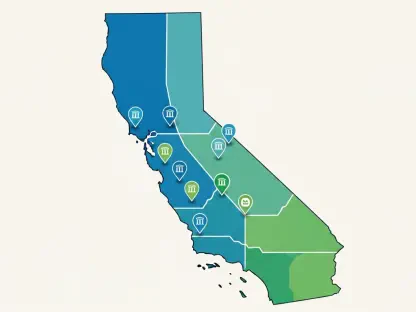
In the domestic banking sector, the announcement of Fifth Third Bancorp’s $10.9 billion all-stock acquisition of Comerica Bank sent ripples through the industry, signaling a new phase of consolidation among major regional players. This merger is set to create the ninth-largest bank in the United States by assets, a transformative step that fulfills a key component of Fifth Third’s long-term strategic growth plan. The deal is meticulously designed to achieve two primary objectives: substantially enhance the combined entity’s scale and drive significant profitability through operational synergies and an expanded service portfolio. Perhaps more importantly, the acquisition provides Fifth Third with a powerful vehicle for geographic expansion, catapulting its presence into several high-growth markets where it previously had a limited footprint. The addition of Comerica’s operations in key states like Texas, Arizona, and California, as well as a stronger foothold in the Southeast, positions the new institution to capitalize on demographic and economic trends in some of the nation’s most dynamic regions. This strategic expansion is a clear move to compete more effectively with the nation’s largest money-center banks.
International Consolidation and Fintech Expansion
European Giants Fortify Their Positions
Across the Atlantic, major European banks executed strategic acquisitions to solidify their positions in key markets. HSBC initiated a conditional proposal to privatize Hang Seng Bank, in which it already held a majority stake, for a consideration of approximately $13.6 billion. This maneuver is aimed at taking the successful Hong Kong-based bank completely private, integrating it fully as a wholly-owned subsidiary of HSBC Asia Pacific. By consolidating its control over this crucial asset, HSBC strengthens its grip on the vital Asian financial market, streamlining operations and capturing the full value of Hang Seng’s powerful regional franchise. In a separate but thematically similar move, Santander announced an all-cash deal to acquire the UK-based TSB from Banco Sabadell for £2.65 billion. This acquisition is a game-changer for the UK banking scene, vaulting the combined entity to become the third-largest bank in the country by market share and the fourth-largest mortgage lender. For Santander, the deal serves to significantly strengthen its franchise in a core European market, accelerating its path toward achieving a target of a 16% return on tangible equity and reinforcing its status as a dominant force in UK retail banking.
Fintech’s Global Ambitions
The trend of strategic acquisitions was not limited to traditional banking, as the financial technology space continued its own consolidation with a distinctly international flavor. This was exemplified by US-based Shift4’s $2.5 billion acquisition of Global Blue, a prominent paytech company headquartered in Switzerland. This deal is a significant part of Shift4’s ongoing and notably aggressive acquisition strategy, but it also highlights a broader pattern of American fintech firms looking beyond domestic borders to fuel their growth. By purchasing an established overseas player like Global Blue, Shift4 gains an immediate and substantial international footprint, along with a suite of specialized services and technologies that would have taken years to develop organically. This “buy versus build” approach allows US fintechs to rapidly scale their operations, enter new geographic markets, and diversify their revenue streams. The transaction underscores how the global fintech landscape is evolving, with established players in Europe and Asia becoming prime targets for well-capitalized American firms eager to expand their global reach and service capabilities in an increasingly interconnected financial ecosystem.
The Strategic Imperatives Driving Tomorrow’s Finance
The major transactions of the year conclusively demonstrated that the financial industry had fully embraced a new paradigm driven by an unyielding focus on scale and market leadership. The overarching analysis of these multi-billion-dollar deals revealed that a consensus had formed around the core strategic imperatives needed to thrive in an increasingly competitive global environment. The acquisitions by Global Payments and Fifth Third highlighted a powerful trend toward consolidation to achieve dominant market share and unlock critical operational efficiencies within a single market. At the same time, the moves made by Santander, HSBC, and Shift4 showed that geographic expansion remained a primary engine for M&A, whether it was a European bank solidifying its position in a core international market or an American fintech making a bold leap across continents. Ultimately, these transformative deals underscored a collective industry-wide pivot toward long-term value creation by acquiring complementary businesses, a strategy that has now redrawn the competitive lines for the years ahead.