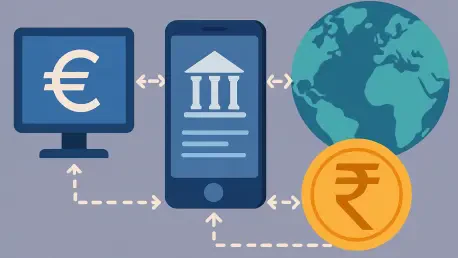

Cross-border payments hit a wall when local instant rails stop at the border, so the decision to interlink TIPS with UPI reframed the problem from isolated upgrades to shared infrastructure. Payment leaders praised the move as overdue, noting that domestic success meant little if small firms still waited days for settlement abroad.
However, sources differed on what mattered most. Bank strategists focused on speed and transparency, while fintech operators highlighted cost and user experience. Several industry groups saw a staged roadmap—TIPS–UPI first, Nexus as the multiplier, Swiss links next—as a pragmatic way to compound reach without breaking trust.
Inside the linkage effort: architecture, governance, and market repercussions
Direct rail-to-rail connections take center stage: TIPS–UPI as the spearhead
Technical voices emphasized ISO 20022 convergence, shared alias directories, and synchronized settlement to keep messages, FX, and funds aligned end-to-end. Operators pointed to the 2022 Malaysia–Singapore test and 2024 exploratory work as proof that latency and fees could fall sharply.
In contrast, risk chiefs warned that liquidity management across time zones, fraud countermeasures, and dispute playbooks would define success more than syntax. Many agreed correspondent overlays will persist, but their role would shrink as real-time rails carry more volume.
Building a network of networks: how Nexus expands reach beyond bilateral links
Policy analysts described Nexus as the scale engine, bringing Malaysia, the Philippines, Singapore, Thailand, and India into a shared template. A TIPS–Nexus link, they argued, could offer Europeans a familiar experience while routing to multiple Asian markets.
Yet payment schemes flagged trade-offs: operational complexity, onboarding sequence, and fee and FX models that must satisfy both retail and treasury users. Some PSPs saw competitive pressure on proprietary corridors, while others viewed Nexus as a way to accelerate acceptance.
Aligning rules and risks: synchronizing legal, compliance, and operational layers
Governance specialists welcomed staged delivery with legal work in parallel and a scheme body in Singapore, with the Eurosystem and Bank Indonesia observing. They stressed that shared SLAs, privacy-by-design routing, and sanctions controls would anchor trust at scale.
Security experts pushed for joint cyber drills, crisis communications, and clarity on settlement finality and liability across jurisdictions. Liquidity buffers and replay-safe reconciliation were cited as essentials, not extras, for live cross-border rails.
Europe’s new footing in real-time payments: implications for banks, fintechs, and merchants
Market participants expected PSPs to pivot product roadmaps toward instant corridors, bundling alias-based pay-by-account with embedded FX. Lessons from UPI adoption and SEPA Instant were cited as blueprints for onboarding and merchant activation.
Banks compared correspondent models with scheme-based interoperability and saw room for both. A potential Swiss link and new corridors could normalize consumer aliases across regions and make account-to-account a credible option at checkout.
What to do now: playbooks for policymakers, payment providers, and enterprises
Consulted practitioners converged on readiness: upgrade to richer ISO 20022 data, tune fraud analytics for real-time cross-border, and pre-fund smart liquidity buffers. Operational teams were urged to codify runbooks and escalation paths.
On execution, leaders suggested piloting priority corridors, integrating alias directories early, and negotiating FX and fee constructs that balance retail and B2B flows. Customer communication and support plans were framed as conversion levers, not afterthoughts.
Toward resilient, inclusive cross-border instant payments
The roundup showed that interlinking TIPS with UPI—and exploring Nexus and Swiss rails—signaled a durable turn to interoperable networks. Shared rules and stronger governance were judged capable of lifting cost, speed, and transparency across corridors.
Next steps clustered around standards alignment, risk choreography, and consistent user journeys, so that stakeholders shaped the shift rather than reacted to it. For deeper context, readers had benefited from scheme documentation, pilot retrospectives, and technical design notes.