
In a significant move poised to reshape the landscape of international commerce, Tether, the prominent issuer of the world’s most utilized stablecoin, has strategically invested in SQRIL, an innovative startup dedicated to building cross-border payment infrastructure for emerging markets. This collaboration signals a powerful convergence of established digital currency and on-the-ground payment technology, aiming to dismantle the friction-laden processes that have long characterized international transactions. While the specific financial details remain private, the investment is set to supercharge SQRIL’s expansion across Asia, Africa, and Latin America. The partnership is not merely a capital injection but a strategic alliance designed to accelerate the integration of stablecoins into the company’s sophisticated QR code-based payment solutions. This initiative directly addresses the growing demand from consumers and merchants for a payment experience that is as seamless internationally as it is domestically, heralding a potential new era for global financial interoperability and inclusion for millions.
The Technological Nexus of Payments
Bridging Traditional and Digital Finance
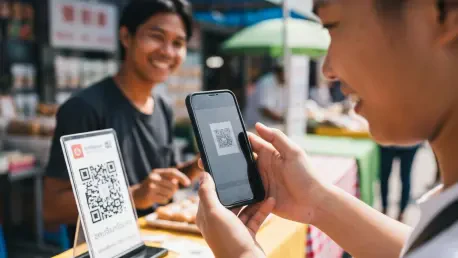
At the heart of SQRIL’s innovative approach is a sophisticated API switch, a powerful technological bridge designed to connect the disparate worlds of legacy banking and modern digital finance. This system masterfully links established financial giants like Barclays and Bank of America with the nimble, user-centric platforms of neobanks and digital wallets, including Venmo, Revolut, and Cash App. The result is a unified network that powers seamless cross-border QR payments. For the consumer, the experience is remarkably simple: a traveler or online shopper can scan a QR code and pay using their preferred home-country app, transacting in their native currency without ever needing to worry about complex conversions. Behind the scenes, SQRIL’s platform executes a complex series of operations in real time. It instantly calculates the foreign exchange rate, manages the currency conversion, and settles the payment directly into the merchant’s local bank account in their own currency. This eliminates the typical delays, high fees, and operational headaches associated with traditional international payment processing.
The Strategic Role of Stablecoins
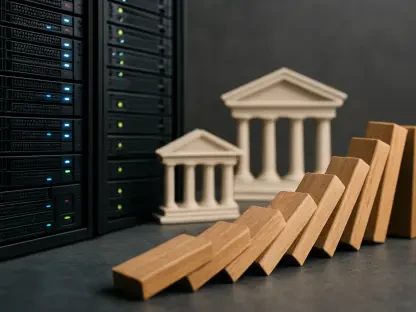
Tether’s involvement transcends a simple financial backing; it provides the very rails upon which a more efficient payment future can be built. The integration of stablecoins, specifically a digital dollar, into SQRIL’s infrastructure is the key to unlocking true real-time, low-cost settlement. Traditional cross-border payments often rely on a slow and expensive correspondent banking system, which can take days to clear a single transaction. By leveraging a stablecoin as the settlement asset, SQRIL can bypass this antiquated network entirely. Transactions can be finalized in a matter of seconds, 24/7, without being constrained by banking hours or international holidays. This model drastically reduces operational costs and counterparty risk for both the payment provider and the merchant. For businesses in emerging markets, this means faster access to their funds, improved cash flow, and the ability to participate more competitively in the global marketplace. The stability of a dollar-pegged asset provides a reliable medium of exchange, shielding merchants from the volatility often associated with other digital currencies.
Charting the Course for Global Interoperability
A Vision for Universal Scan to Pay
The leadership at SQRIL, spearheaded by founder and CEO Malcolm Weed, envisions a future where scan-to-pay QR codes become a truly universal and interoperable payment method across the globe. This vision is grounded in a clear analysis of converging global trends. Many countries are developing and promoting their own national QR code payment schemes, which are rapidly gaining adoption for domestic transactions. However, these systems often operate in isolated ecosystems, unable to communicate with one another. SQRIL aims to position itself as the critical interoperability layer that connects these disparate national networks. The rising adoption of stablecoins provides the ideal settlement mechanism for such a network, while increased global mobility—driven by tourism, remote work, and international business—creates a powerful demand for this very solution. By creating a unified infrastructure, the company is not just facilitating payments; it is building a foundational platform for a future where a QR code in any country can be scanned and paid for by any digital wallet from another.
Targeting Growth in Emerging Economies
SQRIL’s expansion strategy is laser-focused on regions where its technology can have the most profound impact. The company has already established a presence by supporting QR code payments in the Philippines, Vietnam, and Indonesia, alongside bank transfer services in Malaysia and Thailand. With the new backing from Tether, an aggressive expansion is planned for the first quarter of the year, targeting new markets across Asia, Africa, and Latin America. These emerging economies are prime candidates for this technological leap. They are often characterized by high mobile phone penetration but relatively low access to traditional banking and credit card services. This creates a unique opportunity to bypass legacy financial infrastructure entirely. Instead of building out expensive card-based systems, these regions can jump directly to more accessible and cost-effective mobile-first, QR-based payment solutions. This approach promises to accelerate financial inclusion, empowering millions of small business owners and consumers with access to efficient digital commerce for the first time.
A New Framework for Global Commerce
The strategic alliance forged between Tether and SQRIL marked a pivotal development in the evolution of international payments. This collaboration effectively demonstrated how the abstract potential of stablecoin technology could be harnessed to solve tangible, real-world challenges in cross-border commerce. By integrating a digital dollar settlement layer with a user-friendly QR code interface, the partnership laid down a practical blueprint for a more efficient, inclusive, and interconnected global financial system. The initiative moved beyond theoretical discussions, providing a compelling, operational model that showcased a path to reducing friction and costs for merchants and consumers, particularly in developing nations. The successful implementation of this integrated system signaled a significant step forward, establishing a new standard for what was possible in the realm of global digital transactions and setting the stage for wider adoption of similar models worldwide.