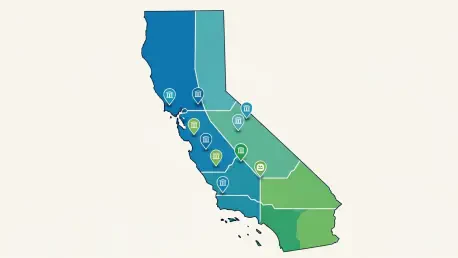

The modern American banking landscape is currently undergoing a massive structural reorganization as institutions move away from broad, underperforming footprints toward high-density economic engines. BMO is leading this charge by launching an ambitious strategy to open 145 new financial centers over the next five years, signaling a profound shift in how the bank perceives the value of physical presence. This move represents a calculated departure from traditional geographic strongholds, focusing instead on the wealth-rich corridors of the West. By prioritizing these specific regions, the bank is attempting to capture a larger share of the nation’s commercial and retail growth while the competitive environment remains fluid.
This aggressive expansion is not merely a expansion of physical square footage but a sophisticated market rebalancing designed to achieve critical mass in the country’s most vibrant economies. As digital banking becomes the standard for basic transactions, the role of the physical branch is being redefined as a hub for complex advisory services. BMO’s focus on California and Arizona reflects a broader industry trend where “densification” in high-activity urban centers is preferred over a thin presence in stagnant markets. Understanding this pivot requires an analysis of how capital is being recycled and why the Western frontier has become the primary battleground for North American banking dominance.
The Strategic Pivot: BMO’s Bold Western Frontier
Historically, BMO’s American operations were defined by its deep roots in the Midwest, a legacy built through the acquisition of Harris Bank. For decades, this provided a stable foundation, but the shifting demographics of the United States have necessitated a change in direction. The current strategy reflects a move away from the Great Plains and rural markets, where population growth has leveled off. By pivoting toward the West, the bank is aligning its physical infrastructure with the areas where wealth creation and business formation are at their highest levels.
This evolution marks the end of the era where banks tried to be everywhere for everyone. Instead, the focus has shifted toward becoming a dominant force in specific, high-value regions. The transition from the Midwest to the West Coast is a response to the “flight to quality” seen across the financial sector. Banks are increasingly recognizing that maintaining branches in low-growth areas carries a high opportunity cost. Consequently, BMO is repositioning its brand to serve as a premier partner for the sophisticated financial needs of the Western markets, leveraging a “financial center” model that emphasizes relationship-based banking.
Rebalancing the Portfolio for High-Growth Opportunities
Capital Recycling: The Sale to First Citizens Bank
A foundational element of this expansion is the strategic recycling of capital through the divestment of underperforming assets. To fund its Western ambitions, BMO recently finalized an agreement to sell 138 branches across the Midwest and Pacific Northwest to First Citizens Bank. This transaction allows the bank to exit states like Kansas and the Dakotas, where the growth trajectory does not match the bank’s long-term objectives. By offloading these locations, the institution is freeing up significant liquidity to reinvest in the infrastructure required to compete in more lucrative markets.
This move highlights a clear preference for market depth over geographic breadth. Rather than spreading resources thin across a dozen states, the bank is concentrating its firepower where it can achieve a higher return on equity. This asset sale is a textbook example of “capital recycling,” where a firm sheds legacy operations to fuel a more modern, high-growth strategy. For stakeholders, this indicates a disciplined approach to balance sheet management, ensuring that every dollar of capital is deployed in a way that maximizes competitive advantage in the current economic climate.
The California-Centric Focus: A Bank of the West Foundation
The expansion is overwhelmingly focused on California, with 130 of the planned 145 branches earmarked for the Golden State. This concentration is a deliberate follow-up to the acquisition of Bank of the West, which provided the necessary initial scale and brand recognition. By targeting metropolitan hubs like Greater Los Angeles, the San Francisco Bay Area, and San Diego, BMO is placing itself at the heart of the world’s fifth-largest economy. These “Big Three” regions offer a concentration of high-net-worth individuals and mid-sized enterprises that require specialized lending and wealth management services.
Success in California requires more than just a few scattered locations; it demands a visible and dense network that builds consumer trust. The bank is focusing on “densifying” its presence to ensure that it becomes a household name in these competitive markets. By leveraging the existing infrastructure from its previous acquisitions, BMO can more efficiently integrate new branches into a cohesive ecosystem. This strategy allows the bank to offer the localized feel of a regional player while providing the robust technological and capital resources of a top-tier North American financial institution.
Arizona’s Economic Corridors: Capturing Migration Trends
Beyond the borders of California, Arizona represents a vital secondary front in BMO’s expansion strategy. The bank is specifically targeting the Phoenix and Tucson corridors, regions that have benefitted immensely from the ongoing migration of businesses and residents from higher-cost states. This influx of population has created a surge in demand for residential mortgages, small business loans, and sophisticated advisory services. Arizona’s business-friendly environment and rapid urbanization make it a natural fit for a bank looking to establish a dominant Western presence.
The timing of this move is also highly opportunistic. While some competitors face regulatory hurdles or asset caps that limit their ability to grow, BMO is operating with a clear runway. Under the leadership of seasoned industry veterans, the bank is using this window to aggressively gain market share. By establishing itself as a premier alternative in Arizona, BMO is capitalizing on the state’s transition into a major tech and manufacturing hub. This regional focus ensures that the bank is not just a bystander but a primary participant in the Southwest’s economic transformation.
The Future of Physical Banking and Economic Integration
The future of retail banking is increasingly bifurcated between high-speed digital tools and high-touch physical spaces. BMO’s new “financial centers” are designed to be the physical manifestation of this hybrid model, serving as professional hubs where clients can discuss complex financial goals such as business scaling or estate planning. As these branches open, they are expected to drive local economic growth by increasing the availability of credit for small to mid-sized enterprises. This physical commitment acts as a signal to the community that the bank is invested in the long-term success of the local economy.
Looking ahead, these locations will likely evolve into technology-integrated spaces that offer more than just traditional teller services. The trend toward “advisory-led” banking means that the physical footprint will be smaller but more specialized, featuring advanced digital interfaces alongside private meeting rooms. This evolution will allow the bank to maintain a lean operating model while still providing the human expertise that remains essential for high-value transactions. As economic integration between the U.S. and Canadian markets continues, these Western hubs will play a critical role in facilitating cross-border trade and investment.
Navigating the New Banking Landscape: Key Takeaways
For both consumers and business leaders, this expansion signifies a new era of competition in the Western United States. The primary takeaway is the renewed importance of “densification”—the strategy of building a concentrated physical presence to foster deep-rooted client relationships. Stakeholders should recognize that a visible branch network remains a powerful tool for customer acquisition and retention, even in an increasingly digital world. This move demonstrates that for a bank to be successful in the modern era, it must be willing to aggressively reallocate resources toward high-growth corridors.
Furthermore, professionals in the financial sector can view BMO’s strategy as a blueprint for modern portfolio management. The process of shedding underperforming assets to fund expansion into high-potential markets is a necessary step for long-term sustainability. Business owners in California and Arizona should prepare for a more competitive lending environment, as BMO’s entry into these markets will likely force other institutions to enhance their service offerings. Ultimately, this geographic shift underscores the reality that in banking, growth is no longer about being everywhere, but about being exactly where the capital is flowing.
Building a Lasting Legacy in the West
BMO’s decisive move into the Western United States successfully transformed the institution’s identity from a Midwest-centric lender into a dominant force in the nation’s most dynamic economic zones. By prioritizing the “Big Three” regions in California and the burgeoning corridors of Arizona, the bank correctly identified where the next decade of wealth and business growth would occur. This strategy proved that physical presence, when executed through a “densified” and advisory-focused model, remained a critical component of retail and commercial success. The bank established a robust ecosystem that catered to the sophisticated needs of a modern clientele, effectively bridging the gap between digital convenience and human expertise.
As the financial landscape continued to evolve, the lessons from this expansion provided a clear roadmap for other institutions aiming to navigate regional shifts. The bank’s ability to recycle capital from stagnant markets into high-growth areas ensured its long-term relevance and competitive edge. By fostering deep connections within local communities and providing the credit necessary for business scaling, the institution cemented its legacy as a pillar of the Western economy. This bold pivot ultimately demonstrated that strategic geographic concentration, rather than broad and thin expansion, is the key to achieving sustainable mass and influence in the global banking sector.