
Priya Jaiswal is a powerhouse in the world of international finance and portfolio management, currently serving as a lead analyst on emerging credit risks. With a career built on deconstructing complex market trends and advising major institutions on banking security, she has become a leading voice in the fight against digital document forgery. Today, she joins us to discuss the alarming intersection of generative AI and mortgage applications, shedding light on a growing trend that threatens the integrity of the housing market.
This discussion covers the psychological shifts among younger borrowers who view financial documents as flexible resumes and the sophisticated technological maneuvers banks use to catch these discrepancies. We also delve into the “industry secret” of unreported systemic fraud and the potential for regulatory overhauls to bridge the gap between tax offices and lenders to stop billions in fraudulent loans before they are approved.
With 56 percent of Gen Z and 36 percent of Millennials admitting to tampering with bank statements or payslips, what specific psychological factors lead applicants to treat loan applications like resumés, and how do they mistakenly believe AI-altered documents will bypass modern banking security?
Borrowers today are under immense pressure to secure a foothold in the housing market, leading them to view a loan application as a hurdle to be cleared through “embellishment” rather than a legal filing. They feel that if they can just look better on paper—much like adding a few impressive skills to a resume—the end justifies the means. There is a pervasive, dangerous myth that AI-altered documents are indistinguishable from the real thing, leading 56 percent of Gen Z to believe they can outsmart the system. They often assume that because a PDF looks clean to the naked eye, the underlying data won’t scream “fraud” to an automated verification system. It is a classic case of overconfidence in consumer-grade tech versus the institutional-grade forensic tools that banks have at their disposal.
Applicants are increasingly using AI to modify proof of income, employee documents, and competing lender offers to secure approvals. How exactly do banks deploy technology to detect subtle changes in text or formatting, and what specific markers usually trigger an automatic application decline?
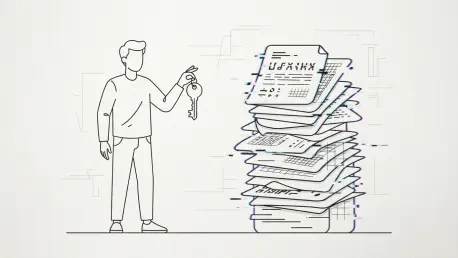
Modern lenders are fighting fire with fire by using advanced algorithms to scan for minute inconsistencies in document metadata and pixel alignment. While about 10 percent of applicants try to doctor bank statements and 9 percent target employee documents, banks are utilizing software that detects even the slightest shift in font spacing or text layering. These tools look for “ghosting” around numbers or unauthorized alterations in the document’s digital history that occur when a user tries to inflate their proof of income. If a bank sees that a document has been tampered with in any way, whether it’s a 6 percent adjustment to a payslip or a 3 percent tweak to a competitor’s offer, the application is instantly flagged and declined. The system doesn’t just see a number; it sees the digital scars left behind by the AI tool used to change it.
There is a growing trend of lenders identifying systemic fraud but choosing not to report it publicly or to authorities to protect their wholesale funding reputations. What are the long-term risks of this “industry secret,” and how does this lack of transparency impact the broader mortgage market and interest rates?
The decision to keep systemic fraud an “industry secret” is driven by a fear of spooking the wholesale funders who provide lenders with their capital. If a lender admits that fraud is widespread within their portfolio, they may be forced to declare that their risk profile has increased, which could lead to a loss of funding or significantly higher costs. By choosing not to report these incidents, lenders are essentially masking the true level of risk in the economy, which can lead to a dangerous bubble where loans are backed by fictitious income. This lack of transparency ultimately hurts every borrower because as the hidden risk grows, lenders eventually have to raise interest rates across the board to cover potential losses from these “nightmare” scenarios.
Certain AI tools are now actively promoting their software’s ability to alter financial records for loan purposes. What step-by-step measures should regulatory bodies and tax offices take to combat this specific type of forgery, and what legal consequences do applicants face even if their lender chooses not to report them?
The first step must be an integrated push for real-time data sharing between the tax office and banking institutions to verify billions in mortgage loans at the source. We need a system where a lender can verify a payslip directly with government records rather than relying on a PDF that could have been cooked up in an AI program like ImageGPT. Beyond technology, there must be a clear legal deterrent; currently, many applicants think they are safe if their bank simply declines the loan without calling the police. Even if a lender stays quiet to protect their reputation, these forged documents create a paper trail of financial fraud that can lead to permanent blacklisting or prosecution for obtaining financial advantage by deception.
Since many applicants view embellishing financial data as a victimless trend rather than a crime, how should the industry shift its communication strategy to educate younger borrowers on the severity of financial fraud? Can you share metrics or examples of how a single rejected application for fraud can affect a person’s future creditworthiness?
The industry needs to stop using soft terms like “embellishment” and start calling it what it is: financial fraud that carries life-altering consequences. When 18 percent of the population admits to using AI for forgery, it’s clear that the message isn’t landing, and we need to highlight the “hard stop” that occurs after a rejection. A single decline for fraudulent documentation doesn’t just mean you don’t get the house today; it creates a red flag in internal banking databases that can haunt your creditworthiness for years. Imagine being locked out of every major lender because of a 6 percent “tweak” to a payslip—that is a high price to pay for a mistake that stays on your record and makes you a pariah in the eyes of any future credit provider.
What is your forecast for the future of AI-driven financial fraud in the mortgage industry?
I anticipate a high-stakes technological arms race from 2026 to 2028, where the “industry secret” of systemic fraud will finally be forced into the light by mounting house price falls and tighter wholesale funding. We will see a shift toward mandatory, direct-source income verification that bypasses consumer-uploaded documents entirely, effectively killing the market for AI-altered PDFs. However, until these systems are universal, the burden of honesty remains with the applicant, and those who continue to “embellish” will find themselves increasingly trapped by a digital web that never forgets a forgery.