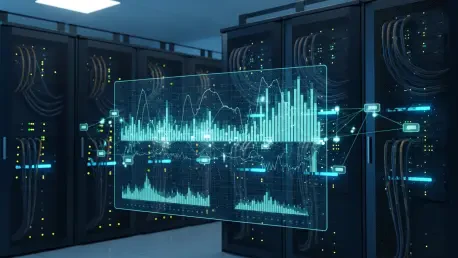

The once-boisterous trading floors where colorful jackets and frantic hand signals dictated the flow of global capital have effectively vanished into the hum of climate-controlled server racks. Today, financial markets operate at a velocity that defies human perception, as sophisticated computer programs execute complex orders in mere millionths of a second. This fundamental shift from manual intuition to mathematical precision is not merely a change in scenery; it represents a total structural overhaul of how assets are priced and exchanged across the globe. Algorithmic trading now serves as the central nervous system of modern finance, coordinating millions of daily transactions with a level of efficiency that was previously unimaginable. While the physical noise of the trading pits has quieted, the electronic activity has grown exponentially, creating a landscape where data is the primary currency and speed is the ultimate competitive advantage for every participant involved in the market today. This evolution ensures that the liquidity of the world’s most important financial instruments is maintained through rigorous code and lightning-fast connectivity rather than human emotion or physical presence.
The Democratization of Advanced Trading Infrastructure
Historically, the specialized hardware and low-latency connections required for high-frequency trading were the exclusive domain of massive investment banks and elite hedge funds. However, the current landscape has been transformed by the widespread availability of cloud computing and open-source programming libraries, which have leveled the playing field for smaller participants. Retail traders can now leverage the same types of execution engines that were once guarded as trade secrets, using standard consumer hardware to connect to powerful remote servers located near exchange data centers. This shift has removed the traditional gatekeepers of the financial industry, allowing independent developers and boutique firms to compete directly with institutional giants. Consequently, the barriers to entry that once protected the old guard have largely crumbled, giving rise to a new generation of quantitative traders who prioritize technical expertise over social pedigree or historical institutional affiliation.
Building on this technological accessibility, the proliferation of specialized trading platforms has simplified the integration of complex data feeds into automated systems. Instead of building every component from scratch, modern traders utilize modular frameworks that allow them to plug in specific strategies, risk management protocols, and execution logic with minimal friction. These platforms offer seamless access to historical tick data, which is essential for backtesting new models to ensure they remain viable under various market conditions. Furthermore, the rise of collaborative coding communities has accelerated the development of more robust and secure algorithms, as peer-reviewed code becomes more common in the financial tech space. This environment fosters a culture of constant iteration, where the ability to adapt to changing market signals is more important than simply having a large capital base. As a result, the democratization of these tools has created a more diverse but highly competitive marketplace.
Intelligence: From Static Logic to Machine Learning
The sheer volume of activity controlled by these automated systems is staggering, with current data indicating that algorithms facilitate between sixty and seventy percent of all equity trading in the United States. This dominance is expected to drive the global algorithmic trading market toward a valuation of nearly forty-three billion dollars by 2030, reflecting a sustained trajectory of growth that shows no signs of slowing down. As traditional manual methods become obsolete, the demand for automation extends beyond simple stock trades into complex derivatives, fixed-income products, and the volatile world of digital assets. This massive influx of automated liquidity has tightened spreads and reduced transaction costs for many investors, though it has also made the market more sensitive to rapid shifts in programming logic. The increasing reliance on these systems means that the health of the global economy is now inextricably linked to the stability and reliability of the code running behind the scenes.
Beyond simple volume growth, the internal logic of these systems has undergone a profound evolution from rigid, rule-based instructions to flexible artificial intelligence architectures. Early iterations of automated trading relied on basic conditional logic that could only respond to specific price triggers, but contemporary systems utilize sophisticated machine learning models to interpret multifaceted datasets. These models are capable of processing unstructured information, such as social media sentiment, live news broadcasts, and geopolitical events, to adjust their positions in real-time. This transition allows algorithms to recognize subtle patterns in market behavior that would be impossible for a human analyst to detect, especially when those patterns exist across multiple asset classes simultaneously. However, this increased sophistication also introduces a layer of opacity, as the decision-making process of deep learning models can be difficult for even their creators to fully explain or predict during periods of extreme volatility.
Execution Strategy: Precision and the Quest for Speed
The strategic breadth of modern algorithms has expanded significantly, covering everything from simple trend following to complex statistical arbitrage and proactive market making. By identifying temporary price discrepancies between different exchanges or related securities, these systems can capture tiny profit margins that accumulate into substantial gains over millions of trades. Market-making algorithms, in particular, play a vital role by constantly providing both buy and sell quotes, which ensures that there is always a counterparty available for other traders. This constant activity provides a level of market depth that was historically impossible to maintain manually, especially during periods of high turnover. Moreover, the integration of advanced risk management protocols directly into the execution code allows firms to set hard limits on exposure, automatically halting activity if certain loss thresholds are met. This level of precision ensures that strategies remain within predefined parameters, preventing human error.
While strategy is essential, the physical speed of execution remains a defining factor in the success of algorithmic operations, leading to an intense race for proximity. Firms frequently engage in colocation, where they pay a premium to house their servers within the same facility as the exchange’s matching engine to minimize the travel time of electronic signals. In this high-stakes environment, even a microsecond of latency can be the difference between a profitable trade and a missed opportunity, making the infrastructure as important as the code itself. However, for many participants, the focus has shifted from pure speed toward achieving higher execution quality through the reduction of slippage. Slippage occurs when the final execution price differs from the expected price, often due to rapid market movements occurring between the time an order is sent and when it is filled. Sophisticated algorithms now use predictive modeling to anticipate these fluctuations, timing their orders with surgical accuracy to ensure the best possible results.
Resilience: Navigating Systemic Risks and Regulation
The high-velocity nature of automated trading is not without significant dangers, as the same speed that provides efficiency can also facilitate rapid systemic failures. One of the most prominent risks is the occurrence of a flash crash, where a sudden surge in automated sell orders triggers a feedback loop among other algorithms, causing prices to plummet in seconds. These events highlight the fragile interconnectedness of modern markets, where a single malfunctioning script can have a cascading effect on global liquidity. Additionally, individual traders often face the challenge of over-optimization, where they refine a strategy so precisely based on historical data that it loses its ability to function in a live environment. This phenomenon, known as curve-fitting, often results in significant losses when the algorithm encounters a market regime it was not specifically programmed to handle. These vulnerabilities necessitate a robust approach to monitoring and system testing to prevent isolated technical glitches from turning into broader market crises.
To counter these systemic vulnerabilities, regulatory bodies introduced comprehensive frameworks like the European Union’s AI Act and enhanced oversight from organizations like FINRA. These regulations established mandatory circuit breakers and required firms to maintain rigorous documentation of their algorithmic logic to ensure transparency and accountability. Moving forward, the most successful market participants emphasized the necessity of a hybrid approach where the human element served as a vital supervisor over the automated execution process. Rather than relying solely on the machine, traders invested in continuous education and ethical oversight to ensure that technology remained a tool for growth rather than a source of instability. Proactive firms also focused on stress-testing their systems against extreme tail-risk events to prepare for the unpredictable nature of global finance. This balanced strategy allowed the industry to harness the immense power of automation while maintaining the integrity and trust required for long-term global economic prosperity and resilience.