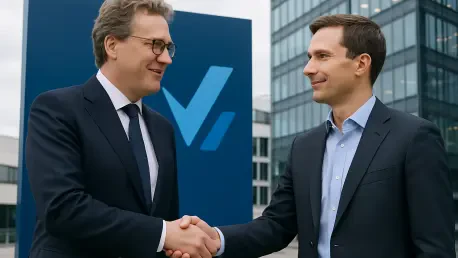

With a career defined by sharp analysis of market-moving deals, Priya Jaiswal stands as a recognized authority in the intersection of banking, finance, and technology. Her expertise in portfolio management and international business trends provides a crucial lens through which to view the tectonic shifts in corporate finance. Today, we delve into the recent landmark acquisition of OneStream by the private equity firm Hg, a $6.4 billion transaction that is sending ripples through the enterprise software market. We will explore the strategic calculus behind the deal’s impressive valuation, the implications of a high-growth company returning to private ownership, and how this partnership aims to redefine the role of artificial intelligence in the Office of the CFO. The conversation will also address the critical balance between rapid innovation and the operational stability demanded by a blue-chip global clientele.
The transaction offers shareholders a significant 31% premium. What specific aspects of OneStream’s platform or market position justified this valuation, and what does KKR’s exit just two years after the IPO signal about the current private equity landscape for software companies?
That 31% premium is a powerful statement, and it’s rooted in OneStream’s incredibly sticky and strategic position within its clients’ operations. This isn’t just another piece of software; it’s a unified cloud platform that modernizes the entire Office of the CFO. When you have over 1,700 clients, including heavyweights like Nasdaq and UPS, relying on your system for mission-critical functions like financial consolidation, planning, and reporting, you have immense pricing power and a very deep moat. Hg isn’t just buying a product; they’re buying a central nervous system for finance departments in 45 countries. As for KKR’s exit, I don’t see it as a lack of faith but as a textbook private equity success story. They acquired their stake when the company was valued at $1 billion in 2019, successfully guided it through an IPO, and are now capitalizing on a fantastic offer. In this market, realizing such a significant return in a relatively short period is precisely the goal, and it signals that high-quality, resilient software assets with clear market leadership will always command a premium from buyers looking for long-term growth.
OneStream is returning to private ownership, yet CEO Tom Shea and the founders are remaining in place. What distinct advantages does this transition offer the leadership team, and how will it change their approach to long-term strategy compared to operating as a public company?
For Tom Shea and his team, this is a strategic liberation. Operating as a public company chains you to the relentless rhythm of quarterly earnings reports. Every major investment in R&D or market expansion is scrutinized for its immediate impact on the bottom line, which can stifle the very innovation you need to lead a market. By going private with Hg, the leadership team is unshackled from that short-term pressure. They can now make bold, multi-year investments in their AI-first strategy without worrying about a temporary dip in profits spooking Wall Street. It allows them to think in five or ten-year horizons, focusing purely on building the best product and outmaneuvering competitors, rather than managing quarterly expectations. Keeping the founding and leadership team intact ensures that the company’s core vision and culture remain, but now they have the freedom and the deep-pocketed backing to execute that vision on a grander scale and at a much faster pace.
Hg is committing its team of over 100 AI specialists and its incubator to this partnership. Beyond financial backing, what are the first practical steps or specific joint projects you expect them to undertake to significantly advance OneStream’s finance AI capabilities for its clients?
This is the most exciting part of the deal—it’s about more than just money; it’s about an injection of specialized talent. The first practical step will almost certainly be an intense knowledge-sharing and strategy session between OneStream’s product teams and Hg’s Catalyst AI incubator. I’d expect them to immediately target low-hanging fruit where Hg’s expertise can be rapidly deployed. For instance, they could work on a joint project to embed far more sophisticated predictive forecasting models directly into the platform, using machine learning to analyze historical data and external market indicators with a level of granularity OneStream might have taken years to develop alone. Another immediate project could be enhancing the platform’s analytical tools to automate anomaly detection during the financial close process, saving clients countless hours and reducing risk. This isn’t just support; it’s an active, hands-on acceleration of OneStream’s entire AI roadmap.
With high-profile customers like Nasdaq and UPS across 45 countries, platform stability is paramount. How will the leadership team balance the strategic push for rapid AI innovation with the operational need to ensure seamless, uninterrupted service for its global enterprise client base?
That’s the billion-dollar question, and the answer lies in disciplined, parallel development. You absolutely cannot risk disrupting the core services that a company like Nasdaq relies on for its financial reporting. The leadership will undoubtedly enforce a strict separation between the stable, battle-tested core platform and the new, experimental AI features. They’ll likely create sandboxed environments and run extensive pilot programs with a select group of clients who are willing to test cutting-edge technology. New AI capabilities will be introduced as optional, modular add-ons first, allowing the broader base of 1,700 clients to adopt them at their own pace after they’ve been proven to be both effective and stable. The strategy isn’t to overhaul the engine while the car is speeding down the highway; it’s to build a new, high-performance engine on the side and carefully integrate it piece by piece, ensuring the ride remains smooth and uninterrupted for everyone.
What is your forecast for private equity’s role in scaling specialized, AI-driven FinTech platforms serving the enterprise market?
My forecast is that this deal is a blueprint for the future of tech-focused private equity. The era of PE firms being just financial engineers providing leverage is fading. The new model, which Hg is championing here, is that of a strategic operator. We will see more and more funds building deep, in-house expertise in critical areas like artificial intelligence, data science, and cybersecurity. They will acquire promising platforms like OneStream and then actively deploy their specialist teams—like Hg’s 100-strong AI group—to accelerate product development and create a decisive competitive advantage. In the coming years, the most successful PE investments in FinTech won’t be defined by the size of the check, but by the tangible, operational value and specialized talent they bring to the table to help their portfolio companies innovate faster and win their markets. This hands-on, value-add approach will become the standard.