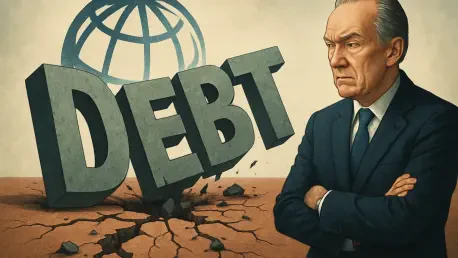

A staggering financial gap between the debt payments developing nations must make and the new funding they receive has widened to its largest point in over half a century, signaling a deep and structural crisis that threatens global economic stability. The World Bank’s latest International Debt Report paints a stark picture of escalating distress, cautioning that a recent easing of global financial pressures provides only a temporary reprieve from a far more dangerous, underlying reality.
The Global Debt Picture: A Looming Storm for Developing Economies
The escalating debt crisis facing developing economies has reached a critical juncture. According to the World Bank, the financial strain on these nations has intensified, pushing many to the brink of instability. This situation persists despite a recent relaxation in global interest rates, a factor that might otherwise suggest relief. The report emphasizes that the core issues are not dissipating; instead, they are evolving. The crisis involves a complex interplay between debtor nations, a shifting landscape of private and official bilateral creditors, and a global economic environment that remains fraught with uncertainty.
The significance of this crisis cannot be overstated. It represents a systemic risk that extends beyond the borders of any single country, threatening to unravel decades of development progress. Low- and middle-income countries find themselves in a precarious position, squeezed between mounting repayment obligations and insufficient new financing. This dynamic creates a vicious cycle where essential public spending on health, education, and infrastructure is crowded out by debt servicing, further hampering economic growth and resilience.
Shifting Sands: The New, More Dangerous Face of Debt
From Concessional Loans to Costly Bonds: The Changing Lender Landscape
A fundamental transformation in sovereign financing is compounding the current crisis. Historically, developing nations relied heavily on concessional loans from bilateral government partners and multilateral institutions, which offered low interest rates and long repayment horizons. However, the lending landscape has changed dramatically. Net flows from bilateral lenders have plummeted by 76% to just $4.5 billion, a low not seen since the 2008 financial crisis. This collapse has forced countries to seek capital elsewhere.
In place of these stable, low-cost options, nations are turning to more expensive and volatile sources of funding. The primary alternative has become the private international bond market, where access has been restored for many but at a punishing cost. This shift marks a move from partnerships focused on development to transactions driven by market returns, fundamentally altering the risk profile for debtor nations and making them far more vulnerable to shifts in global investor sentiment.
By the Numbers: Record-Breaking Costs and Mounting Distress
The raw data illustrates the sheer scale of the financial hemorrhage. Between 2024 and 2026, the gap between the debt servicing costs of developing nations and the new financing they secured soared to $741 billion, a more than 50-year high. In 2026 alone, total interest payments are projected to hit a record $415.4 billion. These figures represent a massive transfer of wealth away from the world’s most vulnerable economies at a time when they need resources most for climate adaptation and poverty reduction.
This immense financial pressure is translating directly into widespread economic distress. The report highlights a deeply concerning statistic: 54% of all low-income nations are now either in active debt distress or are at high risk of falling into it. This is not a distant threat but a present reality for more than half of the world’s poorest countries, underscoring the severity and breadth of a crisis that is actively undermining development goals.
Navigating the Fallout: The High Price of Modern Debt
The complexities arising from these new debt structures present a formidable challenge. With countries re-entering bond markets, they face interest rates nearing 10% on new issuances, approximately double the levels seen before 2020. This high cost of capital locks nations into expensive, long-term commitments that consume an ever-larger share of government revenue, leaving little room for productive investment.
In response to dwindling external options, many emerging nations have increasingly looked inward, leaning on domestic debt markets. Last year, domestic debt grew faster than external debt in 50 low- and middle-income countries. While this can reflect a maturing local financial system, the World Bank warns of significant downsides. This trend risks crowding out lending to the private sector, as local banks prefer to buy safer government bonds, and increases refinancing risks due to the typically shorter maturities of domestic debt, creating a constant cycle of repayment pressure.
Restructuring and Reform: The Policy Response to Mounting Pressure
The immense strain on public finances is evident in the record level of debt restructuring activities. Nearly $90 billion in external debt was reworked in 2026, a 14-year high that reflects the growing number of countries unable to meet their obligations. These restructurings are becoming increasingly complex due to the diverse mix of creditors involved, from traditional bilateral lenders to thousands of individual private bondholders, making coordinated and timely resolutions difficult to achieve.
This new reality demands a significant policy response. The evolving nature of sovereign debt and the changing composition of creditors require more effective and transparent frameworks for debt management and resolution. Without robust mechanisms to handle defaults and renegotiations efficiently, countries risk prolonged periods of economic stagnation and exclusion from capital markets, further deepening the crisis.
The Road Ahead: A Call for Prudence Amidst Lingering Danger
Looking forward, the report warns that complacency is the greatest enemy. World Bank Chief Economist Indermit Gill cautions that debt is continuing to accumulate in “new and pernicious ways,” suggesting that the apparent calm in financial markets masks deeper vulnerabilities. The shift toward more expensive private and domestic debt creates hidden risks that could surface abruptly if global economic conditions deteriorate.
The current window of opportunity, provided by the pause in global interest rate hikes, is finite. If policymakers fail to use this time to address underlying fiscal weaknesses—such as by broadening tax bases, improving spending efficiency, and strengthening debt management capacity—they risk being caught unprepared for the next shock. The danger is that nations will prematurely take on more high-cost external debt without first addressing the structural issues that led to the current crisis.
A Moment of Choice: The World Bank’s Urgent Call to Action
The report’s critical findings make it clear that developing nations are “not out of danger.” They are navigating a treacherous economic landscape where the cost of financing has become prohibitive and traditional safety nets have frayed. The confluence of record-high interest payments, a collapse in concessional lending, and the risks associated with new debt structures leaves these economies exceptionally vulnerable.
Ultimately, the World Bank’s message is a direct and urgent call for decisive action. The “breathing room” afforded by the current global financial environment must not be mistaken for a resolution to the crisis. Instead, it presents a crucial, time-sensitive opportunity. Policymakers are urged to seize this moment to implement difficult but necessary fiscal reforms, strengthen their economic fundamentals, and “put their fiscal houses in order” to build the resilience needed to secure a more stable and prosperous future.