
While overall targets are being met, the bank faces logistical hurdles in water reclamation due to limited municipal infrastructure in several regions. This operational reality underscores the complexity of transitioning a global financial powerhouse like Citi into a sustainability-led organization. Under the leadership of CEO Jane Fraser, the institution has redefined its business model by treating environmental and social governance not merely as a corporate responsibility exercise but as a fundamental competitive necessity. By establishing a massive $1 trillion sustainable finance target to be achieved by 2030, the bank is actively aligning its balance sheet with the shifting realities of the global economy. This strategic pivot aims to build long-term resilience by integrating green criteria into every facet of its financial activities. The ultimate objective remains reaching net-zero operational emissions by 2030 and ensuring that all financed emissions align with a net-zero trajectory by 2050 through careful vetting.
Strategic Allocation: Capital and High-Impact Resources
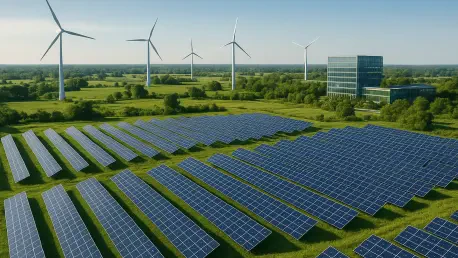
Since 2020, the institution has demonstrated substantial momentum toward its financial objectives, successfully mobilizing approximately $647.2 billion of its $1 trillion goal. This progress is bolstered by a consistent annual commitment that recently exceeded $91 billion, flowing into sectors that provide high-impact environmental and social benefits. Large-scale renewable energy development projects, energy efficiency retrofits for aging industrial sites, and the construction of green affordable housing units represent the core of this capital deployment. The bank estimates that these targeted financial commitments have already facilitated the avoidance of roughly 8.8 million metric tons of greenhouse gas emissions. Beyond environmental metrics, this influx of capital has played a pivotal role in stimulating global labor markets, supporting more than 4.4 million jobs across a variety of industries. This holistic approach ensures that the transition to a low-carbon economy remains viable.
The geographic distribution of these sustainable investments highlights a deliberate strategy to address climate challenges on a global scale rather than focusing solely on domestic markets. In the most recent reporting cycles, approximately 62% of the funding was directed toward international projects, reflecting a prioritized commitment to developing economies and diverse regulatory landscapes. This international focus is critical, as the impacts of climate change are not contained by national borders, requiring a coordinated financial response that spans multiple continents. By navigating the complexities of varying regional energy policies and economic frameworks, the bank facilitates a more inclusive transition. This diverse allocation strategy helps mitigate risks associated with regional policy shifts while maximizing the impact of every dollar invested in green infrastructure. Such a broad-based deployment of capital ensures that technological advancements in sustainability are shared across both mature and emerging markets, fostering global equity in the energy transition.
Internal Resilience: Operational Shifts and Infrastructure
Internally, the organization has made significant strides in aligning its physical footprint with its broader environmental ambitions, often exceeding its initial 2025 operational milestones. To date, the institution has achieved a 58% reduction in Scope 1 and Scope 2 emissions compared to the original 2010 baseline, showcasing a rigorous commitment to energy efficiency. This reduction is largely attributed to a massive overhaul of its real estate portfolio, where 64% of office space now holds prestigious LEED or WELL certifications. These standards represent the gold standard for sustainable building design and occupant health, ensuring that the bank’s daily operations are as efficient as the projects it finances. By optimizing energy consumption and modernizing HVAC systems, the bank has effectively lowered its overhead costs while reducing its direct environmental impact. This internal transformation serves as a blueprint for corporate clients, demonstrating that large-scale operational decarbonization is not only possible but also economically beneficial in the long run.
Building on this internal success, the bank has introduced updated 2030 benchmarks designed to further reduce emissions and energy consumption starting from a 2025 baseline. These new targets are intended to ensure that the internal footprint remains synchronized with the aggressive external financing goals. However, the path to absolute zero emissions is not without its difficulties, particularly regarding unavoidable Scope 1 emissions that cannot yet be eliminated through current technology. To bridge this gap, the institution utilizes a carefully curated portfolio of nature-based carbon credits, which are reported with high levels of transparency to distinguish between absolute reductions and offset activities. This approach acknowledges the current limitations of green technology while maintaining a commitment to immediate climate action. By refining its strategy to balance environmental urgency with the practical needs of a global client base, the bank continues to navigate the nuanced trade-offs required for a successful transition. This transparent reporting ensures that stakeholders remain informed.
Strategic Evolution: Long-Term Pathways for Financial Transformation
The transition toward a trillion-dollar sustainable portfolio required more than just financial commitments; it necessitated a fundamental restructuring of risk assessment and client engagement protocols. Moving forward, the most critical next step involved the deep integration of climate-related financial disclosures into every lending decision, ensuring that sustainability became a prerequisite for capital access. This evolution meant that the bank stopped viewing green finance as a separate asset class and instead treated it as the baseline for all future economic activity. To overcome the persistent municipal infrastructure gaps mentioned previously, the institution collaborated with public sector entities to pilot innovative waste-to-energy and water purification technologies. These partnerships allowed for the development of scalable solutions that smaller municipalities could eventually adopt independently. By prioritizing the creation of robust secondary markets for green bonds, the bank also ensured that long-term liquidity remained available for high-impact projects. This proactive stance provided a clear roadmap for other global financial institutions to follow.