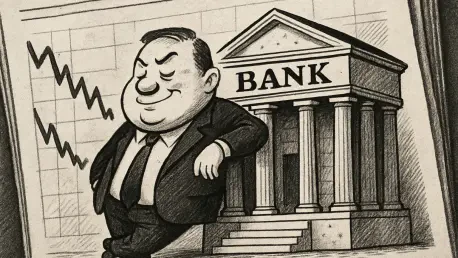

In a landmark decision that sent shockwaves through the financial world, the United Kingdom’s Supreme Court has decisively halted a colossal £2.7 billion class-action lawsuit against some of the world’s most powerful banking institutions. The case, which targeted major players like JPMorgan, UBS, Citigroup, and Barclays, centered on long-standing allegations of foreign exchange (forex) market manipulation. Brought forth by former competition regulator Phillip Evans, the collective action represented the interests of thousands of institutional investors, including pension funds and asset managers, who claimed to have suffered significant financial losses due to the banks’ coordinated rigging of currency rates. This legal battle was seen as a crucial test of the UK’s collective action regime and its ability to hold large corporations accountable for systemic misconduct. The final verdict effectively shuts down this avenue for compensation, leaving many to question whether justice was truly served for those impacted by the widespread market manipulation.
A Complex Legal Path to Dismissal
The foundation for this massive lawsuit was laid years earlier when the European Commission conducted its own extensive investigation into the forex spot trading market. In 2019, that probe concluded with the commission levying fines of more than €1 billion against the banks for their participation in illegal cartels. Armed with this regulatory finding, the class-action suit was filed in the UK, aiming to secure compensation for the victims. However, its journey through the legal system was anything but straightforward. The case hit its first major roadblock in 2022 when the Competition Appeal Tribunal (CAT) refused to certify it on an “opt-out” basis, a critical mechanism that automatically includes all affected parties in the lawsuit unless they explicitly choose to leave. A glimmer of hope emerged for the claimants in 2023 when the Court of Appeal overturned the CAT’s decision, temporarily reviving the case. This victory was short-lived, as the banks mounted a final, successful appeal to the Supreme Court, which ultimately sealed the lawsuit’s fate.
The Supreme Court’s Decisive Verdict
The Supreme Court’s ruling hinged on its agreement with the Competition Appeal Tribunal’s original assessment that the merits of the collective claim were ultimately “weak.” In delivering the judgment, Judge Vivien Rose acknowledged that while a small subset of the claimant class might have had a viable case, they constituted a “tiny fraction” of the lawsuit’s overall value and had shown no inclination to pursue their claims independently. This conclusion was a fatal blow to the collective action. The court’s decision effectively terminated the £2.7 billion lawsuit, forcing any potential future action to proceed on an “opt-in” basis, where each individual claimant must actively and consciously join the case. The claimant leader argued this was not a practical path to achieving “meaningful redress” for the tens of thousands of entities affected by the banks’ conduct. In the aftermath, financial institutions UBS and MUFG publicly welcomed the verdict, which was seen as a major victory for the banking industry. The ruling established a significant precedent, raising the bar for future class-action lawsuits and leaving a profound question about the avenues available for seeking collective justice against corporate malfeasance in the United Kingdom.